
Quake VR
The Pitch
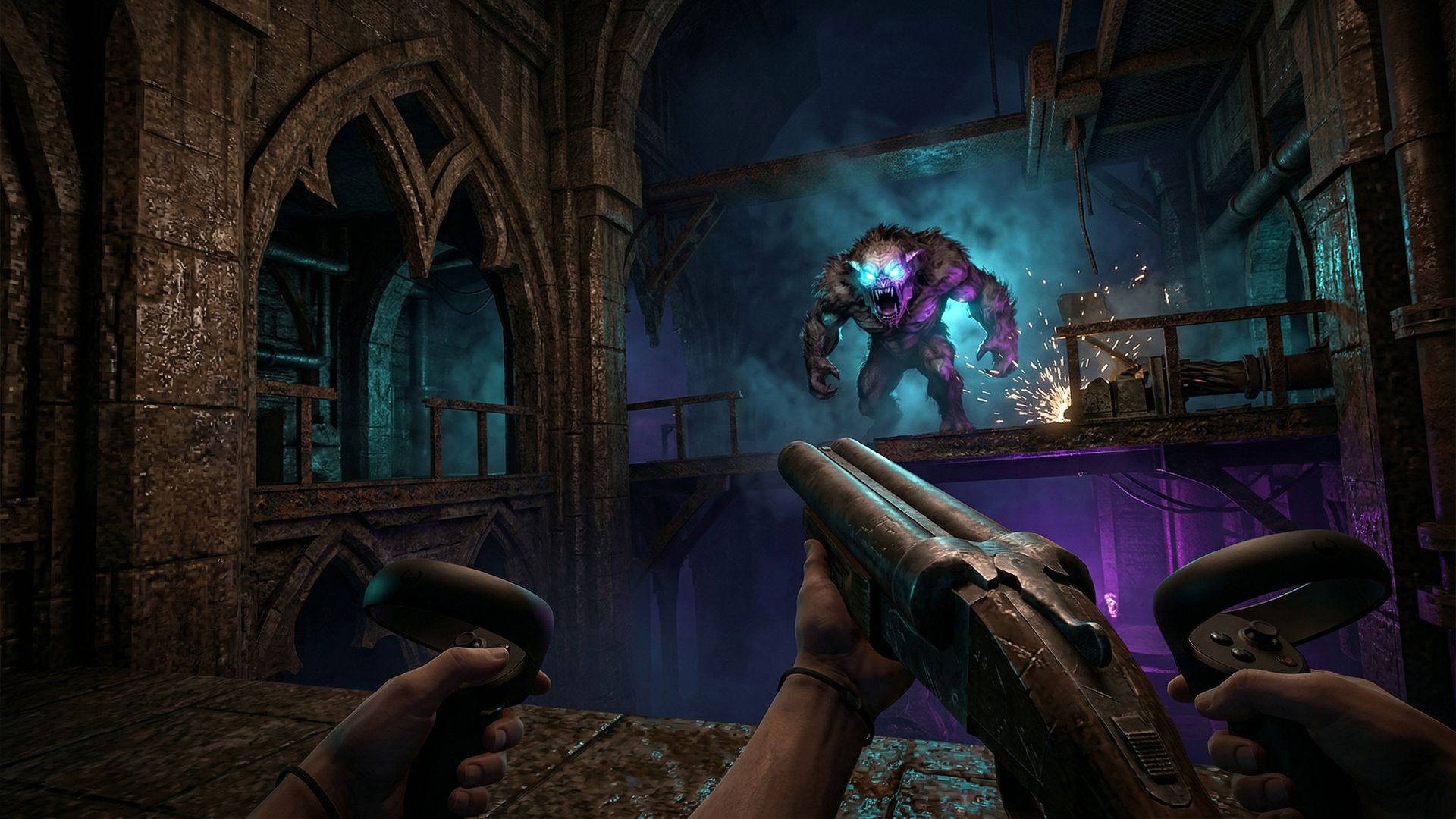
The godfather of 3D shooters gets the full VR treatment. We’re not talking about a janky injection driver or half-baked stereoscopic mode—this is Quake rebuilt with hand tracking, room-scale movement, physical weapon handling, and enough VR-native systems to make it feel like it was always meant to be played this way.
Platform Breakdown
PCVR: Quake VR by Vittorio Romeo The definitive implementation. Built on QuakeSpasm, this mod transforms the 1996 classic into a genuinely immersive VR experience with comprehensive motion controls, hand tracking with individual finger articulation (Index users get full finger movement), room-scale locomotion including physical jumping, and a weapon interaction system that includes dual-wielding, throwing, and holster-based reloading.
Quest/Pico: QuakeQuest by DrBeef Standalone 6DoF port via the DarkPlaces engine. Includes the shareware episode out of the box; full game requires purchased files sideloaded via SideQuest. Supports Quest 1/2/3 and Pico 4. Competent execution for standalone headsets but lacks the depth of interaction found in the PCVR version—no finger tracking, simplified weapon handling, less granular comfort options.
How It Plays
The PCVR implementation is surprisingly complete. Weapons are physical objects—you hold them, throw them, store them on virtual holsters at your hips and shoulders. The shotgun reloads with a satisfying wrist flick. Melee attacks connect with weight and haptic feedback. You can headbutt enemies (with a warning to keep your headset snug).
Room-scale movement works as you’d expect: walk around your space, physically duck behind cover, jump in real life to jump in-game. For those with smaller play areas, the mod supports traditional smooth locomotion with thumbstick controls and adjustable movement speed.
The original Quake campaign plays start to finish. Both official mission packs—Scourge of Armagon and Dissolution of Eternity—are fully supported with their unique weapons and enemies integrated into the VR systems. The grappling hook from Dissolution of Eternity exists as a sandbox toy (entertainingly game-breaking for normal progression).
Multiplayer works against bots or human opponents, with VOIP support built in. The vanilla map pool is limited, but community map packs expand the bot deathmatch options significantly.
Comfort Considerations
Quake was built for speed. Bunny hopping, rocket jumping, and sprinting through corridors at velocities that would make a modern Call of Duty character wheeze. In VR, that speed is intense.
The mod includes teleportation as an alternative to smooth locomotion, adjustable snap turning (in 5-degree increments), and a vignette option that reduces peripheral vision during movement. There’s a speed modifier button for when you need to slow things down.
Even with comfort options enabled, this is a high-intensity VR experience. The UploadVR review noted feeling “a little woozy” after racing through hallways. If you’re sensitive to motion sickness, plan for short sessions and build tolerance gradually.
Technical Notes
Quake VR (PC) requires the original game files—specifically PAK0.PAK and PAK1.PAK from your Quake installation (Steam version works). The HD texture and soundtrack pack is strongly recommended for modern immersion.
The mod has been primarily tested on Valve Index. It supports SteamVR Input API for controller rebinding across various PCVR headsets. WMR controller bindings are included.
QuakeQuest sideloads via SideQuest and supports Quest, Quest 2, Quest 3, and Pico 4 headsets. Mod support exists but compatibility varies.
The Verdict
Quake VR earns its A-tier through genuine VR-native systems that go far beyond “playable in VR.” Physical weapon handling—dual-wielding, throwing, holster-based reloading with wrist-flick shotgun pumps—creates hand presence that most flat-to-VR conversions skip. Full room-scale movement including physical jumping, finger tracking on Index, and melee combat with headbutts and environmental interactions demonstrate a depth of implementation rarely seen in hobbyist mods. The rebalanced hitboxes, positional damage, and dedicated VR tutorial map show polish that respects the source while adapting it.
What keeps it from S-tier is accessibility: Quake’s breakneck speed and bunny-hopping DNA create an intense VR experience that will flat-out reject players without strong VR legs. Compare to Doom VR (B-tier): while both offer full campaigns and motion controls, Quake VR’s weapon systems, room-scale integration, and physical interaction density are significantly more sophisticated. Doom VR is “Quake in VR”; this is “Quake rebuilt for VR.”
If you’ve never played Quake before, this is arguably the definitive way to experience it—provided you can handle the pace. For PCVR users with the stomach for fast movement, this is essential. For Quest owners, QuakeQuest offers a solid if less feature-rich alternative that still captures the core experience.