I wanted to love Psychonauts in VR. I really did. Tim Schafer’s 2005 platformer is one of those games that feels like it was made for the format — jumping inside people’s minds, exploring surreal mental landscapes, the sheer visual imagination of every level. Put that in a headset and it should be magic.
Here’s the thing: it isn’t. At all.
What You’re Actually Getting
The original Psychonauts runs on Double Fine’s proprietary engine, built in the early 2000s before Unreal Engine became the default for everything. That engine choice matters because it means UEVR — the community injector that has brought thousands of Unreal Engine games into VR — won’t touch this game. No motion controls, no 6DOF headtracking, no rebuilt UI. None of the modern modding infrastructure applies here.
What exists is a VorpX profile, and calling it a “VR experience” is generous. VorpX is a commercial stereoscopic 3D injection driver that wraps flat games into a headset. For some titles it works surprisingly well. For Psychonauts, the VorpX community itself has been warning people away from the headtracking features for over a decade.
The official VorpX forum guidance says to change the resolution from the default 800x600 before even thinking about putting it in a headset — because that low resolution stretched across your field of view is genuinely uncomfortable. Then, if you try to link the camera to your head movement, the Y-axis inversion crashes VorpX mid-game and drops you back to flat mono view. The camera sits so far behind Raz in third-person that having it follow your head feels wrong in a way that’s hard to describe until you’ve tried it. Like your neck is attached to a crane hovering twenty feet behind you.
The actual recommendation from people who’ve tried this? Disable headtracking entirely. Play with a gamepad. Treat it like a 3D movie on a very large, very close screen.
What It Feels Like to Actually Play
I went in expecting the worst and found something almost worse than that — a reminder of why we distinguish between “stereoscopic 3D” and actual VR.
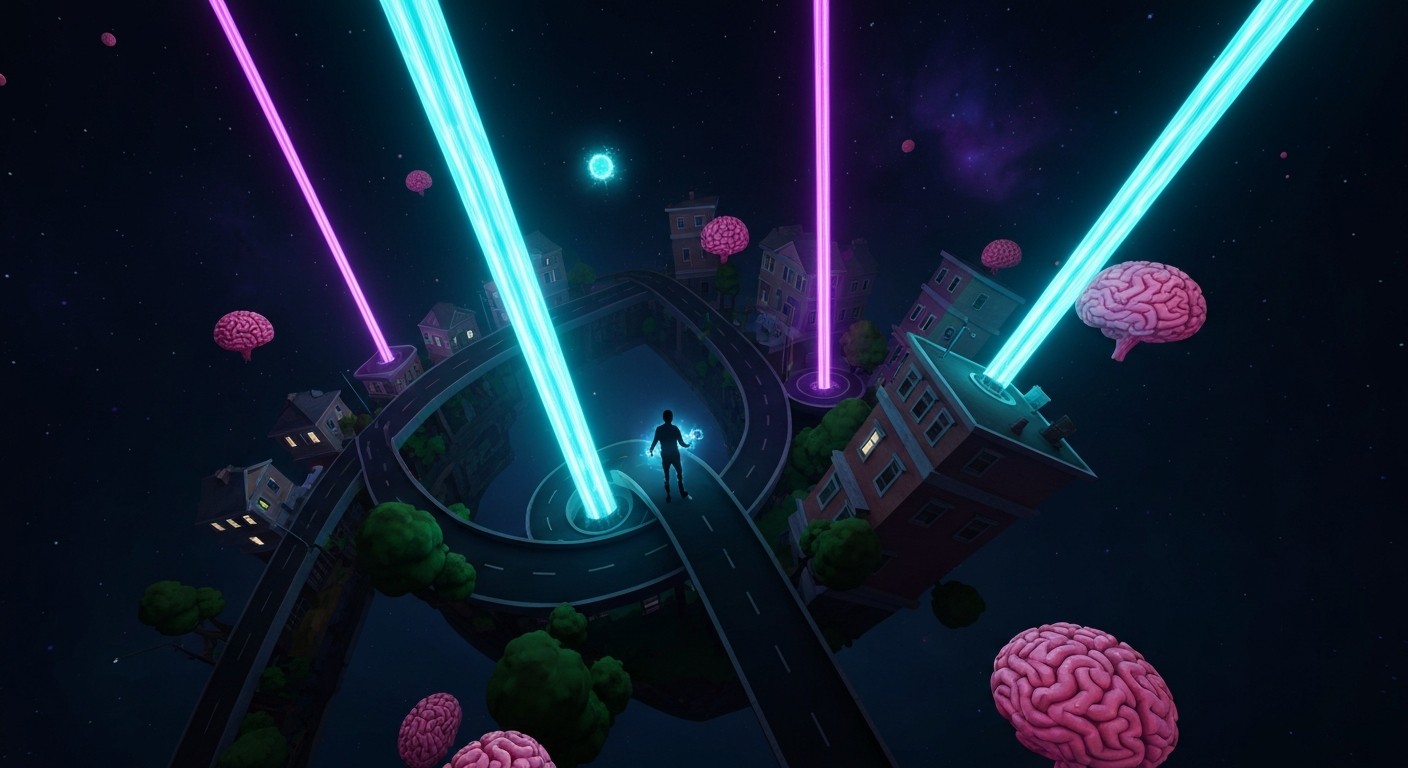
With headtracking off and a gamepad in hand, Psychonauts becomes a 3D platformer you watch through goggles. The art style benefits from depth — Double Fine’s cartoonish brain-worlds pop in a way that’s genuinely pleasant. Basic Camp is layered. The Milkman Conspiracy’s twisted suburban streets have a diorama quality that flat screens flatten. There’s a moment in Sasha’s Shooting Gallery where the cubic mind-space stretches out in actual depth, and you remember why you wanted this in VR in the first place.
But then you try to play. Platforming in a headset without reliable headtracking means your depth perception is fighting your muscle memory. Judging distances for Raz’s jumps — already one of the trickier parts of the game — gets harder when the camera won’t do what your head wants. The combat, never the game’s strong suit, feels even more disconnected when you’re holding a gamepad and staring at a screen inches from your face.
The UI, designed for a 4:3 CRT in 2005, is readable enough but floats awkwardly in your peripheral vision. The cutscenes, locked at their original resolution, look like someone projected a YouTube video from 2008 onto an IMAX screen. Nothing about the experience feels native or considered. It feels like wearing a snorkel mask to watch a movie.
The Real Options
If you want Psychonauts in VR, you have two much better paths, and neither involves the 2005 original.
Psychonauts in the Rhombus of Ruin is Double Fine’s official VR spinoff, released in 2017 for PSVR and 2018 for PCVR. It’s built for the format from the ground up — seated, puzzle-focused, first-person, with Raz using his psychic powers to interact with the world around him. It bridges the story between the first and second games. It won’t give you the platforming, but it gives you the writing, the humor, and the world in a form that actually respects the headset.
Psychonauts 2 + UEVR is where the real magic happens. The sequel runs on Unreal Engine, which means praydog’s UEVR injector actually works. Community reports describe it as genuinely amazing — full 6DOF, motion controls, headtracking that doesn’t crash, and the same spectacular art direction now properly immersive. It has its issues — occasional crashes, some visual glitches, UI that wasn’t built for VR — but compared to VorpXing the original, it’s night and day.
The Bottom Line
Psychonauts deserves better than this. The game itself is an A-tier platformer with some of the most creative level design in the genre. But its VR option is a D-tier afterthought that the community has effectively abandoned. No one is maintaining a proper VR mod. The VorpX profile hasn’t seen meaningful attention in over a decade. The proprietary engine blocks the tools that could actually fix it.
If you’re a Psychonauts fan with a headset, buy Rhombus of Ruin for the official experience. If you want the full platforming in VR, grab Psychonauts 2 and run it through UEVR. Either way, leave the 2005 original on your flat screen — which is exactly where it still shines.