
Paper Mario: The Thousand-Year Door VR
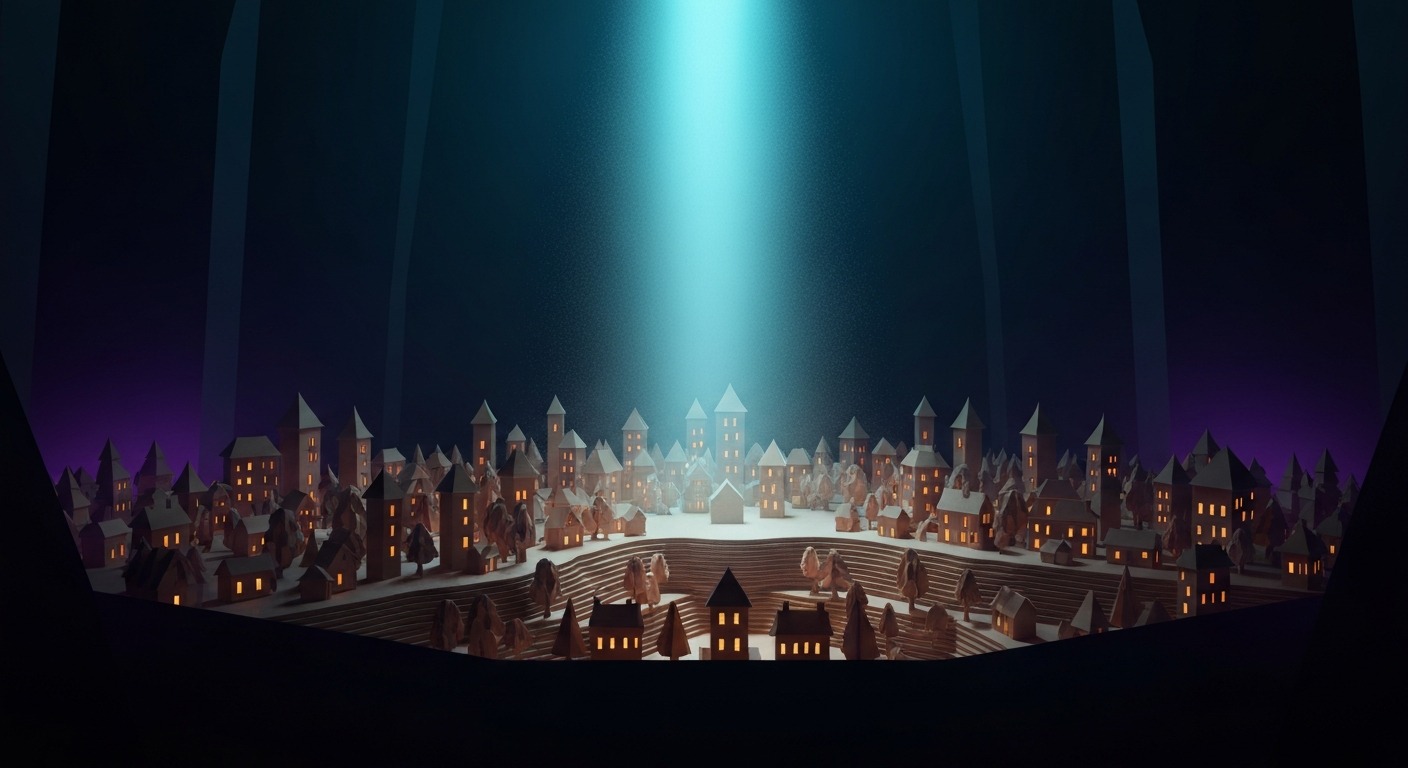
The first thing that strikes you is the scale. Put the headset on, load up Paper Mario: The Thousand-Year Door in Dolphin VR, and you are no longer watching a 4:3 RPG on a CRT. You are hovering over it. The paper town of Rogueport looks like a pop-up book spread across a table. Mario is a tiny cutout bobbing between cardboard buildings, and the camera — for once — stays where you put your head. It is the closest thing the game has to a physical diorama, and the first few minutes are genuinely disarming. Then you try to open a menu and remember you are playing a GameCube game through an emulator built in 2016.
The way to play this in VR is Dolphin VR, a fork of the Dolphin GameCube/Wii emulator. It is not a mod for the game itself; it is a layer underneath the game that re-renders the output in stereoscopic 3D and maps head tracking to the camera. For Thousand-Year Door, the presentation that works best is the one the community landed on early: force the camera static, disable the engine’s culling so geometry stays visible outside the original framing, and let the player look around freely. The result is less “you are Mario” and more “you are a giant leaning over a paper theater.” That distinction matters. If you come in expecting a first-person RPG with motion controls, you will be disappointed. If you come in expecting a charming, slow-paced art piece, you might love it.
Getting there is not casual. Dolphin VR requires a ripped GameCube ISO, the emulator build, and a willingness to dig into Action Replay codes. For TTYD you want the culling disabled so the world does not pop out of existence at the edges of the original camera cone, and you will probably need to adjust scale settings until the world feels like a model rather than a wall. Menus and the flat UI render as 2D planes floating in space, which is jarring but tolerable in a game this text-heavy. Performance sits in the “moderate” range: the GameCube original is not demanding, but stereoscopic emulation is heavier than flat Dolphin, and occasional dips are common enough that you should plan to drop internal resolution if your rig is mid-range.
Once it is running, the actual play is comfortable in a way few VR games are. Thousand-Year Door is turn-based. You walk, you talk, you time a few button presses in combat, and you watch little paper characters flip and fold. There is no sprinting, no snap turning, no artificial locomotion to fight. The headset is used for inspection, not movement, which makes this one of the easier emulated VR experiences to settle into for long stretches. I would still keep a gamepad handy; motion controller support exists in Dolphin VR for Wii games, but TTYD is a GameCube title and plays best with a standard controller mapped to the virtual GameCube pad.
What works is the aesthetic. The paper trees, the flat shadows, the dialogue bubbles, and the stage-curtain transitions all read as intentional craft when you can lean in and see the layers. Bosses feel larger, towns feel cozier, and the theater framing of the whole game finally makes literal sense. What does not work is the wrapper. Dolphin VR’s last major public build dates to mid-2016. It supports the original Rift CV1 and HTC Vive, and it is still very much “hobby project” software. Crashes, HUD glitches, and objects that should be hidden but are not are part of the package. A newer OpenXR fork called DolphinXR surfaced around 2025, but it is a separate, early effort and not the proven path for this game.
This is a curio, not a conversion. It is for people who already love Thousand-Year Door and want one more excuse to revisit it, or for emulation enthusiasts who enjoy the puzzle of making old hardware sing in a headset. If you want a polished turn-based RPG built for VR, look elsewhere. If you want to spend an evening looking down at one of the GameCube’s best games like it is a toy on your desk, Dolphin VR delivers exactly that — unevenly, hackily, and with more heart than polish.