
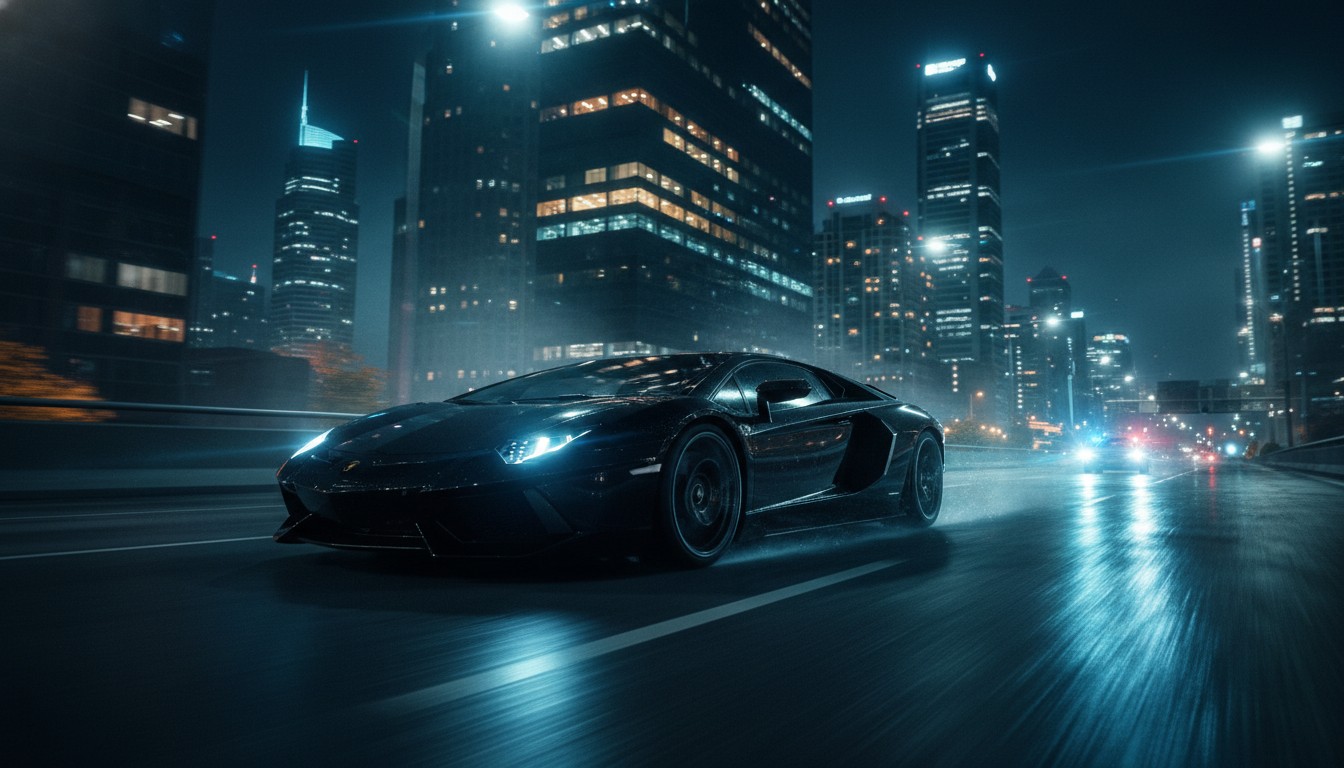
Need for Speed: Most Wanted VR
There’s a moment in Most Wanted where you’re doing 180 down a coastal highway, three cruisers on your bumper, and the sun is cutting through the Fairhaven skyline like a warning. In a headset, that moment should feel electric. And for about ninety seconds, it almost does.
Then your stomach reminds you that this game was never built for VR.
Need for Speed: Most Wanted is an injection driver job. VorpX takes the 2012 Frostbite build and forces stereoscopic 3D and head tracking into a game that was designed for a flat screen and a couch. What you get depends almost entirely on how much tolerance you have for the compromises that come with that approach.
Here’s the thing: Most Wanted is still one of the best arcade racers of its generation. Criterion’s open-world design, the Autolog rival system, the sense that Fairhaven is a city built purely for irresponsible speed — it all holds up. The problem isn’t the game. The problem is what happens when you strap it to your face.
The Reality of Injection
Full VR mode is technically possible. Head tracking maps to the camera, the world renders in 3D, and you can look around the cockpit. But the head tracking is imprecise — it converts movement to mouse input, which means small motions overshoot and large motions lag. At 150 miles per hour, that disconnect between where you’re looking and what the car is doing becomes a recipe for motion sickness. I don’t get sick easily in VR, and even I’d tap out after twenty minutes of aggressive driving.
The smarter way to play is cinematic or immersive screen mode. You sit in a virtual theater with a massive, curved 3D screen, and the game fills your vision without pretending your head is the camera. You lose the “being there” factor, but you gain stability. The 3D depth is still there — the road has layers, the city pops, the sense of speed translates better than you’d expect — and you can actually finish a race without reaching for a ginger chew.
The UI is the other landmine. Flatscreen HUDs don’t scale well in VR. Speedometers, minimaps, and menu text all sit at a fixed distance that can feel either too close or unreadable depending on your headset. The main menu and Autolog screens are functional but clunky. You will be leaning forward and squinting. There’s no way around it.
What Still Works
When the comfort issues settle, the core game shines through. Fairhaven is a playground. The handling model is loose and satisfying. Police chases escalate in ways that feel genuinely chaotic, and the billboards you smash through still land with that delicious crunch. In 3D, the sense of scale on jumps and near-misses with traffic is noticeably heightened. There are moments — threading between two trucks at full speed, watching a cruiser wipe out behind you — where the added depth makes the game feel bigger than it ever did on a monitor.
Performance is a concern. Stereoscopic rendering hits the GPU hard. If your system was already sweating to hold a stable frame rate in the flat version, adding VR will push it over the edge. The Frostbite engine is no lightweight, and VorpX adds overhead on top. You’ll likely need to pull settings back from whatever you’re used to.
What Doesn’t
No motion controls. Full stop. You’re playing with a gamepad or keyboard and mouse. Your hands don’t exist in the world. There’s no steering wheel presence, no gear shifting, none of the physicality that makes racing in VR compelling. You’re a passenger with a good view, not a driver in a car.
Stability is mostly fine but not bulletproof. The injection can conflict with other overlays or mods. Some users have reported issues with force feedback drivers interfering with VorpX profiles. It’s the kind of thing you troubleshoot on a Saturday afternoon, not the kind of thing you fire up for a quick race before dinner.
And the 2012 version specifically was a community effort. VorpX’s official list supports the 2005 Most Wanted natively. The 2012 Frostbite release needed a user-created profile to get functional. It works, but it doesn’t have the polish of an officially supported title.
The Call
If you already own Most Wanted from an old EA Play sub or a Steam sale, and you already have VorpX sitting on your drive, this is a fun curiosity. Load it up in cinematic mode, crank the 3D depth, and enjoy a few nights of nostalgic racing with a visual upgrade. It’s not a transformative experience, but it’s a good one.
If you don’t own either, don’t start here. VorpX is a paid driver that requires real technical patience. Most Wanted is an aging arcade racer that doesn’t need VR to justify itself. The intersection of those two facts is a narrow audience: people who already have both and are willing to tinker.
For everyone else, the best VR racing experience is still a native one. Most Wanted in VorpX is a novelty, not a destination. The city of Fairhaven is still beautiful. It just wasn’t built for your headset.