
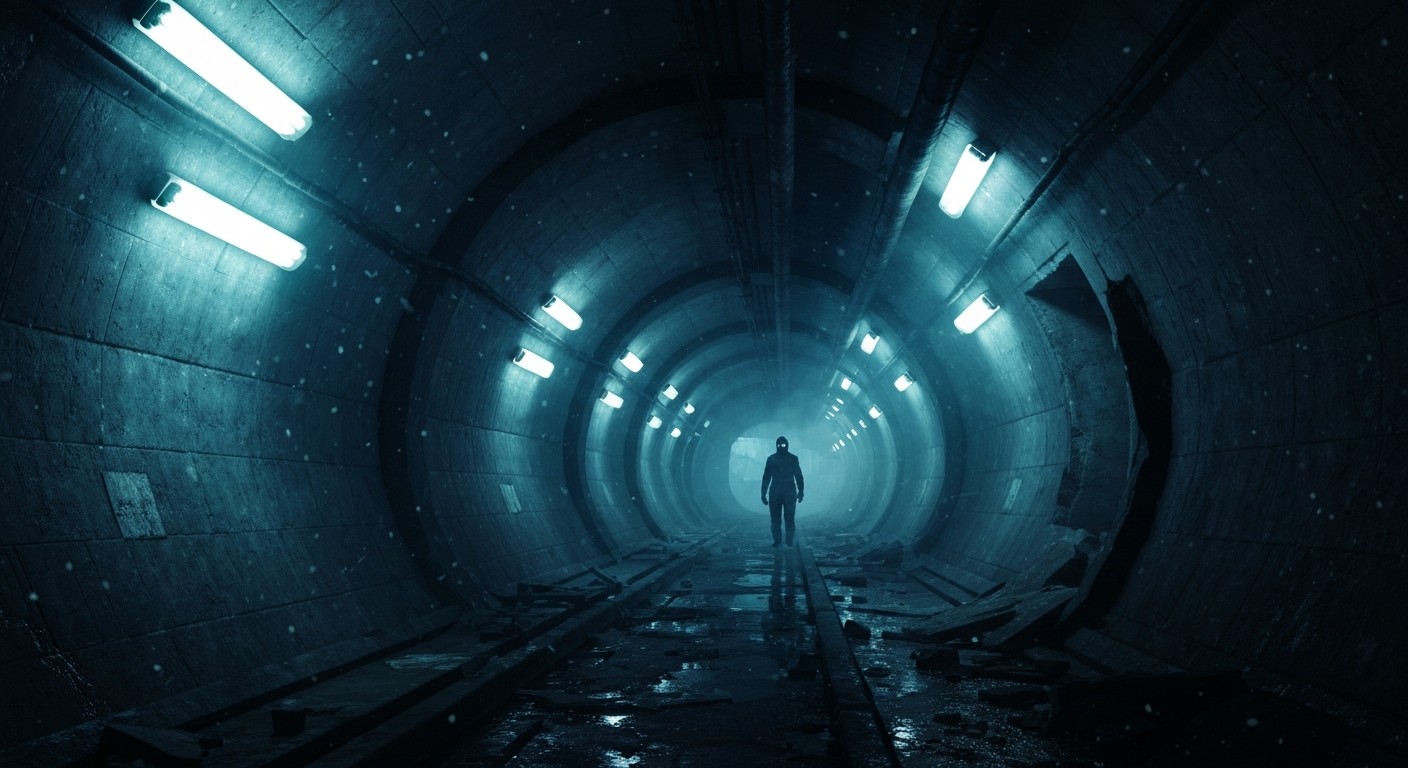
There’s a moment early in Metro 2033 where Artyom crawls through a collapsed tunnel, flashlight cutting weak beams through concrete dust and radiation, and you can hear something breathing in the dark that isn’t you. In flat-screen, it’s tense. In stereoscopic 3D with your head filling the viewport, it’s claustrophobic in a way that makes you physically aware of the headset pressed against your face — which, honestly, kind of helps.
This is the promise of Metro 2033 in VR: not a polished native port, not a community mod with hand-tracked weapons, but the original 2010 game fed through VorpX and given depth. For people who already own the injection driver and know what they’re getting into, it’s one of the more compelling arguments for the format. For everyone else, it’s a reminder that atmosphere travels better than mechanics.
What You’re Actually Getting
Metro 2033 has no official VR support. It runs on the 4A Engine, which means UEVR is outright incompatible — this isn’t an Unreal Engine game, and no community profile exists for the universal injectors. The only way to play it in a headset is through VorpX, a paid stereoscopic 3D driver that wraps the flat game in head tracking and depth.
VorpX has included a built-in profile for Metro 2033 for years. The original DX9 version works reliably with Geometry 3D mode, which renders actual stereoscopic depth rather than the cheaper Z-buffer approximation. The Redux version also functions, though it’s heavier on the GPU and more prone to shadow glitches in G3D. Either way, you’re looking at head tracking mapped to mouse look, a gamepad in your hands, and menus that remain stubbornly flat-screen and unreadable if you don’t memorize them first.
This is not a VR conversion. It’s a VR wrapper. The distinction matters.
What It Feels Like
The head tracking works — mostly. Aiming by looking feels natural after a few minutes of adjustment, with fine control handled by the right analog stick. The 3D effect pops hardest after running VorpX’s Direct VR Scan, which calibrates field of view and stereoscopy for the current scene. But the scan doesn’t persist across level loads, so every transition means a quick re-scan or you’re stuck with misaligned depth and a swaying horizon that will quietly ruin your evening.
Some users report a persistent minor tilt in head tracking that resists elimination. It’s not nausea-inducing for most, but it’s there, a faint sense that the world isn’t quite level. In a game built on unease, you could almost call it thematic. Almost.
The controls are the real friction point. Metro 2033’s mechanics demand a lot of buttons: flashlight, gas mask, charger, medkit, weapon swap, filter swap, stealth kill. An Xbox controller handles this fine. Mapped VR controllers do not — there simply aren’t enough inputs, and the game wasn’t built for spatial hand presence anyway. If you show up expecting to physically raise a gas mask to your face, you’ll be disappointed. If you show up expecting to creep through dark tunnels with a gamepad while your head does the looking, you’ll get what you came for.
Performance is where the original release shines. The 2010 build in DX9 with Geometry 3D runs efficiently enough that even mid-range hardware from a few years ago can push respectable resolutions. Redux asks more of your system, and the visual upgrade isn’t dramatic enough in VR to justify the extra heat. Stick with the original if your hardware has limits.
What’s Actually Good Here
The atmosphere. Full stop. Metro 2033 was already a masterclass in environmental storytelling — flickering fluorescent tunnels, gas-mask breathing amplified in your ears, surface expeditions where every step crunches through frozen ash. Stereoscopic depth doesn’t transform this so much as it intensifies it. The tunnels feel narrower. The surface feels vaster and more hostile. The Nosalises jumping out of vents actually startle you because the spatial depth sells the threat in a way flat-screen can’t.
It’s also one of the more stable VorpX profiles in circulation. The community has been running this since at least 2016, and by 2020 the consensus was that it worked “like a charm” for anyone who understood VorpX’s quirks. That longevity matters — this isn’t a profile that broke in a patch six months ago and nobody noticed.
What’s Frustrating
Everything injection-driver-generic. The menus are flat-screen and often unreadable in the headset. The HUD elements float at fixed depths that sometimes conflict with the world geometry. Level transitions break the Direct VR calibration and require manual re-scanning. There’s no hand presence, no physical reloading, no VR-native interactions — just a flat game viewed through stereo lenses.
The comfort profile is also worth considering. Traditional FPS movement in tight corridors with occasional scripted camera grabs and sprint sequences can hit sensitive stomachs. The darkness helps — there’s less visual motion reference to trigger disorientation — but this is still a fifteen-year-old shooter with legacy movement physics, not a VR-native locomotion system.
The Bottom Line
Metro 2033 in VR is a niche proposition for a specific kind of player. If you already own VorpX, already tolerate injection drivers, and want to experience one of the most atmospheric survival-horror shooters ever made with actual depth in the tunnels, this is worth the setup. The game holds up, the profile is stable, and the mood translates.
If you’re looking for motion controls, room-scale immersion, or a polished VR-native experience, this isn’t it. Metro Awakening exists now for that exact audience — built for VR from the ground up, with proper hand interactions and headset-native design. Metro 2033 through VorpX is something stranger and more limited: a time capsule of early-2010s horror design, given a second life in depth, but still fundamentally a flat game wearing VR goggles.
For the right person, that’s enough. For everyone else, it’s a cautionary tale about the gap between “works in VR” and “belongs in VR.”