
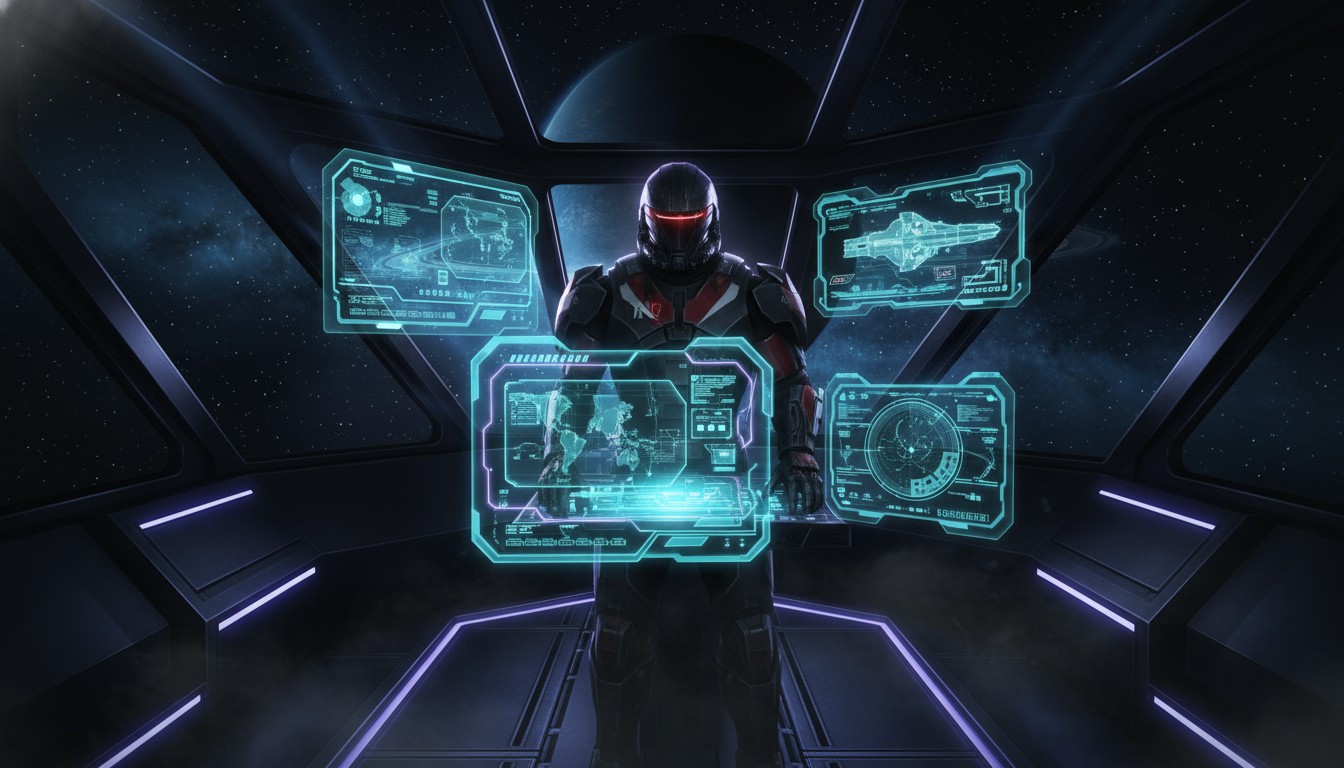
Mass Effect 2 VR
The first time I saw the Normandy’s cargo bay in stereoscopic 3D, I stopped walking. The overhead lights had depth. The crates cast shadows that felt like they existed. For a second, I forgot I was staring at a fifteen-year-old game through a $40 injection driver.
That second passed.
Here’s the thing about Mass Effect 2 in VR: it’s not a VR version of the game. It’s the same flat game you’ve already played, piped through VorpX, with 3D depth and head tracking bolted onto a camera system that was never designed for it. Sometimes that’s enough to make your jaw drop. Sometimes it’s enough to make you queasy. And sometimes — like during a cinematic conversation where the camera lurches to a dramatic angle while your head remains locked forward — it’s both.
What This Actually Is
There is no official VR support. There is no UEVR profile (Unreal Engine 3, not 4 or 5). There is no community mod with motion controls or rebuilt VR UI. The only way into Mass Effect 2 with a headset is VorpX, a paid stereoscopic driver that hooks the rendering pipeline and outputs head-tracked 3D.
VorpX provides two 3D modes: Geometry 3D, which reconstructs actual depth from the scene geometry, and Z-Normal, which fakes depth via a depth buffer. Geometry 3D looks dramatically better — Reapers actually loom, Citadel vistas feel vast — but it’s heavy on performance and notoriously unstable with the Legendary Edition remaster. Z-Normal is lighter and smoother but flatter, more like a pop-up book than a window into the world.
You also get a choice of display modes. “Immersive screen” projects the game onto a giant curved display in front of you, which is comfortable and readable but barely feels like VR. “Full VR” attempts to put you inside the camera, which is where the magic happens — and where the problems start.
How It Actually Plays
In full VR mode with a first-person mod installed, walking through the Omega markets feels genuinely transportive. Turian head prongs stick out in 3D. Neon signs hang at different depths. The scale of the environments — always a BioWare strength — finally lands the way it was meant to. I’ve seen users call it “like purpose-made VR,” and in those exploratory moments, I get it.
Then combat starts.
Mass Effect 2 is a cover-based third-person shooter. In flat, the camera hovers over Shepard’s shoulder, giving you situational awareness. In VorpX full VR with a first-person mod, you’re suddenly staring down iron sights with no body awareness, no snap-to-cover feedback, and no sense of where your squad is positioned. The community consensus is split: some people mod first-person for exploration and switch back to third-person for combat. Others just stick to third-person entirely and accept that they’re playing a 3D action RPG with a headset on rather than a VR shooter.
Either way, you’re playing with a gamepad or keyboard and mouse. There are no motion controls. No hand presence. You can’t point at a terminal to interact with it. You can’t physically reach for your omni-tool. The VR layer is purely visual — head tracking for camera control and stereoscopic depth. That’s it.
Conversations are locked. The game uses cinematic camera angles for dialogue, and VorpX can’t unlock your head during those sequences. You watch cutscenes the way the director intended — except now they’re wrapped around your peripheral vision and you can’t look away. Some of the more aggressive cinematic cuts, especially during loyalty missions, can be genuinely uncomfortable. I wouldn’t recommend this to anyone with even moderate VR sensitivity.
The Performance Lottery
The original 2010 release of Mass Effect 2 generally runs better in VorpX than the Legendary Edition remaster. That’s important because the Legendary Edition is what most people actually own now. Forum reports from 2023 and 2024 describe missing shadows in Geometry 3D mode, jumbled depth information, and severe FPS drops on AMD Radeon 6000-series hardware. NVIDIA cards fare better, but even then, Geometry 3D on the Legendary Edition is described as “much worse performance” compared to the original.
Z-Normal sidesteps some of this, but you sacrifice the depth quality that makes the VR layer worthwhile. And regardless of mode, you’ll likely spend your first session tweaking FOV, 3D strength, and display scale before anything feels right. VorpX has an in-game menu, which helps, but it’s still a tinkerer’s tool — not a plug-and-play experience.
Some users report drift issues that require re-centering every ten to fifteen minutes. Others get rock-solid tracking. Your mileage will depend on your headset, your GPU brand, and seemingly which phase of the moon you launched under.
What’s Good Here
When it works, it works. The 3D effect in Geometry 3D mode is striking — not subtle, not gimmicky, but genuinely transformative for a game this visually dense. Mass Effect 2’s art direction holds up, and seeing the Illusive Man’s office with actual depth, or watching a Reaper descend through cloud cover with stereo separation, is the kind of moment that justifies the hassle for a fan.
The story and pacing are, of course, untouched. This is still one of the best-written action RPGs ever made. The loyalty missions, the Suicide Mission tension, the Mordin singing — all of it plays exactly as you remember, just bigger and closer.
For players who have already beaten the game multiple times and want a fresh way to experience the world, the visual novelty is real. It’s not transformative in a gameplay sense, but it is transformative in a presence sense. You feel closer to the fiction.
The Caveats
There’s no getting around it: this is an injection driver experience, not a VR adaptation. No motion controls means no physical interaction. No VR UI means you’re reading flat menus through a headset lens, which is never comfortable. No comfort options means you’re at the mercy of the game’s original camera design, which includes smooth turning, dramatic angle cuts, and plenty of motion that was never checked for headset comfort.
The setup burden is real. VorpX costs money. First-person mods require Nexus Mods installation and can introduce instability. The Legendary Edition’s VorpX profile is less reliable than the original’s. And even when everything is configured, you’re still playing a third-person shooter that occasionally forces first-person perspective shifts without warning.
Head tracking for aiming is accurate but can lead to neck strain over long sessions. And because the game has no concept of a VR play space, you’ll be seated or standing in place the entire time — no room-scale, no physical dodging, no leaning around cover.
Who This Is For
If you’ve never played Mass Effect 2, play it flat first. The friction of VorpX setup, the comfort issues, and the lack of motion controls make this a terrible first impression for one of the best games of its generation.
If you’re a returning fan who wants to see the trilogy in 3D and doesn’t mind spending an evening on configuration, this is viable. Not essential. Not transformative. But viable, and occasionally genuinely impressive in its best moments.
If you’re looking for a native-quality VR RPG with hand tracking and room-scale combat, this is not that. It will never be that. BioWare has shown no interest in VR support, and the UE3 engine locks out the most promising community injection framework.
The honest bottom line: Mass Effect 2 in VR is a love letter written in duct tape. The depth is real, the scale is striking, and the game underneath is still a masterpiece. But the VR layer is a viewing enhancement, not a redesign. Come for the 3D, stay for the story you’ve already memorized — just don’t expect it to feel like it was built for the headset.