
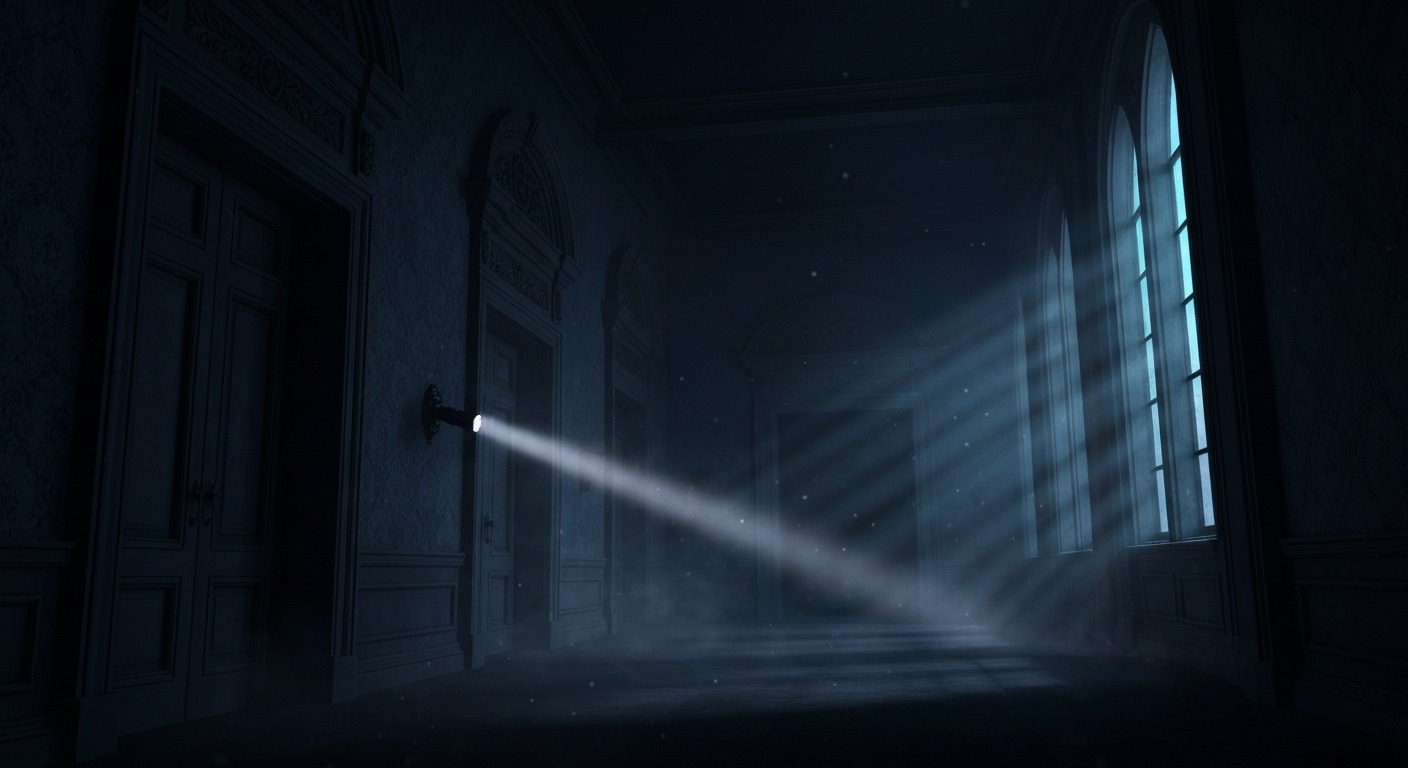
There’s a moment in Luigi’s Mansion — the real one, the 2001 GameCube launch title — where you open a door and the hallway beyond stretches into darkness. The flashlight beam cuts a narrow cone through the gloom. Somewhere ahead, a ghost giggles. In the original game, you saw this from a fixed camera, hovering behind Luigi like a helpful spirit. In VR, you are the helpful spirit. Or rather, with the right hacks, you are Luigi.
That hallway hits different in stereoscopic 3D.
The way to play Luigi’s Mansion in VR is through Dolphin VR, a fork of the Dolphin emulator that Nintendo Wire covered back in the summer of 2016. It added native stereoscopic rendering and head tracking for HTC Vive and Oculus Rift to a broad catalog of GameCube and Wii titles. The last meaningful update — version 5.0-250 — dropped on July 13, 2016. After that, the project went silent. It’s been sitting there ever since, a time capsule from first-generation PCVR.
So here’s what you’re actually getting: the full GameCube game running inside an emulator that pipes the framebuffer into your headset with genuine depth and head tracking. The mansion’s rooms, its dust-mote lighting, the way ghosts materialize out of the dark — all of it exists in real 3D space now. You can lean around corners. You can look up at chandeliers. The spatial presence transforms a game that was already strong on atmosphere into something genuinely uncanny.
But let’s be honest about the tradeoffs. This is emulation, not a native VR port. The UI is flat textures floating in 3D space. The camera system — originally designed for fixed third-person angles — can feel disorienting when your head is doing the looking. Dolphin VR includes Action Replay culling codes for various games to fix rendering glitches that show up in stereoscopic mode, and Luigi’s Mansion benefits from those fixes, but it’s still a 2001 game wearing VR like a costume.
For the truly committed, the community has built first-person camera hacks that shift the viewpoint into Luigi’s actual eyes. Beardo Benjo’s 2022 video shows what’s possible: walking through the mansion in first-person, vacuum raised, peering into dark rooms. It looks incredible in brief bursts. It also breaks the game’s carefully tuned camera logic. Rooms designed for fixed angles become disorienting labyrinths. Combat tuned for a pulled-back view becomes awkward at arm’s length. It’s a novelty, not a replacement.
Controls are where the illusion frays most. Dolphin VR supports motion data bridging via the DSU protocol — tools like DorsalVR can pipe XR controller tracking into the emulator — but there’s no native motion control integration. You’re mapping gamepad inputs or keyboard and mouse to a game that never anticipated either. The vacuum trigger maps to a button press. Aiming the flashlight is right-stick territory. It works, but it never feels like the game was built for your hands.
Performance, at least, is forgiving. GameCube emulation is not demanding by modern PC standards. Even the hardware of 2016 could push Luigi’s Mansion at solid frame rates in VR. On a contemporary mid-range system, it’ll run without breaking a sweat. The bigger concern is compatibility: Dolphin VR predates modern headset runtimes. Getting it running on current headsets means wrestling with SteamVR legacy modes or OpenComposite workarounds. It’s doable. It’s also exactly the kind of software archaeology that either excites you or sends you back to the store page for something that just works.
So who is this for? If you have Dolphin VR already configured, a ripped copy of the game, and a tolerance for abandoned tooling, the mansion in stereoscopic 3D is a genuinely memorable experience. The atmosphere holds up. The ghost-hunting loop — flash, vacuum, reel — translates surprisingly well to VR presence. It’s a two-hour game that justifies an afternoon of tinkering.
If you’re looking for polished VR horror, though, this isn’t it. The Dark Pictures Anthology, Resident Evil 4 VR, even Phasmophobia — all of them offer native VR experiences without the emulation baggage. Luigi’s Mansion in VR is a curiosity, a nostalgia trip with real spatial payoff, but it’s not competing with modern VR titles on their terms.
I keep coming back to that hallway. The flashlight beam cutting through darkness. The ghost’s giggle somewhere ahead. In 2001, it was charming. In VR, even through the cracks of an abandoned emulator, it’s something closer to magic. Just know that the magic requires work.