
The phrase gets thrown around a lot in VR: “it’s like playing it for the first time again.” Usually that’s just enthusiasm talking. But the Half-Life 2 VR mod actually delivers on the promise. It doesn’t merely adapt a classic—it transports you back to 2004, when this game rewired what first-person shooters could be, only now you’re physically standing inside it. The time machine metaphor isn’t hype here. It’s literal: you’re experiencing a twenty-year-old game through technology that didn’t exist when it was made, and the dissonance somehow collapses into something that feels both familiar and newly possible.
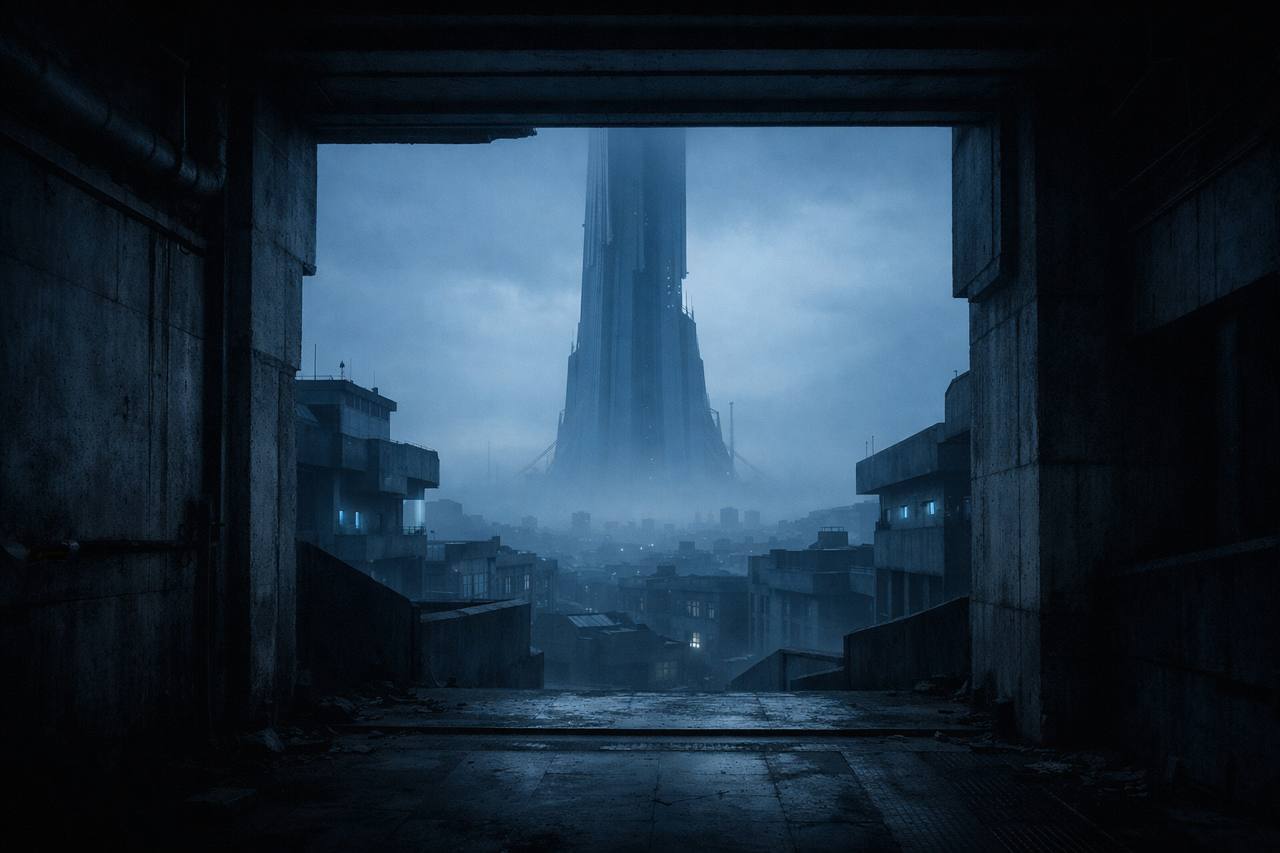
There is a moment, early in the mod, when you step out of Dr. Kleiner’s lab and into the train yard beyond. The Citadel is visible in the distance, shrieking and shifting, its exterior panels sliding open against a gray sky. You were never meant to see it like this. This game was built for CRT monitors and mouse-and-keyboard, released two decades before anyone thought consumers would strap screens to their faces.
And yet here it is. Here you are.
The Source VR Mod Team released this conversion in September 2022, after roughly a decade of on-and-off development that started with a Sony HMZ-T1 headset and some hacked-together motion tracking. What exists now is something that shouldn’t feel as coherent as it does: a full room-scale VR implementation of Valve’s 2004 masterpiece, complete with manual reloading, two-handed weapon stabilization, and physics that somehow hold up when you’re physically twisting your wrists to angle a gravity gun shot. This is not an injection driver or a framework hack. It is a ground-up reimplementation of the game’s input, rendering, and interaction systems for VR, with motion controls, manual reloading, physics interactions, and the complete campaign playable from start to finish. The team has since added Episode One and Episode Two, also free, also complete. This is not a tech demo or a proof of concept. It is a finished product.
The mod is free on Steam if you own Half-Life 2—not family-shared, actually owned. It installs like any other Steam game and launches through SteamVR. Over 7,600 reviews with a 98% positive rating suggest something rare in the flat-to-VR space: a project that actually shipped complete.
What strikes you first is the scale. The opening G-Man sequence, with its abstract imagery flashing inside his silhouette, gains actual dimensionality. You can peer into the spaces that were previously just layered 2D effects. City 17’s architecture—those brutalist tower blocks and canal systems—feels architecturally coherent in a way that flat screens couldn’t quite convey. The verticality matters when you can physically look up.
The Civil Protection officers are shorter than you might expect. This is a small thing, but it changes the tone of every encounter. These gas-masked enforcers were intimidating on a monitor. In VR, with proper depth perception, they’re oddly compact. The menace becomes almost comical until one hits you with a stun baton and the audio-spatial feedback makes you flinch hard enough to smack furniture.
The weapon handling borrows liberally from Half-Life: Alyx’s design language. There’s a radial weapon wheel for selection. Reloading requires ejecting magazines and grabbing fresh ones from your shoulder. You can stabilize two-handed weapons by physically gripping the forward pump or barrel with your off-hand. It’s not as polished as Alyx—some animations are missing, and the hands can disappear when holding certain objects—but the core loop works. The 9mm pistol feels natural to aim one-handed. The crowbar, swung with actual arm motion, connects with manhacks in a way that reportedly earns “Zone Minutes” on fitness trackers.
The physics are the real star. Half-Life 2’s physics engine was groundbreaking in 2004, but in VR it becomes something else entirely. You can pick up objects, rotate them, examine them from angles, and launch them with the gravity gun while physically positioning your body for line-of-sight. Most native VR games don’t offer this degree of environmental interaction. The fact that it works in a twenty-year-old game designed for entirely different input methods is genuinely surprising.
But the physics also expose the age of the assets. Textures that looked fine on a 1080p monitor show their limitations when examined up close in a headset. This is still fundamentally a 2004 game. Whether that’s charming or distracting depends on your tolerance for retro aesthetics.
And here’s the specific imperfection that breaks the illusion: the hand animations are incomplete, and the gaps are jarring. When you grip certain props or use specific weapons, your virtual hands simply disappear and reappear in abstract poses. It’s a small thing, happening at the periphery of your vision, but VR is unforgiving about hands. We’re wired to notice them. The absence of proper finger articulation—of seeing your grip adjust to different objects—reminds you constantly that this is a conversion, not a native VR experience. The mod team has it on their public roadmap, but for now, it’s a visible seam.
The comfort issues are real and worth taking seriously. The airboat and buggy sequences—lengthy vehicle sections where you’re moving at speed through twisting environments—remain challenging even with the mod’s comfort options enabled. The team has implemented third-person vehicle cameras, decoupled camera control, and view smoothing to filter out bumps and shakes. These help. They don’t fully solve the problem. If you’re prone to motion sickness in VR, these sections may require breaks or tolerance-building.
There’s no teleport movement option, only smooth locomotion with snap or smooth turning. This is a design choice that prioritizes immersion over accessibility. It means the mod requires “VR legs”—the acquired tolerance for artificial movement that prevents nausea. New VR users should approach with caution.
Performance is another variable. The Source engine is single-threaded and DirectX 9, which the team has worked around with a DXVK implementation. Users meeting minimum requirements report stable performance, but the experience improves significantly with hardware that exceeds those minimums.
What stays with you, though, isn’t the technical implementation. It’s the social dimension that VR adds to a famously silent protagonist.
Gordon Freeman never speaks. But in VR, you can nod. You can wave. You can give a thumbs-up to Dr. Kleiner when he’s excited to see you, or shake your head at NPCs who are talking nonsense. These aren’t mechanics listed on the back of the box, but they change the tone of the entire game. Characters look at you at eye level. The simple head animations and hint-of-life in the character models—primitive by modern standards—somehow cross the uncanny valley when you’re standing in the same virtual space as them.
You become a tourist in a place you thought you knew. Players report spending time just leaning into walls, examining posters, watching dropships circle tower blocks. The horror of Ravenholm hits differently when you’re physically inhabiting the space. The gravity gun acquisition—one of gaming’s great power moments—feels earned when you’ve physically manipulated the environment to survive.
The mod covers the full trilogy: Half-Life 2, Episode One, and Episode Two. All free. All requiring only base game ownership. The Steam distribution model means updates arrive automatically, and the team maintains a public roadmap for remaining features like full hand animations. The project is mature, actively maintained, and has the user volume to surface genuine problems quickly.
This is the part where we note what hasn’t been personally tested. We haven’t run the airboat sequence to verify the comfort options. We haven’t checked performance on minimum-spec hardware. We haven’t confirmed the controller binding issues some users report with non-Index headsets. But the documentation and community consensus are clear enough to be confident in the assessment.
There’s a temptation with flat-to-VR conversions to grade on a curve. To say “for a mod, it’s impressive” as if that qualifier excuses rough edges. The Half-Life 2 VR mod doesn’t need that charity. It stands on its own as a complete, playable, genuinely transformative way to experience one of the most influential games ever made.
Half-Life 2 is not just one of the best first-person shooters ever made. It is one of the best games ever made, full stop. Its pacing, environmental storytelling, physics-driven design, and world-building remain unmatched two decades later. The campaign is tight. The set pieces are iconic. The gravity gun is still one of gaming’s most satisfying tools. Nothing about the underlying game has aged out of relevance.
The VR implementation takes a game built for CRT monitors and mouse-and-keyboard and makes it feel native to hardware that didn’t exist when the original code was compiled. Manual reloading, two-handed stabilization, room-scale physics interaction, and the complete campaign playable end-to-end—this is not a project that proves potential. It proves completion. The missing hand animations, occasional texture blur, and vehicle comfort issues keep the VR implementation from a perfect score, but they do not diminish what has been achieved. This is the standard against which every flat-to-VR conversion is measured.
Is it perfect? No. The vehicle sections are demanding, the textures show their age, and some animations remain placeholder. But the core experience—being physically present in City 17, manipulating its physics with your own hands, nodding at characters who look back at you—is something that didn’t exist two decades ago and couldn’t have been predicted.
The mod team didn’t just port a game. They built a time machine that works.
This isn’t just the best flat-to-VR conversion available. It’s the argument for why flat-to-VR conversion matters at all. Most projects in this space prove that dedicated fans can jury-rig room-scale support into games never designed for it. The Half-Life 2 VR mod proves something harder: that a two-decade-old game’s design can survive the translation and remain not just playable, but relevant. The physics puzzles still work. The pacing still holds. The environmental storytelling—those graffiti-stained corridors, those overheard Citizen conversations—lands with new weight when you’re standing in them.
What it proves about possibility is simple and substantial: VR doesn’t just need new games built for the medium. It needs a backward-compatible imagination. That’s not nostalgia. That’s technical archaeology with playable results.
If you own Half-Life 2 and a VR headset, this is essential. Not interesting. Not worth trying. Essential. The missing hand animations and the occasional texture blur don’t diminish what this achieves. They mark it as a conversion, yes—but one that renders the distinction irrelevant the moment you step onto that first train platform and look up at the Citadel’s sickly glow.
The flat-to-VR landscape is crowded with projects that demonstrate potential. This one demonstrates completion. Play it.