
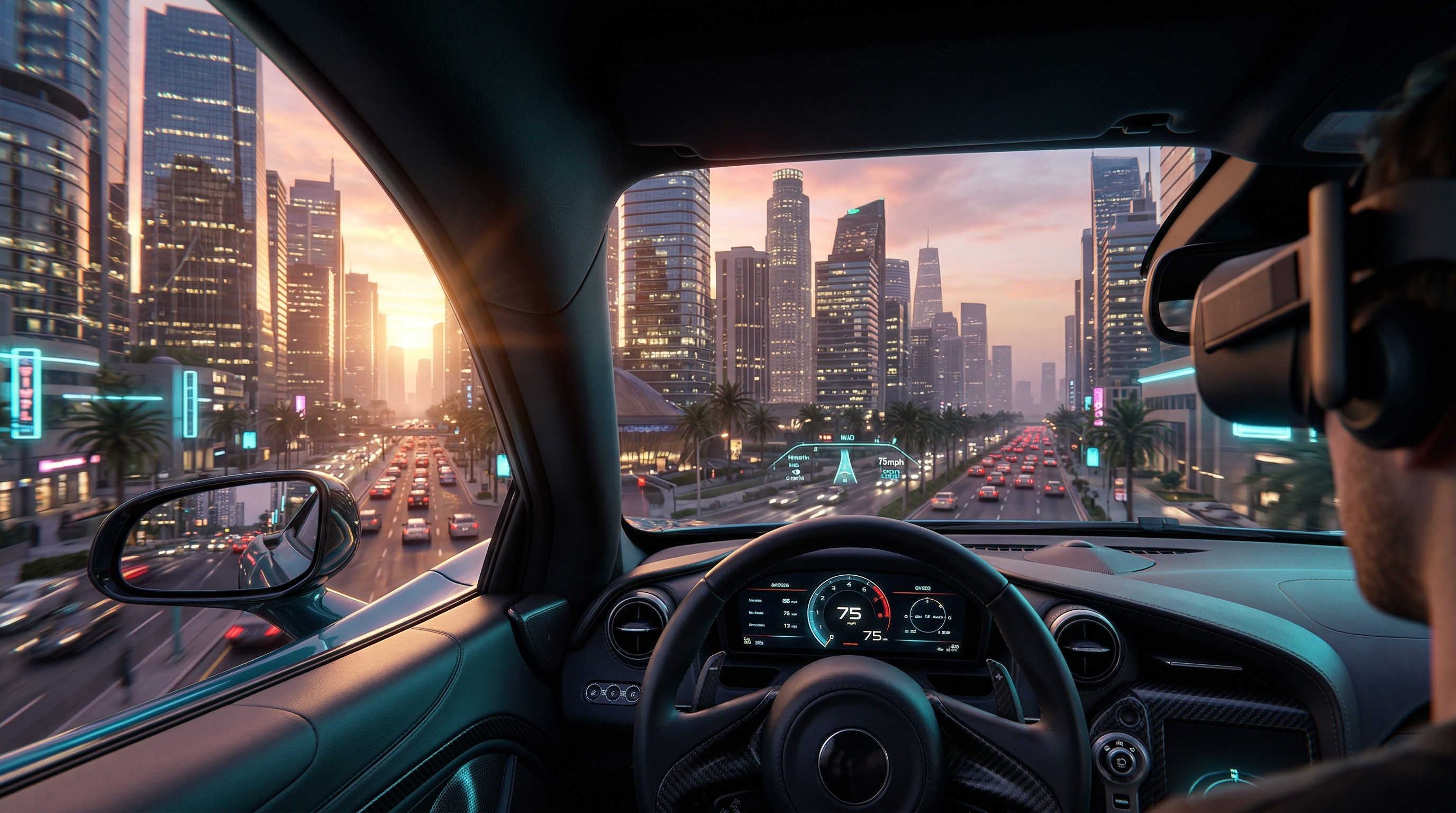
Grand Theft Auto V in VR: The Mod That Proved It Could Work
There are VR mods that feel like experiments, and then there are VR mods that feel inevitable. The Luke Ross R.E.A.L. injection for Grand Theft Auto V falls somewhere in between—technically impressive, genuinely transformative, and frustratingly precarious all at once. What you get is nothing less than one of the largest, most detailed open worlds ever built, suddenly filling your field of view. What you give up is stability, simplicity, and any illusion that this was meant to work this way.
What This VR Option Actually Is
The R.E.A.L. VR mod is an injection driver developed by Luke Ross that converts GTA V’s standard first-person and third-person camera into a fully head-tracked VR experience. It does not transform the game into a native VR title—there are no motion controls, no hand presence, no redesigned UI, and no VR-specific interactions. What it does provide is stereoscopic 3D rendering and full six-degrees-of-freedom head tracking, effectively turning your headset into a viewport into Los Santos.
This is important to understand: you are still playing GTA V as it was designed, just through a VR viewport. The game expects a gamepad. It expects seated play. The UI elements float in space rather than wrapping around your vision. There is no physical crouching, no manual reloading, no hand-based driving. If you go in expecting Half-Life: Alyx with a crime story, you will be disappointed.
The mod was effectively abandoned in July 2022 after Take-Two Interactive issued a DMCA takedown notice. Ross removed GTA V support from his Patreon and ceased all development. While other titles in his R.E.A.L. suite have since been released for free, GTA V remains excluded from that offering. Community workarounds exist to keep the mod functional, but there is no official support, no updates, and no guarantee that future game patches won’t break compatibility entirely.
How It Plays
Controls
You will need a gamepad. The R.E.A.L. mod has no motion controller support—Ross designed his injection drivers specifically around gamepad play, arguing that complex AAA titles are better suited to traditional input than to the limited button sets of VR controllers. In practice, this means playing GTA V in VR feels much like playing it on a monitor, except your head controls the camera and aiming.
Head-gaze aiming works surprisingly well for shooting, creating a natural pointing mechanic that feels more intuitive than right-stick aiming. For driving, the head tracking provides genuine cockpit presence—you’re physically looking around the vehicle interior, checking mirrors, glancing at the dashboard. It adds a layer of immersion that flat-screen driving simply cannot replicate.
However, the game still takes control of the camera during cutscenes, certain animations, and scripted sequences. These camera movements can be disorienting in VR—sudden perspective shifts that your vestibular system did not request.
Comfort
This is where the experience divides players. GTA V was not designed for VR, and it shows. The driving model in particular can induce motion sickness: the subtle bumps, camera shakes, and rapid direction changes that feel fine on a monitor become physically uncomfortable in a headset. Even experienced VR users report that extended driving sessions require breaks.
The first-person mode is generally more comfortable than third-person, as it maintains a consistent camera reference point. Third-person camera movement—especially during combat or when the game automatically pulls back for context—can feel like being dragged around on a string.
Players sensitive to motion sickness should approach with caution. The mod offers no comfort vignetting, no teleport locomotion, no snap turning. This is full smooth locomotion in a game that was never intended for it.
Performance
GTA V was famously well-optimized for its era, but “well-optimized for 2015” and “well-optimized for VR” are different categories. Running Los Santos in stereoscopic 3D at high refresh rates demands significant hardware. Players report that mid-range cards can handle the mod at reduced settings, but a smooth, comfortable experience—particularly for driving and action sequences—benefits from high-end hardware.
Expect to lower graphical settings from your standard flat-screen preferences. Shadows, reflections, and post-processing effects are the first casualties for maintaining stable frame times. The mod also works best with specific older game versions, meaning you may need to roll back from current builds and block Rockstar’s update mechanism.
Stability
The mod’s abandoned status is not merely academic. Each Rockstar update risks breaking compatibility, and without active development, fixes are community-driven. Players have developed workarounds—downgrading game versions, bypassing launcher integrity checks, using specific ScriptHookV builds—but these are patches upon patches. The experience is functional, but fragile.
Online play is not possible with the mod installed, and attempting to connect to GTA Online with modified files risks bans. This is strictly a single-player experience.
What Works Well
The sense of scale is undeniable. Los Santos and Blaine County were already impressive on a monitor, but seeing them in true stereoscopic depth transforms the world. Skyscrapers tower. Mountains loom. The desert stretches endlessly. It is one of the largest, most detailed spaces available in VR, and that has genuine value.
The story campaign translates well to the format. The narrative pacing, the mission variety, the sheer density of content—there are dozens of hours here that simply do not exist in native VR open-world titles. If you want to experience a AAA crime epic in virtual reality, this is effectively your only option.
The driving, when it works, is genuinely special. The cockpit perspective, the sense of speed, the physicality of weaving through traffic—it captures something that dedicated VR racing games struggle to match because those games lack the urban context. A high-speed chase through downtown Los Santos in VR is adrenalizing in ways the flat version cannot replicate.
What Doesn’t Work
The lack of motion controls is a persistent limitation. Interactions that would feel natural with hand presence—opening car doors, handling weapons, melee combat—remain button presses. After experiencing native VR shooters, returning to gamepad aiming feels like a step backward, even with head-tracking assist.
The UI is a constant reminder that this was not built for VR. Menus float in space, sometimes at uncomfortable distances. Text that was readable on a monitor becomes eye-straining in a headset. The phone interface, crucial to the game’s mission structure, is particularly awkward.
The motion sickness risk is real and not to be underestimated. This is not a “build your VR legs” recommendation—this is a “know your limits” warning. The combination of driving, shooting, and the game’s occasional camera seizures creates genuine physical discomfort for susceptible players.
Who This Is For
Good for:
- VR enthusiasts with strong stomachs and high-end hardware
- Players who value open-world scale over polished VR interactions
- Those willing to tinker with version management and mod installation
- GTA V fans who want to experience the campaign from a new perspective
- Players comfortable with gamepad-driven VR
Not for:
- VR newcomers or those sensitive to motion sickness
- Players expecting native-quality VR interactions
- Those who want a simple, stable setup
- Anyone unwilling to downgrade game versions or block updates
- Players seeking multiplayer functionality
The Verdict
Tier: B
Game Quality: A Grand Theft Auto V is one of the most accomplished open-world games ever created. The density of content, the quality of the narrative, the sheer scale of the world—it remains a landmark achievement. None of that changes in VR. If anything, the game’s strengths shine brighter when experienced at true scale.
VR Implementation Quality: C The R.E.A.L. mod provides the basics—stereoscopic 3D and head tracking—but stops there. No motion controls, no VR-native UI, ongoing stability concerns, and abandoned development status limit its technical achievement. It works, often impressively so, but it always feels like a workaround rather than a true integration.
Overall Tier: B This is a compromised experience that delivers something genuinely unique. You do not play GTA V in VR because it is the best VR experience available; you play it because it is the only way to experience this specific game in this specific way. The setup burden, comfort challenges, and abandoned status are significant caveats. But for the right player—someone with the hardware, the patience, and the stomach—the reward is one of the most ambitious VR experiences available: a full-scale open world with dozens of hours of narrative content, playable today, in true stereoscopic depth.
It is not for everyone. It is arguably not for most. But for those it is for, there is still nothing else quite like it.