
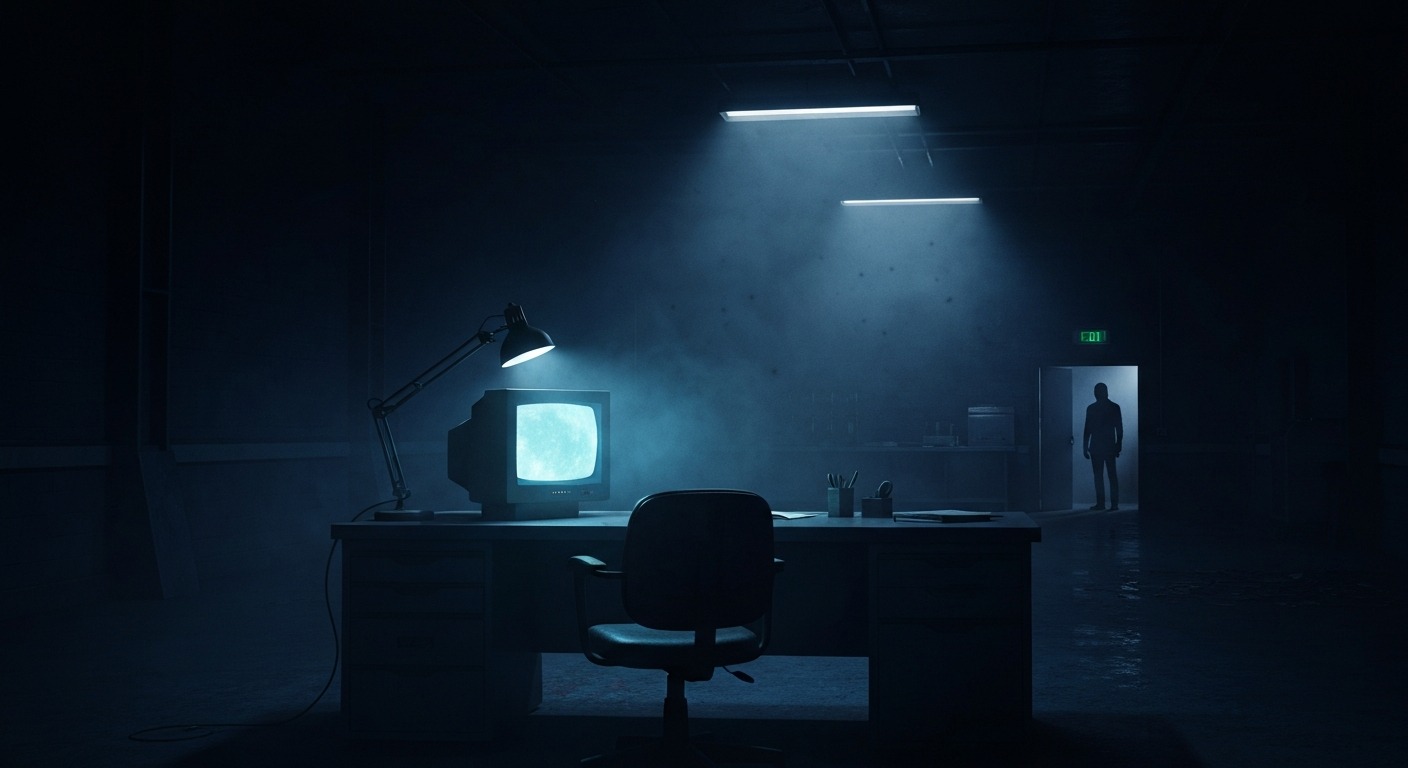
There is a moment in Five Nights at Freddy’s VR: Help Wanted when you realize the mask in your virtual hand isn’t just for show. You pull it up, hold your breath, and wait while something with too many teeth and not enough lubricant stands inches from your face. It is a cheap horror trick, executed with the kind of physical immediacy that only VR can deliver, and I absolutely fell for it every single time.
This is a native VR title from Steel Wool Studios and Scott Cawthon, built in Unreal Engine 4, released on May 28, 2019 for PCVR and PSVR. The design assumes you are standing or sitting inside a dark room with motion controllers. The VR version is the game. The flat mode — added as a free update in December 2019 — is the concession, not the core.
What It Actually Is
Help Wanted is an anthology of minigames drawn from the first six years of Five Nights at Freddy’s. You get simplified VR recreations of FNaF 1 through Sister Location, plus original challenges built for the format. The twist is that you do it with your actual hands in a 3D space, and the animatronics are now life-sized.
The scale change is the most devastating thing VR adds. In the flat-screen games they are pixelated figures in dark hallways. In VR, Chica is eight feet tall and her jaw is wide enough to fit your head. When Bonnie leans into your office, you see the wear on his suit, the dead gleam in his eyes, and the specific angle at which his neck bends wrong. They stop being sprites on a monitor and become objects standing over you.
The physicality is what sells it. Pulling a lever, turning a key, pressing a button, yanking a mask over your eyes — these small interactions force you to be present. Jumpscares that would be routine on a flat screen become startling because the thing lunging at you is doing it from your actual peripheral vision.
Some of the strongest original minigames push that physicality further. In Parts and Service you reach in to remove eye housings and replace circuitry while trying not to trigger a springlock failure. It is a horror-themed VR puzzle box: follow instructions under pressure, or fail and take a face full of endoskeleton. In Vent Repair you crawl through ventilation systems solving pipe puzzles while listening for something moving in the dark. It uses the claustrophobia of VR spaces better than most dedicated horror titles: metal tube, dim flashlight, audio that makes every creak sound like it is happening inside your own skull.
Comfort is better than you might expect. Most minigames are stationary or seated-friendly, with no free locomotion, no sprinting, and no artificial turning. The intensity comes from atmosphere and surprise, not from your stomach. The only caveat is the PSVR2 Full Time Edition, which lists a 2m × 2m roomscale requirement. Even there, the actual gameplay is still mostly static.
The Platform Question
Because this is a native VR game across multiple platforms, the real decision is where to buy it.
PCVR is the reference version. Buy it on Steam and it just works with any SteamVR/OpenXR headset. Visual fidelity is the highest here, load times are short, and mod support exists. If you already have a PCVR setup, this is it.
Quest is the most accessible version. Released on July 16, 2020, it runs standalone with no PC. The graphics are pared down compared to PCVR, but the core scare design is identical. For a game this reliant on audio cues and timing, the downgrade barely matters.
PSVR2 is the best console version, released as the Full Time Edition on November 21, 2023. It includes the Curse of Dreadbear DLC and benefits from modern displays, haptics, and tracking. The roomscale requirement is technically listed, but the game rarely asks you to move around much. If you are a console-first VR owner, this is the version to get.
PSVR on PS4 is still playable but firmly legacy. Tracking, resolution, and controller limitations make it the weakest official VR option. PICO got the game on October 19, 2023, and functions as a Quest equivalent, though the audience and store visibility are smaller.
What Holds It Back
The biggest weakness is repetition. The minigames are mechanically thin, and after a few hours the structure feels familiar: survive the night, unlock the next challenge, repeat. The horror works because of immediacy, not depth, and that immediacy can wear thin if you try to marathon it.
Platform parity is uneven. The Quest port is a technical compromise, and while the scares survive, the atmosphere takes a visible hit. The PSVR2 port is much stronger, but it arrived four and a half years after the original. That explains why Help Wanted lands at B-tier: the VR implementation is excellent, but the game underneath is a collection of short, similar experiences rather than a world you want to live in.
Mods, Injectors, and Why You Can Ignore Them
There is no meaningful “flat-to-VR” route because the game is already VR. UEVR could inject the non-VR version, but that would be a deliberately worse version of an experience that already exists natively. VorpX does not list the game, and community mods like Help Wanted + are content expansions, not a way to enable VR. Emulators are not applicable.
If you are researching how to play this game in VR, the answer is: buy the native version for your headset. That is the whole guide.
The Bottom Line
Five Nights at Freddy’s VR: Help Wanted is the best argument for why horror and VR belong together. It is not the deepest game, and it is not the prettiest on every platform, but it understands exactly what makes VR scary: scale, proximity, and the fact that you cannot look away without physically turning your head. For anyone who owns a VR headset and can handle a jump scare, it is an easy recommendation. Just pick the native version for your platform and don’t waste time trying to mod a flat game that already does the job better itself.