
Euro Truck Simulator 2 VR: The Long Haul Finally Comes to VR
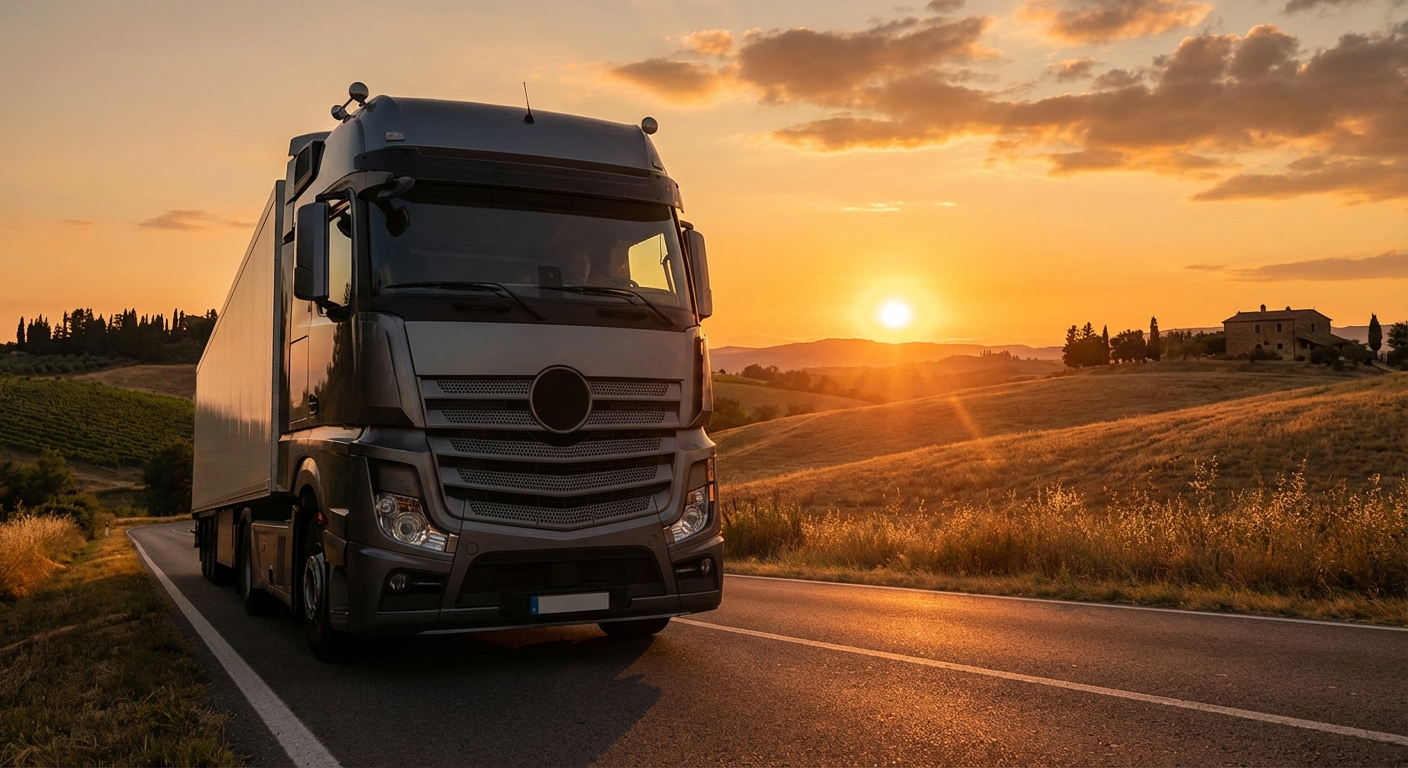
There is a particular calm that settles over you when you’re piloting forty tons of cargo down an empty stretch of European motorway at dusk. The rhythm of the engine, the sweep of the headlights across wet tarmac, the knowledge that Stuttgart is still two hundred kilometers away. Euro Truck Simulator 2 has always been a meditative experience—a game about patience, precision, and the strange satisfaction of doing a job well.
In VR, that calm becomes something else entirely. You’re no longer watching a truck from a camera floating behind the cab. You’re sitting in the driver’s seat. You can lean forward to see the instrument panel clearly. You can glance up at the sun visor. You can check your mirrors with a turn of your head that feels natural because it is natural.
SCS Software’s official VR support—technically still labeled “experimental” despite being available since 2017—transforms one of Steam’s most enduring simulation hits into something that feels purpose-built for the format. This isn’t a mod. This isn’t a workaround. This is the developer committing to VR as a first-class platform, and the result is a driving experience that makes the flat version feel like a distant cousin.
What the VR Implementation Actually Is
ETS2’s VR support is distributed through Steam as a separate beta branch. You’ll need to own the base game, then opt into the VR beta from the properties menu. Since version 1.50, SCS has added native OpenXR support via launch options, though SteamVR mode remains available for those who prefer it.
This matters because OpenXR generally offers better performance and broader compatibility with headsets that aren’t natively SteamVR devices. Quest users via Quest Link or Virtual Desktop often report smoother experiences with the OpenXR path.
The implementation provides full stereoscopic rendering, head-tracked camera, and proper world scale. You’re seated in the cab with correct proportions. The windshield frames your view like a real windshield. When you look left, you see the passenger seat and side window. When you look down, you see the shifter and pedals.
The Driving: Immersive and Demanding
The core revelation of ETS2 in VR is spatial awareness. Judging distances to other vehicles becomes intuitive in a way that flat screens simply cannot replicate. You can tell when that Italian truck is cutting you off before you’d even see the indicator in the flat version. Merging onto the autobahn feels appropriately stressful—you’re acutely aware of how much metal you’re piloting and how fast that Audi is approaching.
Night driving, in particular, benefits enormously. Your headlights cast actual light that you can track across the road surface. Oncoming traffic creates glare and shadow in ways that feel physically present. Rain and weather effects gain dimensionality. A thunderstorm in VR is genuinely disorienting in a way that flat ETS2 never managed.
The game’s simulation depth—all those modeled truck systems, the air brake pressure, the differential locks—takes on new meaning when you’re physically present in the space. You find yourself checking mirrors more often. You notice when the trailer sways. You become the kind of conscientious driver the game always wanted you to be.
Controls: Where VR Meets Reality
Here is where we need to be blunt: ETS2 VR does not support motion controllers. There is no virtual steering wheel you can grab with VR hands. There are no tracked pedals. The game expects physical input devices—a steering wheel and pedals are strongly recommended, with a gamepad as a functional but compromised fallback.
This is not a bug or oversight. It’s a design decision that reflects the simulation audience SCS serves. ETS2’s playerbase is heavily invested in racing wheels, H-shifters, and button boxes. The VR implementation assumes you’re bringing that hardware to the experience.
If you have a wheel and pedals, the VR integration is seamless. You can see your virtual wheel turn as you turn your physical one. The disconnect between virtual and physical hands is less jarring than you might expect because you’re typically looking at the road, not your hands. Menu interaction, however, becomes a blind exercise—you’re operating UI elements by memory while wearing a headset.
If you’re attempting to play with a gamepad, the experience is functional but notably less convincing. The right stick handles steering, which works fine but removes the tactile feedback that makes driving simulation compelling.
Comfort and Performance: The Real Challenges
ETS2 VR is, by the standards of modern VR experiences, extremely demanding. The underlying game engine dates back to 2012 and was not designed with VR performance budgets in mind. Users report that even powerful hardware—RTX 3070s and above—struggles to maintain consistent 90fps without substantial settings compromises.
Common optimization recommendations include reducing vegetation detail to Low, lowering mirror resolution, using single-pass rendering where available, and aggressive supersampling adjustments.
Reprojection and motion smoothing become facts of life for many users. If you’re sensitive to ASW artifacts or dropped frames, ETS2 VR may be uncomfortable regardless of your hardware investment.
On the comfort front, however, ETS2 VR is unusually forgiving. You’re seated in a cockpit. There’s no artificial locomotion beyond the vehicle’s own movement. The camera is stable and horizon-locked. Users report long sessions—two hours or more—without significant discomfort, provided their hardware maintains stable framerates. This is a rare case where VR might actually be more comfortable than other titles because the real-world experience (sitting in a truck cab) maps so cleanly to the virtual one.
Completeness: The Full Trucking Life
ETS2 VR is not a tech demo or limited mode. It is the complete game. Every map expansion, every DLC truck, every cargo type, every feature of the career mode—all of it works in VR. The multiplayer mode (World of Trucks) functions normally. Mod support, including the massive ProMods map overhauls and truck modifications, loads and operates as expected.
This is a significant achievement. SCS Software continued supporting VR through years of base game updates, engine changes, and expansion releases. The company has not treated VR as a checkbox feature to be abandoned.
That said, the “experimental” label still applies. Users report occasional issues: UI elements that render at uncomfortable distances, occasional shadow rendering oddities, and the ongoing performance concerns mentioned above. These are irritations rather than blockers, but they remind you that VR remains a secondary platform for SCS despite their commendable commitment.
American Truck Simulator: The Sibling
A note for completeness: American Truck Simulator (ATS) uses the same engine and received VR support in the same update. The implementation is functionally identical. If you’ve read this review wondering about ATS, the same judgments apply. The only difference is scenery—Nevada highways versus German autobahns—and that distinction matters less in VR than you might expect. The cab experience dominates.
The Bottom Line
Euro Truck Simulator 2 VR is one of the most compelling arguments for VR in the simulation space. The core experience—long-haul trucking across detailed European landscapes—benefits enormously from presence and spatial awareness. If you already own a steering wheel and pedals, this is arguably the definitive way to experience the game.
The caveats are real: you need the hardware (wheel strongly recommended), you need the patience to tune performance, and you need a system that can handle the load. This is not a casual entry-point VR experience. It is a destination for enthusiasts who are willing to invest in the setup.
But for those who make that investment, ETS2 VR offers something rare: a complete, content-rich simulation that genuinely feels different and better in virtual reality. The long haul has never felt this real.
Setup: Steam beta branch for VR mode, add -openxr launch option for OpenXR or -openvr for SteamVR. Requires some configuration knowledge.
Controls Note: Motion controllers not supported. Steering wheel/pedals strongly recommended. Gamepad functional but compromised.
Performance Warning: Heavy tuning required for smooth VR. Expect to compromise visual quality for framerate stability.
Last Verified: March 2025