
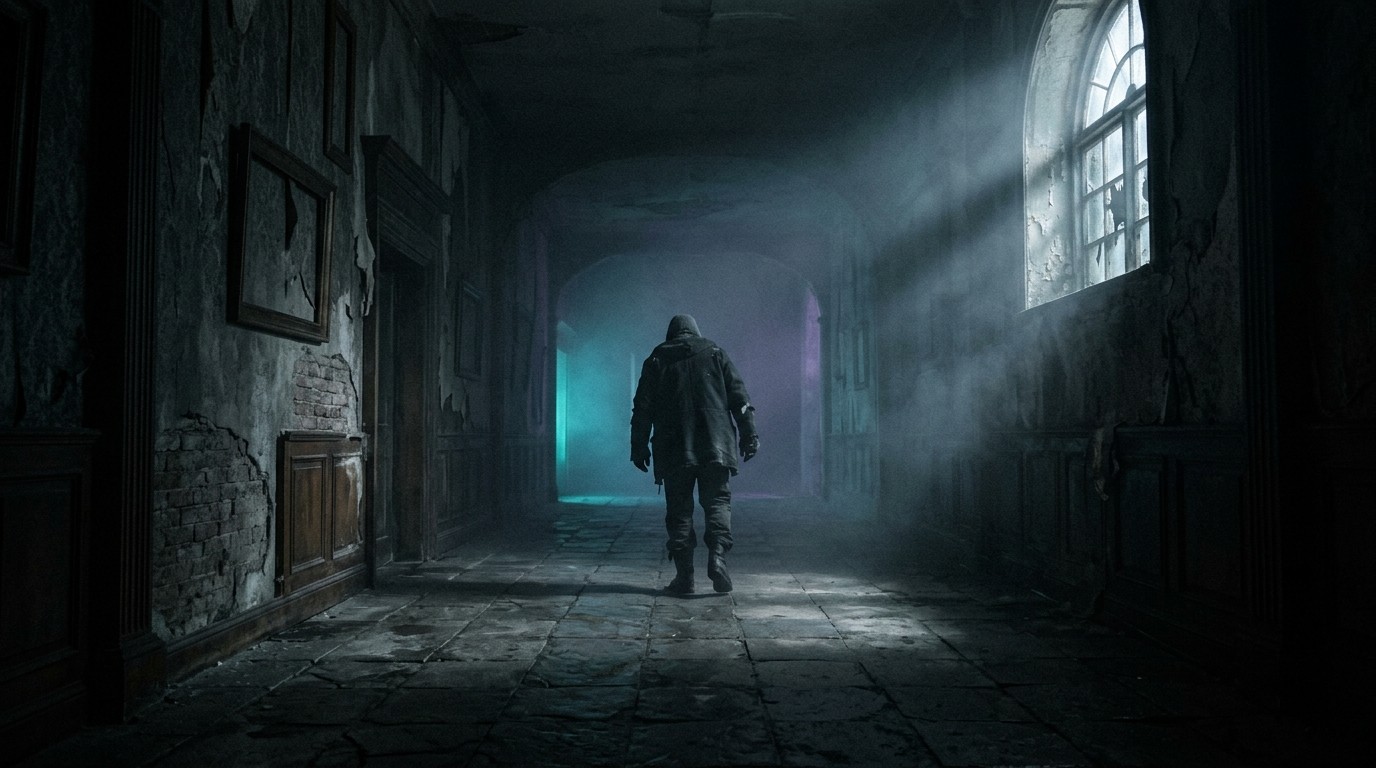
The first time I fired up Eternal Darkness in VR, I wasn’t sure if the emulator had crashed or the game had started faking one.
That’s the thing about this one. Eternal Darkness is already famous for gaslighting the player — fake TV volume changes, fake controller disconnects, the whole “your sanity meter is low and now so is your confidence in the hardware” routine. Strap that into a headset where your entire view can be tilted, inverted, or interrupted, and the game stops being a clever trick and starts feeling like it’s happening to you. It’s the most on-brand possible VR experience for a game that was never designed for VR.
Here’s the catch: the only way to get there is Dolphin VR, a community fork of the GameCube emulator that hasn’t seen a real update since 2016.
The VR Reality
Eternal Darkness: Sanity’s Requiem came out on GameCube in 2002 and never left. No PC port, no remaster, no Switch Online drop, no GameCube Classic re-release. If you want to play it in VR, you are ripping your own disc, installing Dolphin VR 5.0-250, and hoping your PC still plays nice with a 2016 build aimed at the original HTC Vive and Oculus Rift CV1/DK2.
Dolphin VR isn’t a mod for the game — it’s a mod for the emulator. It takes the GameCube frame and splits it into stereoscopic 3D, then maps head tracking so you can look around inside the fixed camera scenes. For Eternal Darkness, that means a lot of fixed third-person angles where the camera sits at a room corner and you peer around like you’re watching a tiny, horrible stage play from the front row. No motion controls, no VR UI, no redesigned systems. Just the original game, rendered in depth, with your head as the camera.
The upside is that the setup is mostly nausea-proof. Fixed camera third-person is about as comfortable as third-person VR gets — your view isn’t tied to a body moving through space, so there’s no artificial locomotion churning your stomach. The downside is that the game itself wants to make you uncomfortable, and in a headset those sanity effects hit harder. The camera skews. The screen inverts. The audio distorts. In VR, that fake system crash doesn’t read as a prank; it reads as your headset dying in the middle of a dark room.
How It Actually Plays
I went in expecting a novelty and came out respecting how much the original design holds up. The fixed angles that feel dated on a TV become something else in VR — each room is a diorama, and the sense of scale makes the mansion feel more claustrophobic than I remembered. Walking Alex Roivas down a hallway doesn’t change, but looking around the space while she walks does. You notice details. You notice how small the rooms are. You notice how often the game traps you in tight spaces with things you can’t see yet.
Combat and the spell-casting system are untouched, which is fine because neither was built for motion controls anyway. A gamepad is the sensible input method here — mapping the original GameCube controls to a modern pad and playing it like you always would, just with head tracking for the camera. The VR addition isn’t about interacting differently; it’s about looking differently, and for a horror game built around atmosphere and framing, that’s enough to change the experience.
Performance is reasonable by emulator standards. Eternal Darkness isn’t a demanding GameCube title, and Dolphin VR 5.0-250 can hold a steady frame rate on modest modern hardware. The real friction is compatibility: modern headsets, modern OS builds, modern runtimes. This was written for an Oculus SDK that barely exists anymore. You are not walking into this with a Quest 3 and a USB cable and expecting it to just work. You are walking in with a tolerance for legacy software archaeology.
The biggest practical issue is culling. The fixed camera means objects outside the original frustum get culled, so you need to enable the “Disable Culling Outside Camera View” AR code for the game or you’ll see geometry pop in and out as you turn your head. That’s fixable, but it’s the kind of fix that tells you exactly what tier of project this is.
What’s Good and What Isn’t
The strengths are atmosphere and conceptual fit. Eternal Darkness is a horror game about perception and sanity, and VR is a medium about perception. The sanity effects that were clever on a CRT are genuinely unnerving when they take over your entire field of view. The game world, already dense with detail, gains a sense of physical presence that flat play can’t replicate. If you love this game and you’ve already played it multiple times, this is a fascinating way to see it again.
The weaknesses are everything else. The emulator is abandoned. The hardware target is a generation old. There is no active support, no modern integration, no guarantee it keeps working as Windows and VR runtimes move on. The VR implementation adds presence but doesn’t transform the underlying game — you’re still playing a 2002 third-person survival horror title with a gamepad. And for all the atmospheric gains, the experience never fully escapes the feeling that you’re looking at a very convincing diorama rather than standing inside a world.
It also can’t escape the base game’s own pacing. Eternal Darkness is slow, deliberate, and heavy on reading and menu navigation. The flat menus are still flat, rendered in a virtual space with no special VR treatment. You’ll spend time in the spell system, the inventory, the tome — all of it perfectly playable, none of it enhanced by the headset.
Who Should Even Bother
This is for the subset of VR owners who also own a copy of Eternal Darkness and have the patience to get Dolphin VR running on a legacy or modern-but-stubborn PCVR setup. It is not a recommendation for someone who just wants a great horror game in VR — there are better options for that. It is a recommendation for the already-converted: the person who has played this game three times, knows all the sanity effects, and wants to see what it does when the trick is aimed directly at their eyes.
In that narrow lane, it’s worth the effort. For everyone else, the GameCube original on a good CRT or upscaled through standard Dolphin is still the best way to experience one of the most interesting horror games Nintendo ever published.