
Dying Light VR
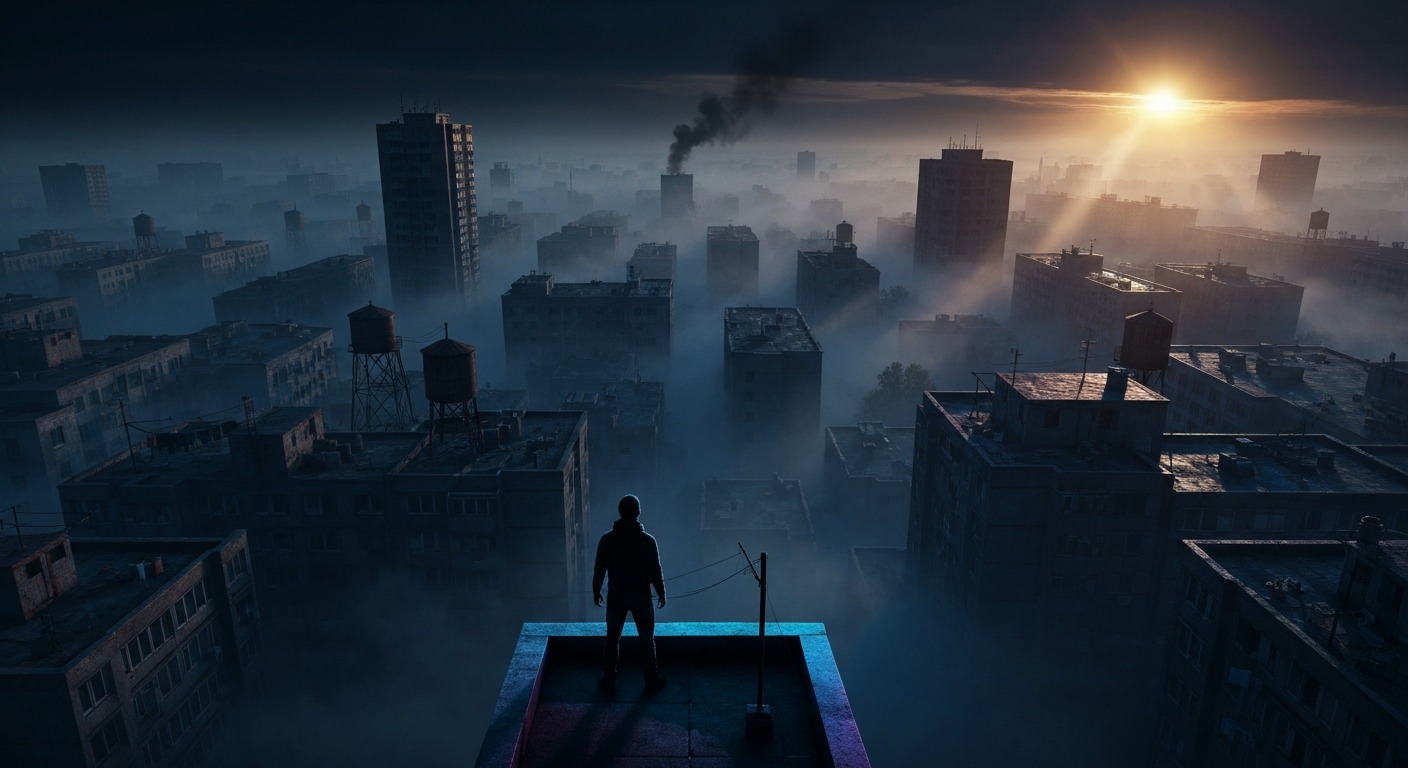
The first thing that hits you in Dying Light VR isn’t the zombies. It’s the height. Standing on a rooftop in Harran, looking down at streets full of infected, you feel the drop in your stomach in a way the flat version never manages. The city is dense, vertical, and genuinely dangerous — and the idea of experiencing all of that inside a headset is exactly why people keep trying to make this work.
The problem is that Techland only sort of tried.
When Dying Light launched on PC in January 2015, it shipped with a hidden Oculus Rift mode. Not a menu toggle, not a splash screen, not a patch — just a config-file flag you had to enable manually. That should tell you everything about how serious Techland was. The mode gave you head tracking and a stereoscopic view, but no motion controls, no VR UI, and no comfort options. Polygon called the experience “terrifying, but also unfinished and unpolished.” Ars Technica was blunter: “a frustrating, nauseating mess.”
So the story of Dying Light VR is really two stories: the abandoned official attempt, and the community’s ongoing effort to make it playable through VorpX.
The Official Mode: A Cautionary Tale
The official VR support is buried in the PC version’s settings. You don’t launch a “VR edition” — you edit a text file, add the right line, and hope the game recognizes your headset. At launch it was aimed at the Oculus Rift DK1/DK2 dev kits, and Techland never really updated it for the consumer headsets that followed. Today it’s effectively a dead end.
What you get is head tracking only. You can look around the world naturally, and that’s genuinely cool for about ten minutes. Harran is a well-built place: slums, high-rises, zip lines, cluttered interiors. Seeing it in 3D makes the scale click in a new way.
Then you start moving, and the problems pile up. Strafing left or right sends a lurch through your stomach. Cutscenes seize the camera and whip it around with no regard for where you’re looking — at that point you’re just hanging on and hoping not to feel sick. The HUD, subtitles, and tutorial prompts were designed for a monitor, so they’re tiny and unreadable inside a headset. Menus require you to either squint or take the headset off and check the mirrored display. Visual glitches like floating black boxes show up in VR and vanish in the flat version.
Techland’s promotional hook at the time was parkour pioneer David Belle trying the Rift and calling it “magical.” With respect, playing the retail version felt more like a warning. This is the textbook example of bolting VR onto a first-person game without redesigning anything around it. Techland moved on to Dying Light 2, Bad Blood, and other projects, and the official VR mode never got the attention it needed.
The VorpX Profile: The Real Modern Option
If you want to play Dying Light in a modern PCVR headset today, the way to do it is VorpX. The community has built profiles for the game that deliver stereoscopic 3D and head tracking on Index, Reverb G2, Pimax, Quest over Link, and the rest of the PCVR ecosystem. It’s not a full VR conversion — there are no motion controls, no hand presence, and the flat UI is still the flat UI — but it is the best available version of the game in a headset.
Setup is not trivial. You need VorpX itself, which is a paid injection driver, and you need a community profile. Then you spend time tuning: FOV, scale, HUD size, Z3D versus G3D mode, per-headset tweaks. Some users report needing to edit the video.scr config file to raise FOV beyond the in-game slider. Z3D mode tends to run well and gives you the depth and smooth frame rate you need for a game this fast. G3D looks better in some scenes but can chug during dusk, particle-heavy fights, and dense city views. A few users have noted minor eye-divergence quirks in G3D because the profile is unofficial.
Once it’s dialed in, the experience is unmistakably Dying Light, just inside your headset. Rooftop runs feel more precarious. Nighttime chases feel more frantic. Looking around while sprinting adds a physicality that the flat version can’t replicate. But you’re still playing with a gamepad or mouse and keyboard. You’re still fighting the same flat UI. And you still have no comfort features to help with the motion.
Why UEVR Doesn’t Apply Here
Dying Light runs on Techland’s proprietary Chrome Engine 6, not Unreal Engine. That matters because UEVR — the tool that has transformed so many flat games into real 6DOF VR — only hooks into Unreal. There is no UEVR profile for this game, and there can’t be unless someone does the much harder work of building an engine-specific mod. No such mod exists. There’s also no community Full VR Mod with motion controls, and no emulator path — this is a PC/console game, not a ROM-based title.
So your choices are limited to: the broken official mode, or VorpX. That’s it.
What It’s Actually Like to Play
The core game is still excellent. Harran is one of the better open-world settings of its generation, and the parkour loop — run, climb, drop, fight, scavenge, repeat — is genuinely satisfying. The day/night cycle is brutal in the right way. The story is fine, the side content is generous, and the co-op keeps it alive long after the campaign.
In VR, the highs are higher and the lows are lower. Looking down before a jump adds risk. Getting chased at night by volatiles while you’re physically turning your head to track them is stressful in a way flat play can’t match. But the sickness is real. Strafing, quick turns, sprinting across uneven rooftops, and especially the unskippable camera grabs during cutscenes all push against VR comfort hard. The game has no teleport option, no vignette, no snap-turn comfort aid — it was never designed for VR, and it shows.
Performance is also demanding. Dying Light was already a heavy open-world game in 2015, and rendering it twice in stereoscopic 3D doesn’t make it lighter. You’ll want a high-end PC to keep the frame rate stable in G3D or dense areas. Even in Z3D, this is not a budget-headset experience.
The Verdict
Dying Light is a genuinely great game that got a genuinely bad VR implementation. The official mode is a historical curiosity: hidden, broken, abandoned, and useful mostly as a warning. The VorpX profile is the only sensible way to play it in a modern headset, and it delivers real stereoscopic depth and head tracking — but that’s as far as it goes. There are no motion controls, no VR UI, no comfort options, and no escaping the fact that this was built as a flat first-person game.
If you’re a Dying Light fan with a strong stomach, a high-end PC, and the patience to tune VorpX, the VorpX profile is worth experimenting with. For everyone else, this is a reminder that a great game in flat can still be a rough ride in VR.