
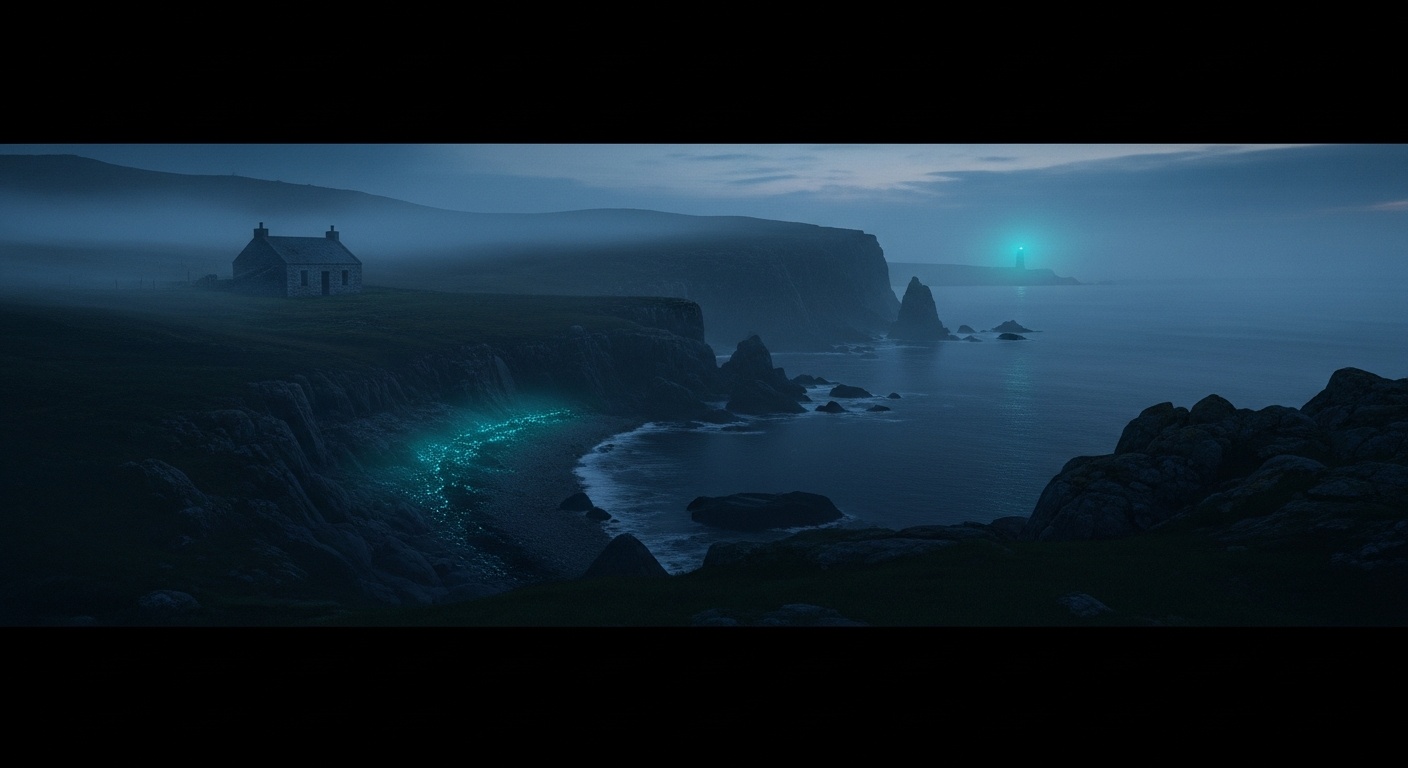
Dear Esther in VR: When a Walking Simulator Becomes a Journey
Dear Esther isn’t a game in the traditional sense. There are no puzzles to solve, no enemies to defeat, no scores to chase. You’re simply walking — slowly, deliberately — across a windswept Hebridean island while a fragmented narrative unfolds through voiceover and environmental storytelling. On a flat screen, it’s affecting. In VR, it’s transformative.
The VR conversion comes courtesy of VRGIN, a Unity injection framework by Eusth that hijacks the camera and rendering pipeline to deliver stereoscopic VR. For a game built entirely around atmosphere, presence, and environmental immersion, the results are extraordinary.
What VR Route Exists
Dear Esther has one viable VR path: the VRGIN injection mod for Dear Esther: Landmark Edition.
Dear Esther: Landmark Edition (2017) + VRGIN
The Landmark Edition is a Unity 5.x remake of the original 2012 Source mod. This version replaces the aging Source engine with Unity, enabling the VRGIN injection framework to work its magic. The mod is community-created but built on a stable, well-documented foundation.
What VRGIN Provides:
- Full stereoscopic 3D rendering
- Head tracking for camera control
- Seated and standing play mode support
- Automatic GUI adaptation for VR
- SteamVR/OpenVR compatibility
What It Doesn’t Change:
- Input remains gamepad or keyboard/mouse
- No motion controller support
- No room-scale interaction
- The core game loop stays identical
The original 2012 Source engine release (the mod that started it all) does not have a viable VR conversion. VorpX and similar drivers can force a 3D view, but the results are inferior to the Unity-based Landmark Edition with VRGIN.
How It Plays in VR
The VRGIN injection doesn’t add mechanics — it adds presence. Here’s what that means in practice:
Controls
Gamepad (Recommended): The Landmark Edition fully supports gamepad input, and this translates perfectly to VR. Left stick moves, right stick looks (though you’ll mostly use your head), and a single button advances dialogue triggers. The simplicity is a feature, not a limitation.
Keyboard/Mouse: Fully functional if you prefer PC-style input, though less comfortable in a headset.
Motion Controllers: Not supported and not needed. This is a slow-paced walking simulator — the lack of hand tracking doesn’t diminish the experience.
Visual Presentation
Dear Esther’s environments — crumbling cliffs, abandoned bothies, bioluminescent caves, shipwreck beaches — gain extraordinary dimensionality in VR. The scale of the island becomes tangible. You can look up at the moon, down at the pebbles beneath your feet, and feel the verticality of the coastline.
The VRGIN injection handles the Unity 5.x renderer competently:
- Stereoscopy: Excellent depth perception, particularly effective in cave sequences
- Scale: Proper world scale — the island feels vast and isolating
- Comfort: No forced camera movement or artificial locomotion conflicts
- GUI: Subtitles and minimal UI elements render correctly in 3D space
Audio Design
Jessica Curry’s soundtrack was already one of gaming’s finest atmospheric scores. In VR, with spatial audio and the visual immersion locking you into the world, it becomes overwhelming in the best way. The music responds to your location, swelling as you crest hills or enter caves, and the isolation feels physical.
The narrator’s fragmented letter fragments — the core storytelling device — land with more weight when delivered into your ears while you stand in the environments they describe.
Comfort and Accessibility
This is one of the most comfortable VR experiences available:
- Locomotion: Slow, deliberate walking speed with no sprinting, jumping, or artificial acceleration
- Camera: No forced camera movements — you control your gaze entirely
- Motion Sickness Risk: Minimal to none for most users
- Play Session Length: ~90 minutes for a full playthrough — easily digestible in one sitting
The game is designed around contemplation, not action. You set your own pace, and the VR implementation respects that.
What Works Exceptionally Well
Environmental Storytelling Gains Physical Presence
On a monitor, Dear Esther’s island is a backdrop. In VR, it’s a place. The abandoned bothies feel genuinely abandoned. The shipwrecks feel like you could reach out and touch the rusted metal. The cave sequences — particularly the bioluminescent sections — achieve a beauty that surpasses the flat-screen version.
The Pacing Becomes a Virtue
Dear Esther is slow. There’s no way around it. In VR, that slowness becomes meditative. You’re not rushing to the next objective — you’re walking, experiencing the wind, listening to the waves, absorbing the loneliness of the landscape. The game’s refusal to gamify the experience aligns perfectly with VR’s strengths in presence and immersion.
The Narrative Lands Harder
The fragmented story — a man writing to his deceased wife, exploring themes of grief, guilt, and redemption — carries more emotional weight when you’re physically present in the spaces where it unfolds. The radio towers, the caves, the beacon — these aren’t just levels anymore. They’re memorials you walk through.
Technical Stability
Unity 5.x and VRGIN are mature, well-tested combinations. The Landmark Edition isn’t receiving updates, which means the mod isn’t fighting against patches. Once configured, it just works.
What Doesn’t Work
No Motion Controller Support
If you expect hand presence and physical interaction, this isn’t that experience. Dear Esther in VR is a seated or standing gamepad experience. The world is there to observe, not manipulate.
Limited Replayability
The randomized elements — which fragments play, which paths you encounter — provide some variation, but this remains a 90-minute experience. Once you’ve absorbed the story, there’s limited incentive to return. This isn’t a criticism of the VR implementation, but it’s worth setting expectations.
Setup Requires Technical Comfort
The VRGIN installation isn’t difficult, but it requires:
- Downloading VRGIN and IPA (Illusion Plugin Architecture)
- Running the injection patcher
- Understanding basic mod installation
It’s intermediate-level PC gaming, not plug-and-play.
Some Visual Artifacts
As with any injection mod, you may encounter:
- Minor UI clipping in edge cases
- Slight text readability issues at extreme angles
- Occasional depth buffer oddities in complex scenes
None of these break the experience, but they’re present.
Who This Is For
This experience is for:
- Players who value atmosphere and narrative over mechanics
- Anyone interested in contemplative, slow-paced VR experiences
- Fans of walking simulators (Firewatch, Gone Home, Everybody’s Gone to the Rapture)
- Players seeking comfortable, low-intensity VR sessions
- Those interested in successful examples of flat-to-VR conversion
This experience is NOT for:
- Players seeking action, challenge, or traditional gameplay loops
- Those requiring motion controller interaction
- Users who dislike ambiguity in storytelling
- Anyone unwilling to spend 10 minutes on mod setup
The Verdict
Tier: A
Game Quality: A Dear Esther is a landmark title in narrative game design. It essentially created the “walking simulator” genre and remains one of its finest examples. The writing, sound design, and environmental storytelling are genuinely exceptional.
VR Implementation Quality: B+ VRGIN is a stable, reliable injection framework, but it’s still injection — not native VR. The lack of motion controls is appropriate for the experience but limits the technical achievement. What exists works consistently well.
Combined Experience: A Dear Esther in VR is a rare case where the whole exceeds the sum of its parts. The VR conversion doesn’t just work — it elevates the source material. The isolation of the island, the scale of the cliffs, the intimacy of the caves — all gain dimension that serves the game’s themes.
This is one of the best flat-to-VR conversions available. It demonstrates that not every VR experience needs motion controllers, room-scale, or complex interaction. Sometimes, presence is enough. Sometimes, just being there is the point.
If you have any interest in narrative games, atmospheric experiences, or simply want to see how transformative VR can be for the right type of experience, Dear Esther belongs on your list.
Setup Overview
- Purchase Dear Esther: Landmark Edition on Steam
- Download VRGIN (version 1.1 or compatible) from the GitHub repository
- Download IPA (Illusion Plugin Architecture) for injection
- Run the injection by dragging the game executable to IPA
- Launch through SteamVR with your headset active
Full detailed installation guides are available through Flat2VR community resources.