
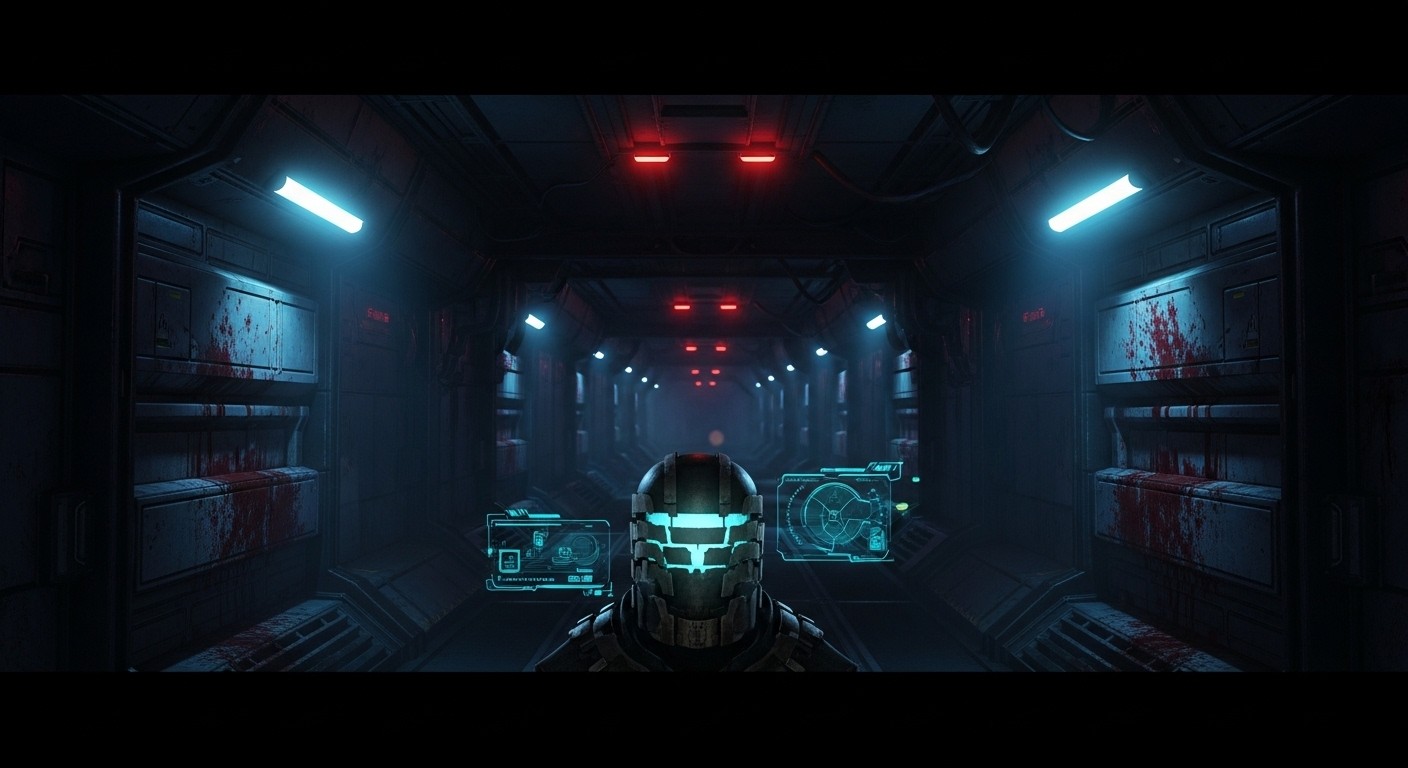
Dead Space in VR: The Ishimura at Arm’s Length
The USG Ishimura was already one of gaming’s most terrifying environments. VorpX makes it feel like you’re standing inside it — watching from over Isaac Clarke’s shoulder.
Dead Space in VR works better than it has any right to. That’s the short version. The longer version requires honesty about what “works” means when you’re using an injection driver to put a third-person survival horror game into a headset.
This review covers the 2008 original, not the 2023 remake. The original has official VorpX Geometry 3D support. The remake does not — its executable naming conflicts with the original, and community workarounds using other game profiles produce inconsistent results.
What This VR Option Actually Is
Dead Space in VR runs through VorpX, a paid injection driver (~$40) that hooks into flat games and renders them in stereoscopic 3D with head tracking. This is not a VR mod. It is not native VR support. It provides:
- Stereoscopic 3D via Geometry 3D (rendering the scene twice, once per eye — genuine depth, not simulated)
- Head tracking for looking around the environment
- No motion controls — gamepad or mouse/keyboard only
- No VR-native UI — menus and cutscenes may display in 2D or require Edge Peek mode
- No hand presence — you are watching Isaac, not being Isaac
The third-person camera is worth understanding clearly. You see Isaac Clarke on screen in an over-the-shoulder view, positioned in a 3D diorama. You can look around the environment with head tracking, but you’re observing the scene rather than inhabiting it. This is fundamentally different from a first-person VR experience.
How It Plays
Controls
Gamepad is the natural input for Dead Space, and that holds true in VR. Mouse and keyboard work but feel less appropriate when you’re in a headset. There are no motion controller options — no aiming with your hands, no physical interactions.
The strategic dismemberment combat — the core mechanic of cutting off necromorph limbs rather than shooting center mass — benefits from the depth perception Geometry 3D provides. Judging distances to targets feels more natural in stereoscopic 3D, and the over-the-shoulder perspective gives you enough spatial context to make limb-targeting intuitive.
Comfort
This is the most important section.
Dead Space in VR is significantly more intense than the flat-screen version. The USG Ishimura’s corridors become genuinely oppressive when rendered in stereoscopic 3D. Jump scares happen around you rather than on a screen. The audio design — already among the best in horror gaming — takes on new weight when your head tracking lets you orient toward sounds.
The third-person camera actually reduces some motion sickness concerns compared to first-person VR, but the psychological intensity more than compensates. Multiple community reports describe the experience as “genuinely terrifying” and “overwhelming for some players.” This is not hyperbole — the combination of atmospheric horror, spatial audio, and genuine 3D depth creates an experience that demands respect.
If you are sensitive to horror content, prone to anxiety in VR, or new to VR entirely, Dead Space is not a gentle introduction.
Performance
Geometry 3D doubles GPU load by rendering each frame twice. Dead Space (2008) is not demanding by modern standards, which helps, but you still need meaningful GPU headroom. The game runs comfortably on mid-range hardware and above. Users with older or integrated graphics may need to reduce some in-game settings to maintain a steady frame rate.
Stability
The official VorpX profile is stable and well-tested. Occasional hook failures can occur on some systems, but restarting VorpX and the game typically resolves them. The profile has been part of VorpX’s official list for years, indicating solid ongoing compatibility.
What Works Well
Corridor design as VR advantage. The Ishimura’s tight, claustrophobic corridors — a flat-screen strength — become a VR superpower. The sense of being trapped in a damaged spaceship with something hunting you is amplified by genuine 3D depth. The environment’s scale becomes tangible.
Diegetic UI. Dead Space’s famous “no HUD” design — health on Isaac’s RIG suit, ammo as holographic weapon projections, inventory as holographic overlays — translates exceptionally well to VR. These elements sit naturally in 3D space rather than floating at screen depth.
Lighting and atmosphere. The dramatic lighting and shadow play gain additional impact in stereoscopic 3D. The Ishimura’s flickering emergency lights, blood-smeared walls, and ventilation shaft shadows all benefit from genuine depth perception.
Full campaign playable. No progression blockers have been reported. The entire game is completable in VR.
What Doesn’t Work
No motion controls. This is the fundamental limitation. You cannot aim with your hands, physically interact with objects, or experience any hand presence. Every interaction is mediated through a gamepad or keyboard.
Third-person perspective. You’re watching Isaac, not being Isaac. For some players, this creates a disconnect — the VR headset promises immersion, but the camera keeps you at arm’s length. The horror is effective, but the experience is more “intense movie” than “I am there.”
Menu navigation. Some in-game menus require VorpX’s Edge Peek mode for comfortable viewing. This is a minor but recurring friction point.
Cutscene handling. Pre-rendered cutscenes may display in 2D or require specific VorpX settings, creating brief breaks in immersion.
Remake confusion. The 2023 Dead Space remake has no reliable VorpX support. Some users try workarounds, but results are inconsistent. Anyone buying VorpX specifically for the remake should know this upfront.
Who This Is For
Play this if:
- You want the most immersive Dead Space experience currently available
- You’re comfortable with VorpX’s injection approach and its inherent limitations
- You can handle intense horror amplified by VR presence
- You enjoy third-person games and want to experience one in stereoscopic 3D
Skip this if:
- You’re new to VR — the horror intensity is a terrible first impression
- You expect native VR with motion controls — this will disappoint
- You’re sensitive to jump scares or atmospheric horror
- You don’t want to purchase VorpX for a single game
- You’re primarily interested in the 2023 remake
The Verdict
Tier: B
Game Quality: A Dead Space is a landmark survival horror title — brilliant sound design, innovative dismemberment combat, and one of gaming’s most effectively realized hostile environments. The diegetic UI remains influential.
VR Implementation Quality: C+ Geometry 3D provides genuine stereoscopic depth and the official VorpX profile is stable, but there are no motion controls, no VR-native interaction, and the third-person camera keeps you beside the action rather than inside it. This is a competent injection experience, not a transformative one.
Overall Tier: B The game’s quality carries the experience. The VorpX injection is well-implemented for what it is, and the Ishimura’s design choices align with VR’s strengths in ways that few third-person games manage. But the fundamental limitations of injection drivers — no motion controls, no hand presence, camera detachment — prevent this from reaching higher. Worth playing if you understand the tradeoffs and can handle the intensity.
Evidence basis: VorpX official forums (Geometry 3D profile documentation), Reddit r/vorpx and r/virtualreality (community experience reports), PCGamingWiki (compatibility notes). Claims about horror intensity amplification and third-person camera effectiveness are supported by multiple independent community sources. No direct hands-on testing was performed for this review.