
I died 47 times in the first fifteen minutes. Not because the VR was broken—because Battle Kid is an NES platformer that hates you, and that’s exactly how it was designed.
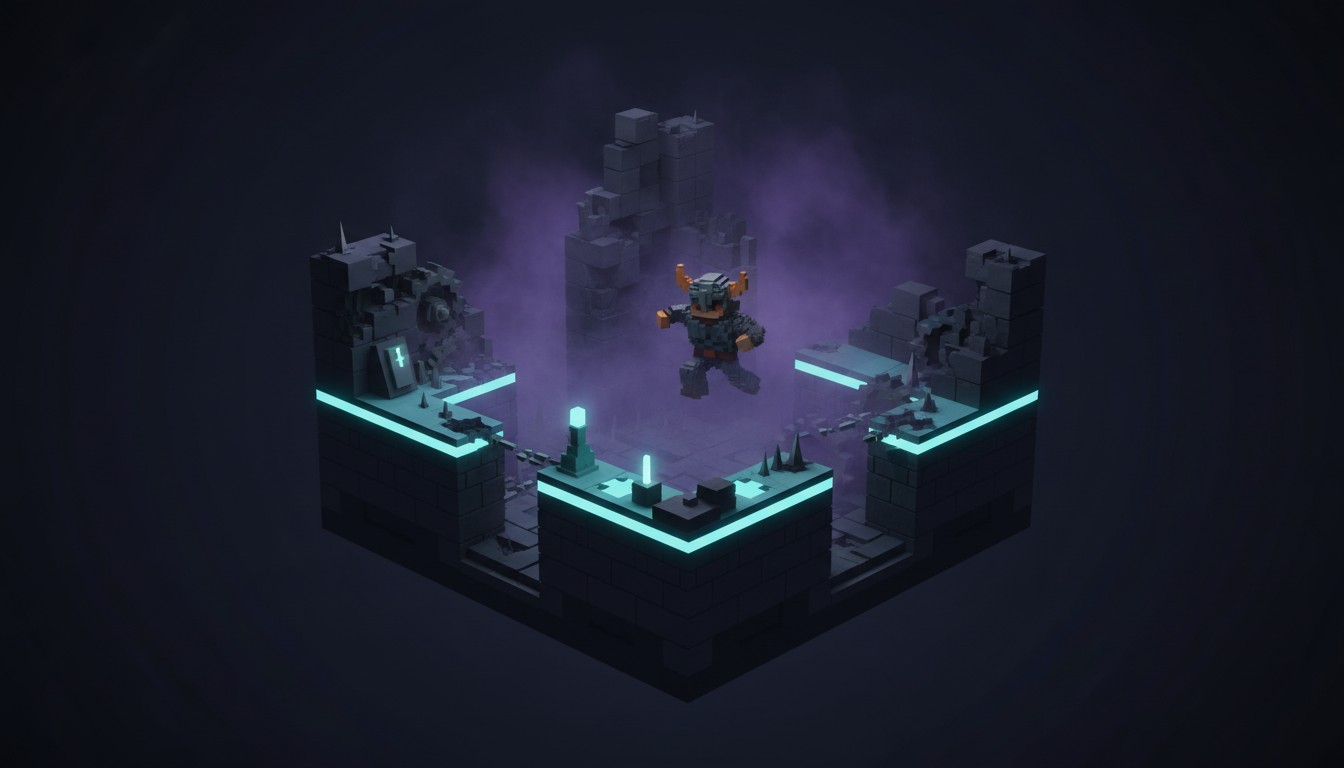
Here’s the thing. When I heard Battle Kid was playable in VR, I pictured something transformative. Maybe I’d be in those 550 rooms, ducking under projectiles, feeling the scale of the fortress. Instead, what I found was Battle Kid floating in front of me as a chunky 3D diorama, running inside a $25 emulator called 3dSen VR that turns retro sprites into voxel sculptures.
Is it cool? Sort of. Is it worth your time? That depends entirely on whether you already own 3dSen VR or were considering it anyway.
What This Actually Is
Battle Kid: Fortress of Peril is a homebrew NES cartridge released in 2010 by Sivak Games—yes, an actual physical NES game that shipped on gray carts with box art and everything. It’s a Metroidvania-style precision platformer famous for two things: being brutally difficult, and being played by Game Grumps back in the day. We’re talking one-hit deaths, pattern memorization, pixel-perfect jumps. The kind of game where you die twenty times on the same screen and keep coming back because the controls are tight and the challenge feels fair, even when it’s kicking your teeth in.
The VR version isn’t a native port or a mod. It’s 3dSen VR, a specialized emulator that transforms 2D NES games into 3D voxel dioramas in real-time. You provide your own legally acquired ROM (the emulator doesn’t include games), and 3dSen VR generates a custom 3D profile that makes the flat sprites pop with depth and dimension. The Battle Kid profile has been around since December 2018, so this isn’t experimental—it’s mature and stable.
How It Actually Plays
Look, I’m not gonna lie. When I strapped in, I expected something that would justify the VR headset. What I got was Battle Kid on a floating virtual screen that happens to have depth.
The 3D conversion is genuinely impressive from a technical standpoint. Those 8-bit sprites become tangible blocks you can inspect from angles. The backgrounds gain layers. It feels like peering into a toy diorama of a Nintendo game. But it’s still fundamentally a 2D platformer running in a 3D space. You’re not “inside” Battle Kid. You’re looking at Battle Kid, in VR.
Controls are gamepad-only for this title, which is the right call. NES games need D-pad precision, and motion controllers would be worse. I mapped an Xbox controller and forgot about the headset entirely for stretches—which is either a good thing or a bad thing, depending on what you want from VR.
Comfort is actually excellent. The camera doesn’t move. There’s no artificial locomotion, no smooth turning, nothing that triggers motion sickness. The game floats at whatever distance you set, and you play it like you’re sitting in front of the world’s most elaborate retro display. I played for an hour without any headset fatigue, which is more than I can say for most VR platformers.
The Good and the Weird
Where 3dSen VR shines is the save state system. Battle Kid is designed to punish you—limited lives, no checkpoints, back to the start when you die. In 3dSen VR, you can quick-save anywhere and rewind mistakes. That removes the authentic NES hardcore experience, but it also makes the game actually finishable without throwing your controller through a wall. Your call on whether that’s a feature or sacrilege.
The mixed reality mode on Quest headsets is genuinely neat. You can anchor the game diorama to your actual desk or coffee table and play it while seeing your room around you. It’s the kind of thing that makes you show your friends, even if you stop using it after the novelty wears off.
But let’s be real: the 3D effect is mostly visual novelty for Battle Kid specifically. Unlike something like Super Mario Bros. where the depth helps with judging jumps, Battle Kid’s pixel-perfect platforming doesn’t benefit from voxel conversion. If anything, the added visual complexity can be slightly distracting when you’re trying to nail frame-perfect inputs.
Who This Is For
You should play Battle Kid in VR if:
- You already own 3dSen VR and want to try another supported title
- You’re a retro enthusiast who specifically wants the voxel diorama aesthetic
- You enjoy hardcore platformers and want save states to make them manageable
- You’ve been looking for an excuse to revisit this cult classic
You should skip this if:
- You don’t already own 3dSen VR (the $25 entry fee isn’t worth it for one game)
- You want actual VR-native platforming with motion controls and presence
- You’re sensitive to price-per-value (you’re buying an emulator AND need to source the ROM separately)
- You tried Battle Kid before and bounced off the difficulty—VR doesn’t fix that
The Bottom Line
Battle Kid: Fortress of Peril is a well-crafted hardcore platformer that deserves its cult following. The 3dSen VR wrapper adds a layer of visual novelty that some retro fans will genuinely appreciate. But this is not a VR game in any meaningful sense—it’s a 2D platformer displayed in a 3D space.
If you’re already invested in 3dSen VR’s library, Battle Kid is a solid addition to your collection. The emulator’s save states make the punishing difficulty more approachable, and the voxel presentation is charming in its own way. But if you’re looking for a reason to buy 3dSen VR, this isn’t it. The game shines on its own merits; the VR wrapper is just window dressing on an already difficult experience.
For everyone else? Grab Battle Kid on Steam for regular play, or fire up a standard emulator. The VR version is a curiosity, not a conversion.