
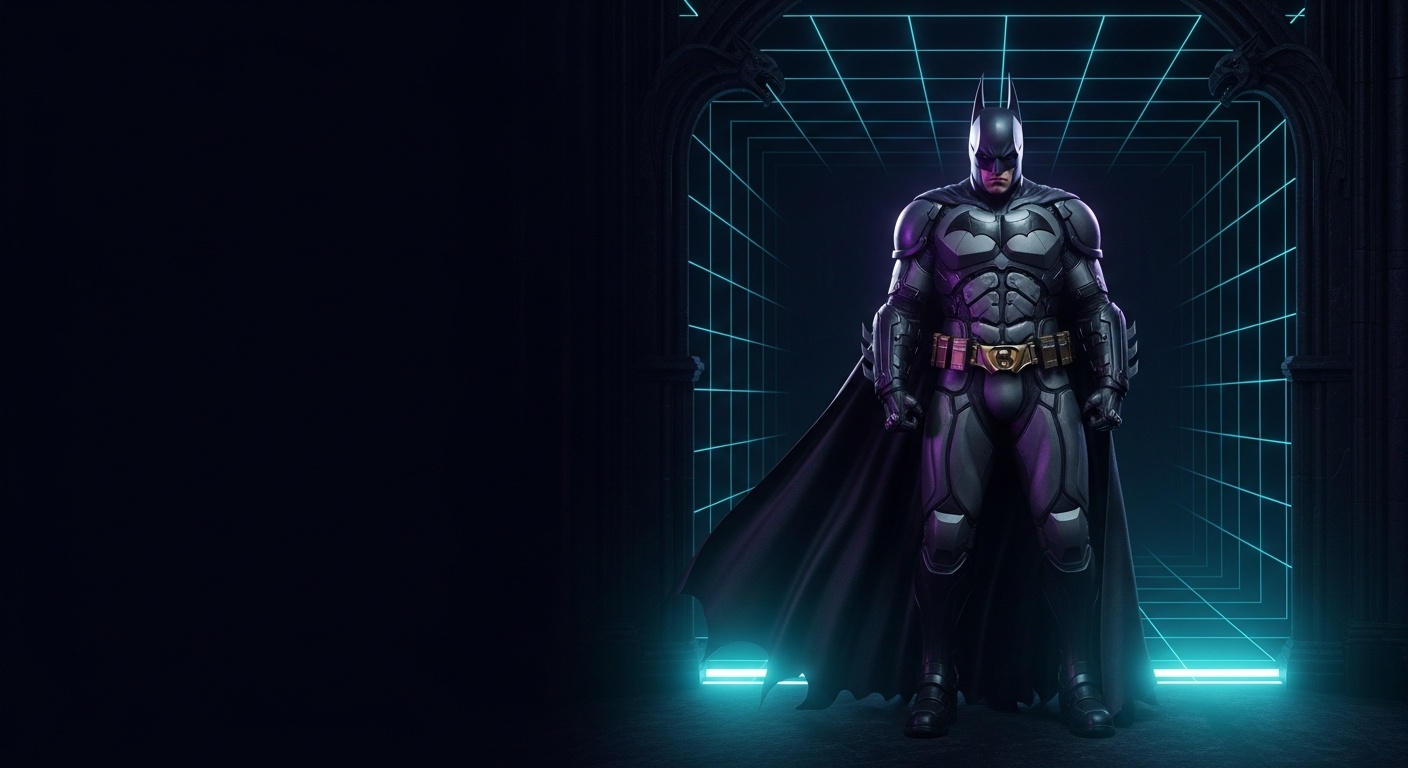
Batman: Arkham VR: The Batman Fantasy, Compressed
Rocksteady Studios built their reputation on making players feel like Batman. The Arkham trilogy delivered fluid combat, predatory stealth, and detective work that satisfied the power fantasy of the World’s Greatest Detective. With Batman: Arkham VR, they asked a different question: what if you were actually inside that cowl?
The answer is simultaneously impressive and frustrating — a beautifully crafted experience that ends just as it finds its footing.
What This Actually Is
Batman: Arkham VR is not a conversion, mod, or spin-off experiment. It’s an official, purpose-built VR title from Rocksteady themselves, released as a PlayStation VR launch title in October 2016 before coming to PCVR in April 2017. This is the actual Arkham team working in native VR.
The experience places you in Gotham following the apparent murder of Nightwing. The story unfolds across a handful of iconic locations — Wayne Manor, the Batcave, Crime Alley — as you investigate the crime using Batman’s full arsenal of forensic tools. The narrative is a self-contained mystery that, while compelling, exists outside the established Arkham trilogy continuity.
How It Plays
Controls: Full motion controls with tracked controllers (Move on PSVR, Touch/Vive controllers on PC). You use your hands to grab batarangs, activate detective vision, manipulate evidence, and operate the Batcomputer. The control mapping is intuitive — point to scan, grab to examine, gesture to throw.
Locomotion: This is a stationary experience. You teleport between predetermined points in each environment using a gaze-based selection system. There’s no free movement, no artificial locomotion, and — crucially — no combat. Rocksteady made the deliberate choice to focus entirely on investigation and atmosphere.
Core Loop: The gameplay centers on detective work. You examine crime scenes in forensic detail, reconstruct events using the same “detective vision” mechanic from the main Arkham games, analyze evidence in the Batcave, and occasionally use gadgets to interact with the environment. The batarang throwing feels satisfying — you’ll toss them at targets and environmental triggers with genuine physicality.
The Suit-Up Sequence: The opening is genuinely memorable. You stand in Wayne Manor as Alfred helps you suit up, piece by piece — the gloves, the utility belt, finally the cowl. When the helmet seals and the HUD activates, there’s a genuine moment of “I am Batman” that few VR experiences have matched since.
The Production Values
Voice Acting: Kevin Conroy returns as Batman, delivering the authoritative, world-weary performance that defined the character for a generation. This was one of Conroy’s final performances as the Dark Knight before his passing in 2022, giving the experience additional weight for fans. Supporting cast includes solid performances for Alfred, Robin, and other familiar voices from the Arkhamverse.
Visual Design: Built on Unreal Engine 3, Arkham VR recreates the Arkham aesthetic faithfully. The Batcave is appropriately massive and atmospheric. Character models are detailed for the era, though the resolution limitations of 2016 VR headsets show their age now. Art direction trumps technical fidelity — Gotham feels authentically noir and threatening.
Sound Design: The audio design deserves special mention. The spatial audio sells the scale of environments, from the echoing cave systems beneath Wayne Manor to the urban pressure of Crime Alley. The orchestral score hits the expected Arkham beats, building tension during investigations and delivering emotional weight during key story moments.
What Works
- The Suit-Up Opening: It’s been copied since, but this remains one of VR’s great onboarding experiences. The slow transformation from Bruce Wayne to Batman builds anticipation perfectly.
- Detective Vision in VR: Scanning crime scenes and watching events reconstruct in 3D space around you is genuinely immersive. The forensic analysis feels like actual detective work.
- Atmospheric Presence: Standing in the Batcave, looking up at the distant ceiling while the T-Rex looms nearby — these are powerful VR moments.
- Batarang Throwing: Simple but satisfying physics. The tracking is accurate enough to make target challenges feel fair.
- Narrative Polish: The story, while brief, delivers a genuine twist and some effective character moments. Rocksteady knows how to write Batman.
What Doesn’t Work
The Runtime: This is the elephant in the room. Arkham VR runs approximately one hour for a first playthrough — perhaps 90 minutes if you hunt for Riddler collectibles. For a full-priced release (originally $19.99), this is difficult to justify. The experience is polished, but it’s over before you’ve fully settled into the world.
No Combat: Rocksteady’s decision to omit combat entirely makes sense from a development and comfort perspective, but it also removes the action that balanced the detective work in mainline Arkham games. This is purely a narrative and puzzle experience.
Static Locomotion: The teleportation system, while comfortable, feels restrictive. You can’t freely explore the environments. The Batcave should feel explorable, but you’re guided through it on rails.
Standalone Narrative: The story doesn’t connect meaningfully to the Arkham trilogy. It’s an alternate-timeline “what if” that doesn’t resolve lingering questions from Arkham Knight. For fans hoping for narrative closure, this isn’t it.
Comfort and Performance
Comfort Rating: Comfortable. The stationary nature and teleport-based movement eliminate motion sickness concerns entirely. This is an excellent entry point for VR newcomers.
Performance: Low demand by modern standards. Originally designed for PSVR’s modest hardware, the PC version runs smoothly on virtually any VR-capable system. Loading times are brief, and there’s no stuttering or frame drops to break immersion.
Platform Differences: The PCVR version offers improved resolution and controller flexibility, but the core experience is identical. PSVR users with Move controllers may find tracking slightly less precise than PC alternatives, but both versions deliver the same content.
Who This Is For
Recommended for:
- Batman fans who want the definitive “wear the cowl” experience
- VR newcomers seeking a comfortable, polished introduction
- Players who value production values and atmosphere over runtime
- Those who appreciate narrative-focused, low-stress VR experiences
- Collectors of Kevin Conroy’s final performances as Batman
Not recommended for:
- Players seeking gameplay depth or challenge
- Those expecting Arkham-style combat or stealth
- Anyone wanting substantial content for their money
- Players who dislike guided, linear experiences
The Verdict
Tier: B
Game Quality: A
This is authentic Arkham from the authentic Arkham team. The writing, voice acting, visual design, and attention to detail are all Rocksteady at their best.
VR Implementation Quality: A
Native VR built by experienced developers who understand the medium. Motion controls are responsive, comfort is prioritized, and the experience leverages presence effectively.
Overall Tier: B
The execution is nearly flawless — but the scope is simply too limited to earn a higher recommendation. At one hour of content, even exceptional production values can’t fully justify the investment for most players.
Batman: Arkham VR is less a game and more a premium VR attraction — the kind of experience you’d pay $10 for at a theme park and remember fondly. The problem is that it was sold at full indie-game pricing for what amounts to a very polished tech demo.
That said, if you’re a Batman fan, this remains the definitive “be the Batman” experience. The suit-up sequence, the atmospheric environments, and Kevin Conroy’s final performance as the Dark Knight make this worth experiencing at least once — ideally during a sale when the runtime-to-price ratio feels less painful.
If you’re looking for a substantial Batman VR experience, the 2024 release Batman: Arkham Shadow for Meta Quest delivers full-length gameplay with proper combat. But for pure atmospheric authenticity and the sensation of standing in the Batcave as Batman himself, Arkham VR remains unmatched.