
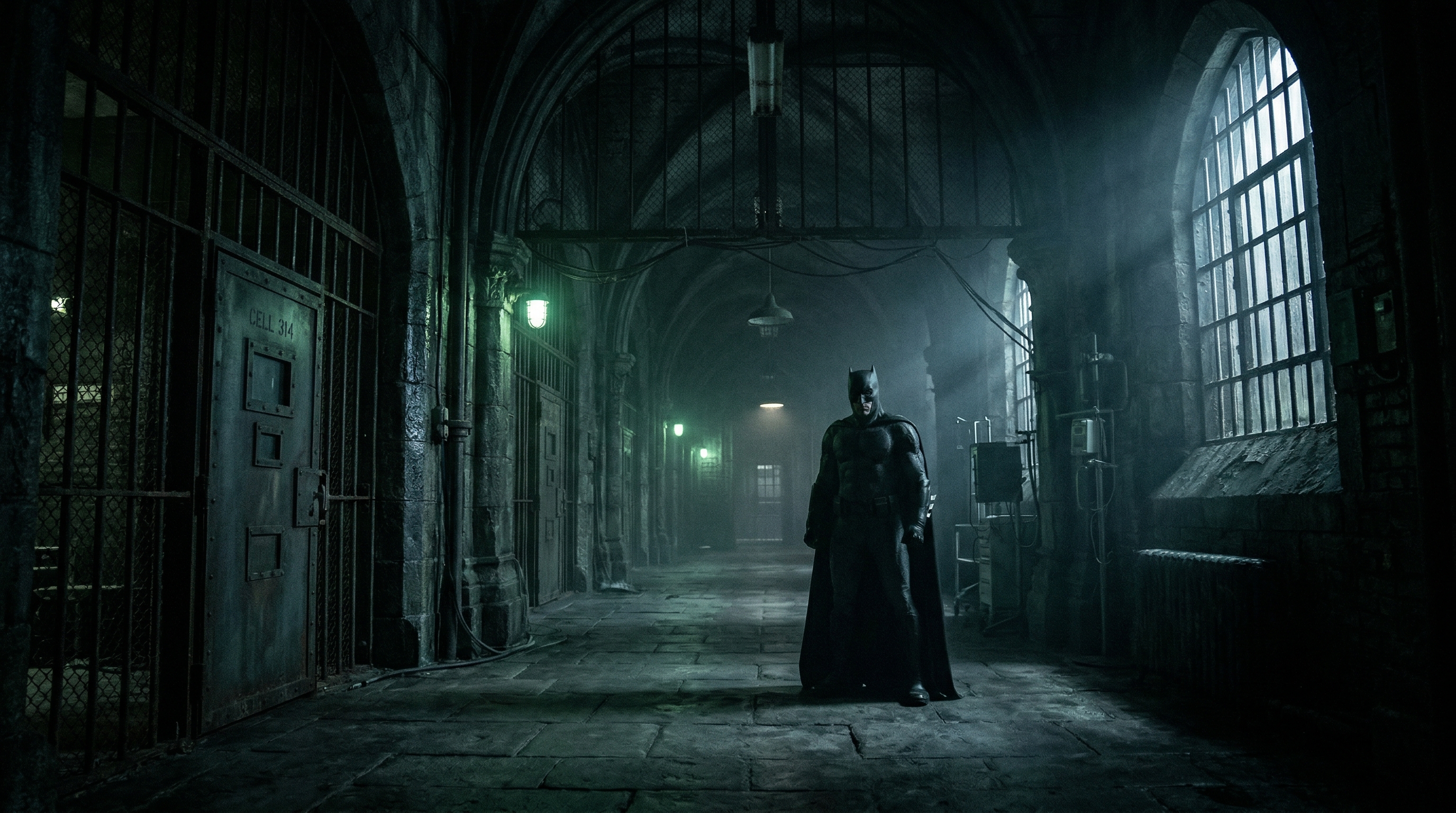
Batman: Arkham Asylum in VR: The Asylum Returns in Stereoscopic 3D
Rocksteady’s 2009 masterpiece didn’t just raise the bar for superhero games—it obliterated it. More than a decade later, Batman: Arkham Asylum remains one of the most atmospheric, tightly designed action-adventures ever created. The claustrophobic corridors of Arkham Island, the weight of Kevin Conroy’s Batman, Mark Hamill’s unhinged Joker—these elements defined an entire generation of gaming.
Which is exactly why people keep trying to experience it in VR.
The official Batman: Arkham VR exists, but it’s a brief, combat-free tech demo compared to the full experience. For the real thing—Batman gliding over Gotham’s island asylum, predator takedowns from the rafters, the full Metroidvania progression—you’ll need VorpX. And that means managing your expectations.
What This VR Option Actually Is
VorpX is a commercial injection driver that forces stereoscopic 3D and head tracking into games never built for VR. For Arkham Asylum, it provides Geometry 3D reconstruction—meaning actual depth perception based on rendered geometry, not just post-processing tricks.
What it doesn’t provide is everything else. There are no motion controls. No hand presence. No redesigned UI. You’re playing the flat game inside a headset, with head tracking potentially controlling the camera (though many users disable this) and genuine depth perception creating that “looking through a window into another world” effect.
The community consensus is clear: treat this like a spectacular immersive cinema experience, not a native VR transformation. Third-person games in full VR mode create a disconnect—your head rotates a camera orbiting a character, which feels fundamentally strange. The sweet spot is VorpX’s immersive screen mode: a massive, curved virtual display that fills your vision with genuine 3D depth.
How It Plays
Controls
You’ll need a gamepad or keyboard and mouse. VorpX doesn’t map VR controllers to Arkham’s combat system. The combat flow—free-flowing melee, gadget selection, predator mode—works exactly as it did in 2009. If you’ve played it before, muscle memory applies. If you haven’t, the tutorialization remains excellent.
Comfort
This is where individual tolerance becomes crucial. Arkham Asylum uses a third-person camera with quick grappling-hook traversal, cape gliding, and rapid directional shifts. In immersive screen mode, this is manageable—your brain accepts the screen-as-window framing. In full VR mode with head tracking enabled, the disconnect between physical head movement and camera behavior can trigger discomfort quickly.
Most users report better comfort with head tracking disabled, treating the headset as a personal 3D theater rather than a first-person portal. The grappling and gliding remain intense regardless; if you’re sensitive to motion sickness, this is not your game.
Performance
VorpX’s Geometry 3D mode doubles the rendering workload. Arkham Asylum is old enough that mid-range modern hardware handles it comfortably, but you’ll want overhead. Frame drops in VR are more punishing than on monitors. Expect to dial back some settings from whatever your flat-screen setup used, especially if pushing higher resolutions for headset clarity.
Stability
The injection process occasionally fails to hook properly. Launching directly from the executable rather than Steam helps reliability. Save frequently; VorpX can introduce crashes that don’t exist in the flat version. Once running, sessions tend to remain stable, but that first successful hook can require patience.
What Works Well
The atmosphere benefits enormously from stereoscopic depth. Arkham Island’s gothic architecture gains tangible presence. The medical facility’s sterile horrors, the botanical gardens’ unnatural expanses, the intensive treatment wing’s industrial dread—all feel more real when you can perceive actual spatial relationships. The Joker’s taunts bouncing through 3D space adds an unsettling intimacy to his psychological warfare.
The immersive screen presentation eliminates the “small monitor” problem of flat gaming. When that screen fills your peripheral vision and the 3D depth cues activate, you stop seeing pixels and start feeling present. It’s not VR-native presence, but it’s significantly more engrossing than traditional display gaming.
What Doesn’t Work
The lack of motion controls isn’t a dealbreaker—Arkham Asylum was designed for gamepads—but it means you’re not becoming Batman. You’re controlling him, same as always, just through a headset instead of a monitor. The fantasy of physically throwing batarangs or reaching for gadgets doesn’t materialize.
UI readability can suffer. Menus designed for monitors don’t always scale elegantly to headset resolution. Text that was crisp on a 24-inch display may require leaning forward or adjusting virtual screen distance. The cryptographic sequencer minigame, already divisive, becomes genuinely frustrating when UI elements blur at certain distances.
Field of view requires manual tweaking. VorpX’s automatic FOV doesn’t always nail Arkham Asylum, leading to zoomed-in perspectives or distorted edges. Expect to spend 15-20 minutes in initial calibration, then ongoing adjustments as you discover your preferred balance between immersion and comfort.
Who This Is For
Good for: Players who’ve finished Arkham Asylum before and want to revisit it with enhanced atmosphere. VorpX owners looking for third-person games that justify the injection cost. Batman fans willing to trade convenience for a novel presentation of a classic.
Not for: VR newcomers expecting native VR design. Players seeking motion control immersion. Anyone prone to motion sickness who hasn’t built VR tolerance. People who haven’t played the flat version and want the “best” first experience.
The Verdict
Tier: B
Game Quality: S Arkham Asylum is a masterpiece—tight combat, exceptional atmosphere, brilliant pacing, and the best superhero game of its generation. Even in 2026, it outclasses most of its successors in pure design elegance.
VR Implementation Quality: C VorpX delivers exactly what injection drivers promise: stereoscopic 3D and head tracking on a fundamentally flat game. The Geometry 3D reconstruction is solid, but the experience lacks motion controls, requires setup patience, and works best when you accept its limitations rather than fight them. For third-person games, immersive screen mode is the practical choice, which inherently caps the VR ceiling.
Overall Tier: B Arkham Asylum through VorpX is worth experiencing if you already own the injection driver and love the game. It’s not a system seller, nor does it transform the experience into something essential. But as a way to revisit a classic with genuine depth perception and a sense of scale that monitors can’t replicate, it earns its place. Just know what you’re getting: a very good flat game, viewed through very good 3D glasses, wrapped around your head.