
Top 15 VR Games of 2016
The definitive ranking of the games that defined the first year of consumer VR — from room-scale pioneers to the titles that proved headsets weren't just expensive demos.
Consumer VR actually happened this year. After four years of development kits, trade show demos, and crowdfunding campaigns, three major headsets shipped to real customers. The Oculus Rift CV1 arrived in March. The HTC Vive followed in April with room-scale tracking and motion controllers in the box. PlayStation VR hit shelves in October, bringing the price of entry down to a console plus a headset. For the first time, you could walk into a store and walk out with a VR system that worked without command-line tweaks or community patches.
The games that shipped in 2016 were different from everything that came before. They weren’t mods for existing titles or hidden modes buried in code. They were built for VR from the ground up — designed around motion controllers, room-scale boundaries, and the expectation that players would actually pay money for the experience. Some of them proved that VR could deliver full-length campaigns. Others proved that VR could sell headsets by itself. A few proved that the medium was going to be stranger and more experimental than anyone predicted.
This list ranks the fifteen most significant VR games of 2016 — not just by quality, but by how much they mattered to the medium’s first real year.
#15: Job Simulator

The absurdist office comedy that became the de facto introduction to room-scale VR. Owlchemy Labs built Job Simulator around a simple premise: what if you could physically interact with a cartoon workplace using your actual hands? The answer was a slapstick sandbox where you throw coffee mugs at robots, photocopy donuts, and cause small kitchen fires — all within a play area the size of a living room.
It shipped as a launch title for the HTC Vive in April and immediately became the game you showed to people who had never tried VR before. The humor is broad, the mechanics are simple, and the learning curve is essentially nonexistent. Grab thing, move thing, throw thing. The comedy comes from the friction between your physical intuition and the game’s exaggerated physics. That accessibility made it the most-demoed VR title of the year and one of the best-selling.
The limitation is depth. Once you’ve exhausted the three job scenarios — office worker, gourmet chef, and convenience store clerk — there’s not much reason to return. The 2016 version is a proof of concept dressed up as a comedy game. But it’s an extremely effective proof of concept. It proved that VR didn’t need violence or complexity to be compelling. Sometimes it just needs a good throwing arm and a room full of breakable objects.
Read the full Job Simulator VR review
#14: Eagle Flight

Ubisoft’s first major VR release dropped you into the body of an eagle soaring over a post-apocalyptic Paris where nature had reclaimed the streets. It was the first time a AAA publisher put real resources behind a VR-exclusive title, and the result was a game that understood something fundamental: flying in VR works best when you remove the stomach-churning freedom of six-axis movement and replace it with something more controlled.
Eagle Flight’s brilliance is its steering system. You turn by tilting your head, not by waving your hands or pushing sticks. The tunnel-vision effect that blacks out your peripheral vision during sharp turns is a simple but effective comfort technique that lets the game move faster than almost anything else on PlayStation VR without making players nauseous. The multiplayer dogfights — eagles chasing eagles through the hollowed-out ruins of Notre-Dame — are surprisingly competitive.
The problem is content. The single-player campaign is short, the multiplayer population peaked early, and the world, while beautiful, doesn’t offer much to do outside of the structured flight paths. Ubisoft proved that a major studio could ship a polished VR exclusive. They just didn’t prove that it could hold your attention for more than a weekend.
Read the full Eagle Flight VR review
#13: Space Pirate Trainer
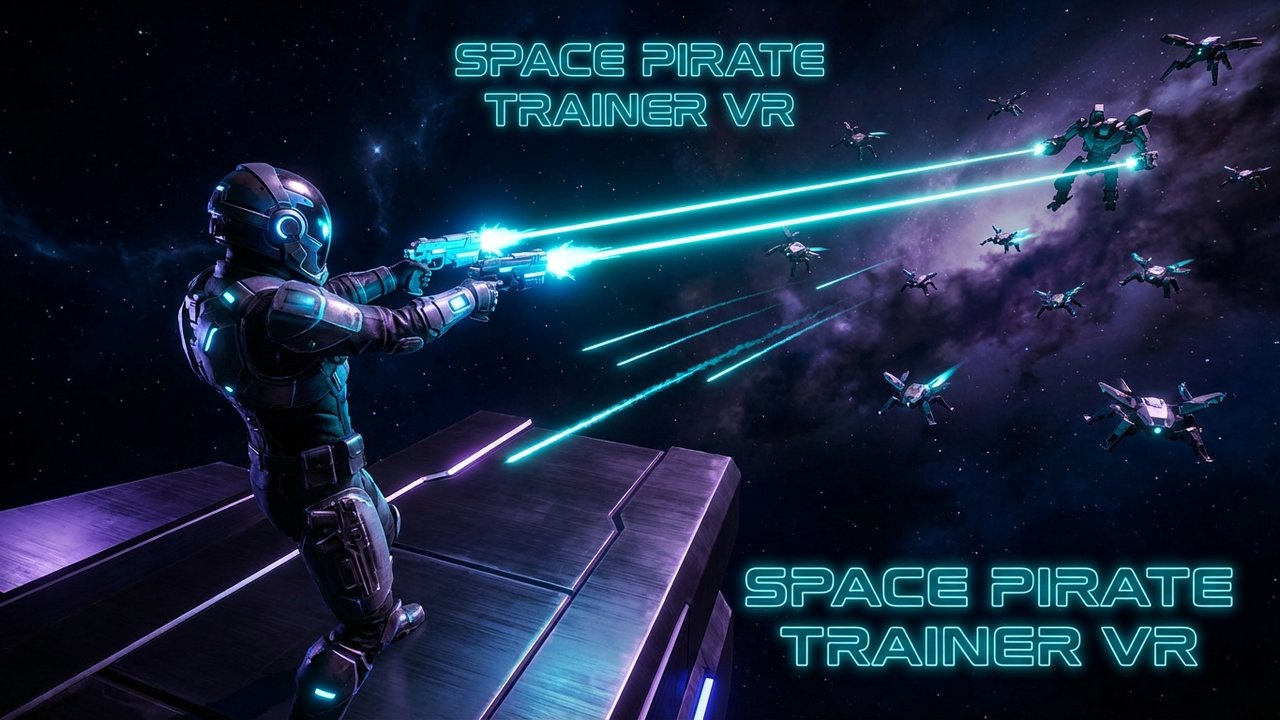
If Job Simulator was the friendly introduction to room-scale VR, Space Pirate Trainer was the cool one. I-Illusions built a wave shooter that felt like standing inside an 80s arcade cabinet — neon grids, pulsing synth music, and droid waves that test your reflexes, your aim, and your ability to physically dodge behind an imaginary shield.
The game’s central loop is as elegant as it is repetitive: dual pistols that switch between semi-automatic, laser, and shotgun modes, a deployable energy shield on one wrist, and an endless procession of flying drones that attack in increasingly aggressive formations. The room-scale element matters because you need to physically move — ducking under laser fire, sidestepping around incoming droids, sometimes dropping to one knee to steady your aim.
It’s thin. There are no levels, no campaign, no narrative framework. Just you, two pistols, and a high-score table. But in 2016, that was enough. Space Pirate Trainer became the game Vive owners loaded up to show off what room-scale tracking could do in an action context. It was the arcade staple that every VR platform needed. Simple, immediate, and genuinely exhilarating.
Read the full Space Pirate Trainer VR review
#12: Elite: Dangerous

Frontier’s space sim didn’t technically launch in 2016 — it had been out since 2014 — but the Horizons expansion and full consumer VR support made this the year it became essential. By December 2016, Elite: Dangerous supported the Rift, the Vive, and every major PC headset with a full cockpit experience that remains one of the most convincing arguments for owning a VR system.
The scale is what breaks you. Undocking from a station and watching the slot shrink beneath you. Warping toward a star and feeling the light change as you drop out of hyperspace. Landing on a planet surface in Horizons and actually standing on another world. No other game makes space feel this vast or this tangible. The cockpit becomes a real place. The galaxy becomes a real place.
The compromises are still there. The UI text is too small for comfort in many menus. The frame rate demands serious hardware. And the game’s famously steep learning curve isn’t made any gentler by wearing a headset. But none of that matters when you’re looking out at a nebula through your canopy window. Elite: Dangerous was already the best VR experience of 2015. In 2016, with Horizons and full consumer support, it became something closer to essential infrastructure — the game that justified the hardware for sim fans and sci-fi lovers alike.
Read the full Elite: Dangerous VR review
#11: Rec Room
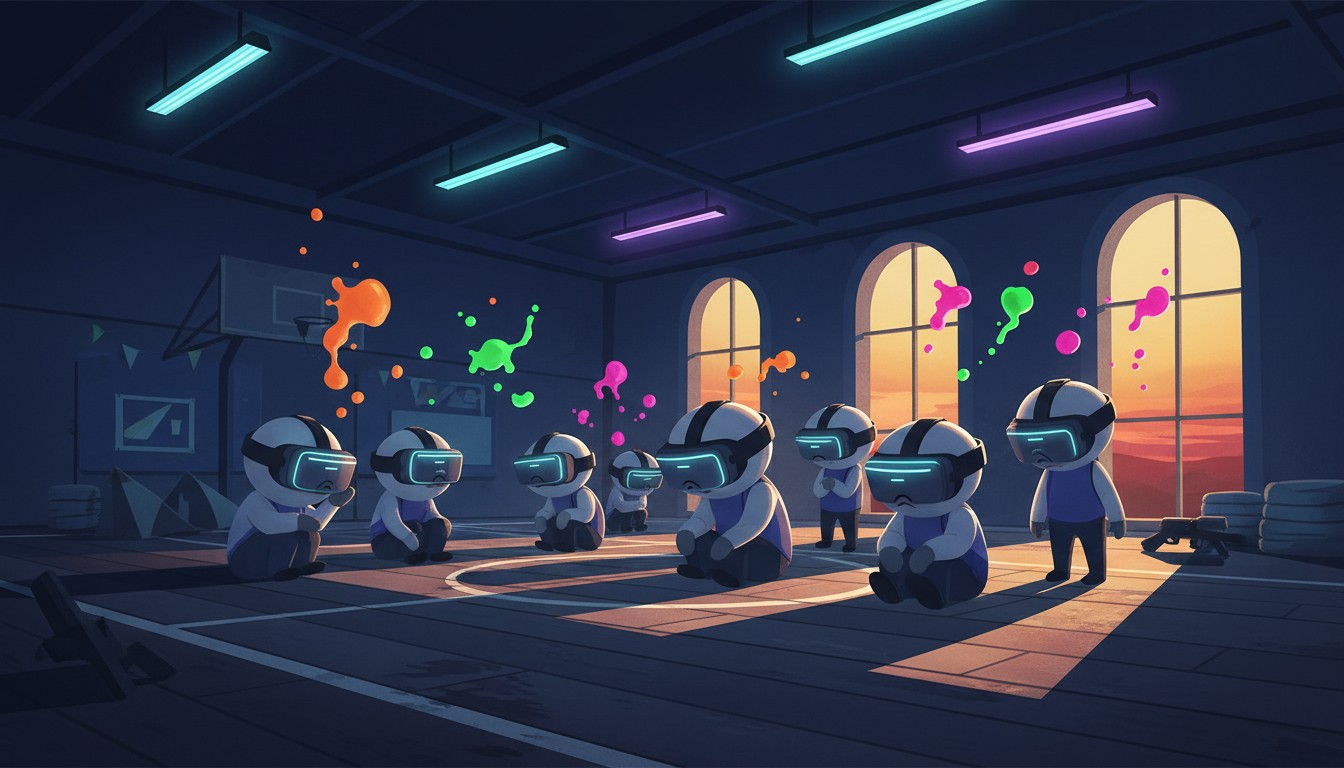
Against Gravity launched Rec Room into early access in June and quietly built the closest thing VR had to a social platform. It’s a free virtual recreation center where you play paintball, disc golf, dodgeball, and charades with other people who also own headsets. The avatars are simple cartoon figures with floating hands and no legs. The environments are bright, blocky, and immediately readable. The genius is that none of it tries to be realistic — it tries to be social.
The activities themselves are simple but well-executed. Paintball works because physically leaning around cover and snap-aiming with motion controllers feels natural in a way that cover-based shooting in more “serious” VR games often doesn’t. The 3D Charades room became an instant hit because pantomiming objects in actual 3D space is inherently funnier than typing guesses in a chat window.
Rec Room’s real significance isn’t any individual game mode. It’s the proof that VR could sustain a persistent online community. In a year when most VR multiplayer experiences struggled to find populations, Rec Room had one — because it was free, because it ran on every headset, and because it understood that VR’s social killer app might just be hanging out.
Read the full Rec Room VR review
#10: Raw Data
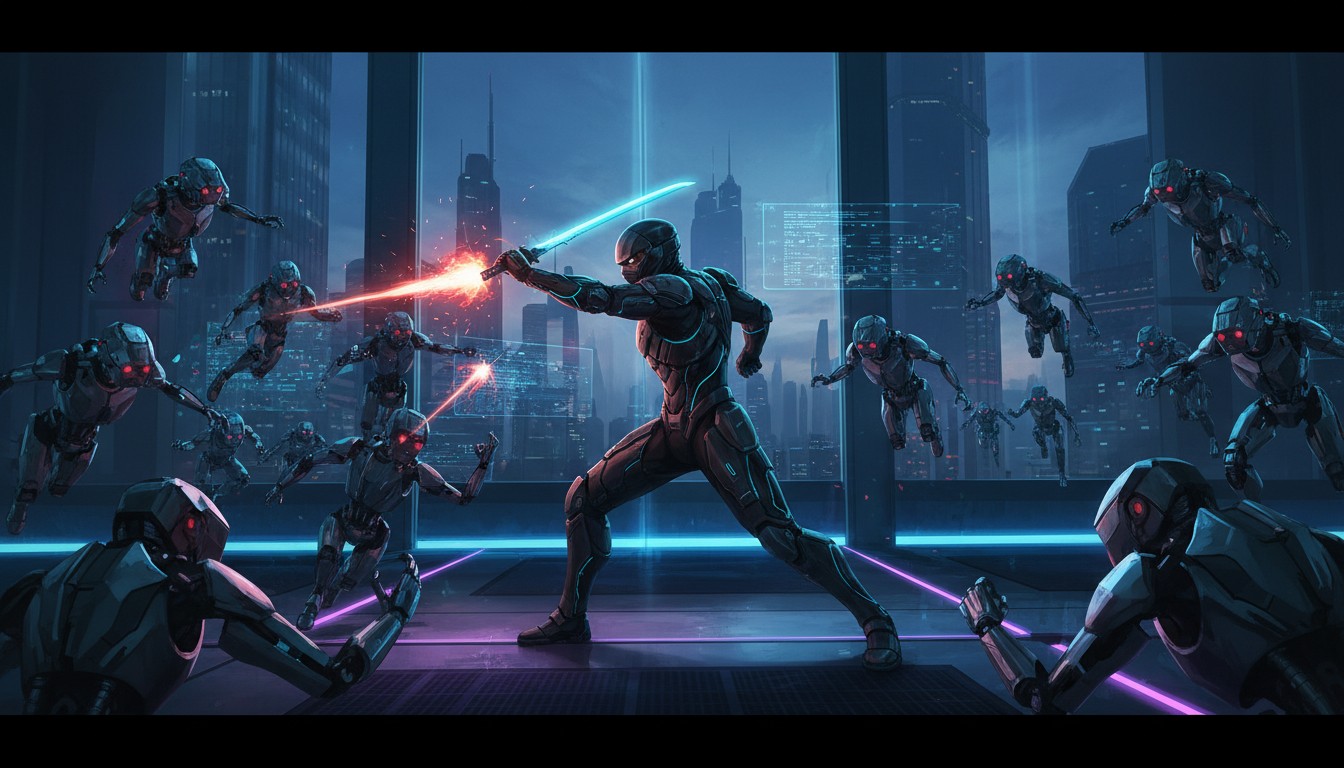
Survios took the wave shooter template and injected it with enough production value and mechanical complexity to make it feel like a real game. Raw Data dropped you into a corporate dystopia as a hacker resistance fighter mowing through waves of enemy robots with pistols, shotguns, katanas, and a bow that actually required you to draw, aim, and release. It launched on Steam Early Access in July and became the first VR game to crack a million dollars in sales within a month.
The combat has weight. Firing a pistol means physically pulling the trigger on a motion controller. Slicing through a drone with a katana means swinging your arm. Reloading means ejecting a magazine, grabbing a fresh one from your hip, and slamming it home. These aren’t scripted animations — they’re physical actions you perform in real space, and the gap between your intention and your execution is where the tension lives.
The early access release meant Raw Data was still building its campaign throughout 2016. Multiplayer co-op worked from the start, and the synergy of covering a teammate while they hacked a terminal or reviving a downed partner while robots closed in gave the game a cooperative energy that solo wave shooters couldn’t match. It was the first VR shooter that felt like it could compete with flat-screen action games on their own terms.
Read the full Raw Data VR review
#9: Chronos
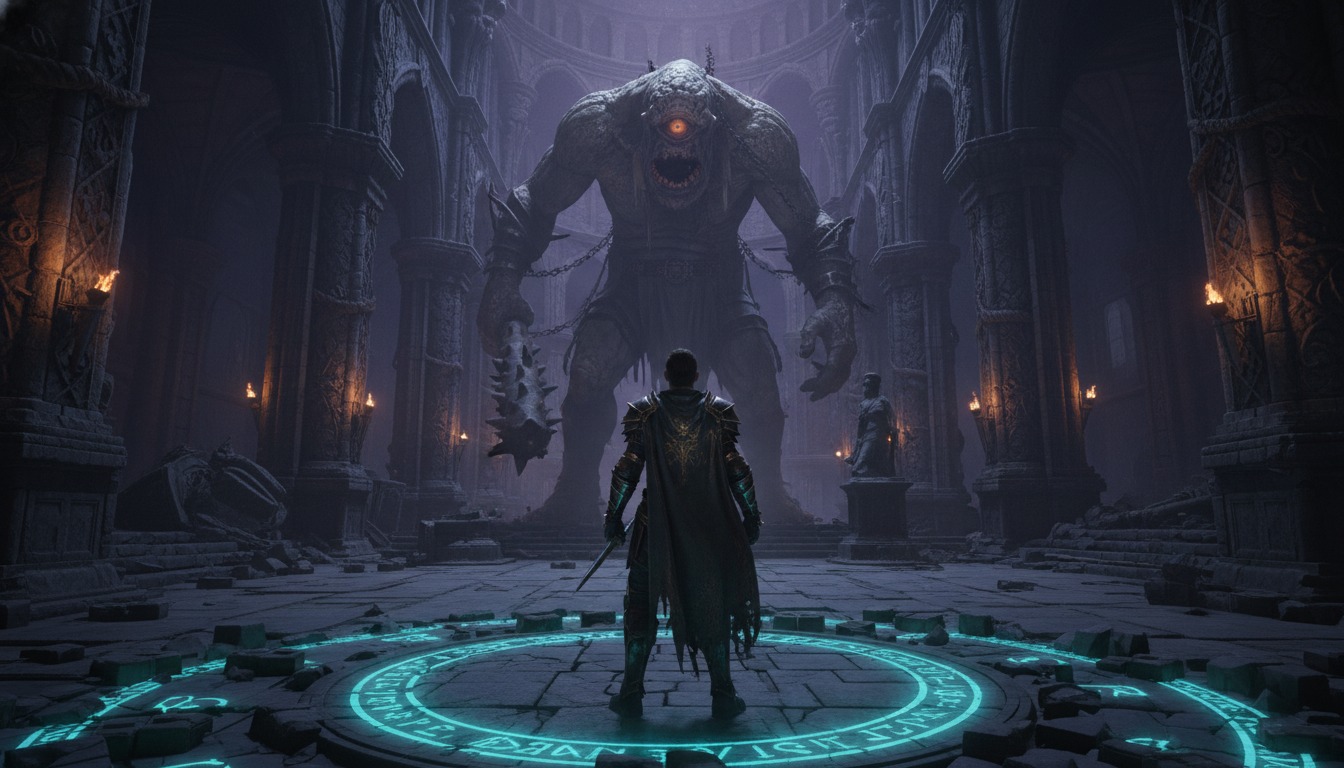
Gunfire Games built an action RPG for Oculus Rift that made a bold design choice: it was third-person. Your character appears on screen in front of you, and you control them with a gamepad while the camera sits at fixed positions around the environment. Every time you die, your character ages by one year, shifting their stats from agility toward strength and magic. By the end of a playthrough, your hero is an old warrior who started as a teenager.
The camera system shouldn’t work in VR. Fixed-position third-person cameras are the antithesis of everything VR was supposed to be about — presence, immersion, first-person embodiment. But Chronos proves that VR can enhance traditional game design, not just replace it. The environments have scale and depth that a monitor can’t capture. Boss fights feel monumental because the creatures actually tower over you. The fixed camera removes the nausea risk while letting the designers compose shots like a film director.
It’s an Oculus exclusive, which limits its reach. It requires a gamepad, which felt old-fashioned in a year when motion controllers were the headline feature. But Chronos demonstrated that VR’s future wasn’t going to be only first-person room-scale experiences. Sometimes the right answer is to adapt what already works and let the headset add something that wasn’t there before.
Read the full Chronos VR review
#8: I Expect You to Die
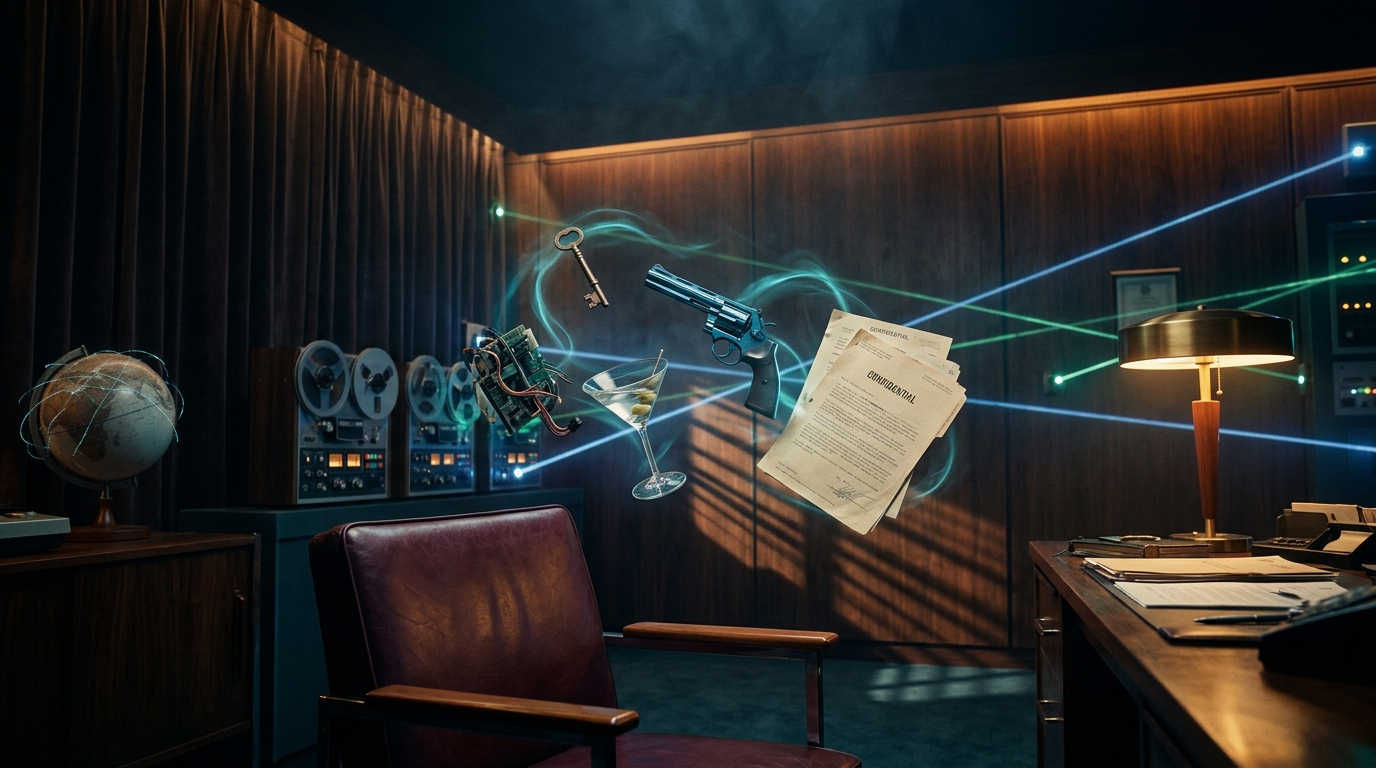
Schell Games designed the best VR escape room of 2016 and wrapped it in a spy-movie aesthetic where you play an elite secret agent who survives lethal traps through telekinesis and lateral thinking. Each level drops you into a deadly situation — a car filling with poison gas, a submarine filling with water, a plane rigged to explode — and gives you a set of objects to manipulate while the clock ticks down.
The design is meticulous. Every object has a purpose, or multiple purposes, or a purpose you discover by accident. The telekinetic grab mechanic means you can pull objects to your hands from across the room, which sounds like a shortcut but actually opens up puzzle design that wouldn’t work in physical space. You might need to trigger a switch across the room while your hands are busy disarming a bomb. The solution is always logical, usually absurd, and occasionally hilarious.
I Expect You to Die understands something that many 2016 VR developers missed: seated VR isn’t a limitation, it’s a different canvas. You don’t need to stand up and wave your arms around to feel present. You just need a well-designed space that responds to your attention and rewards your curiosity. This is the smartest puzzle game of the year, and the one that aged the best.
Read the full I Expect You to Die VR review
#7: Thumper
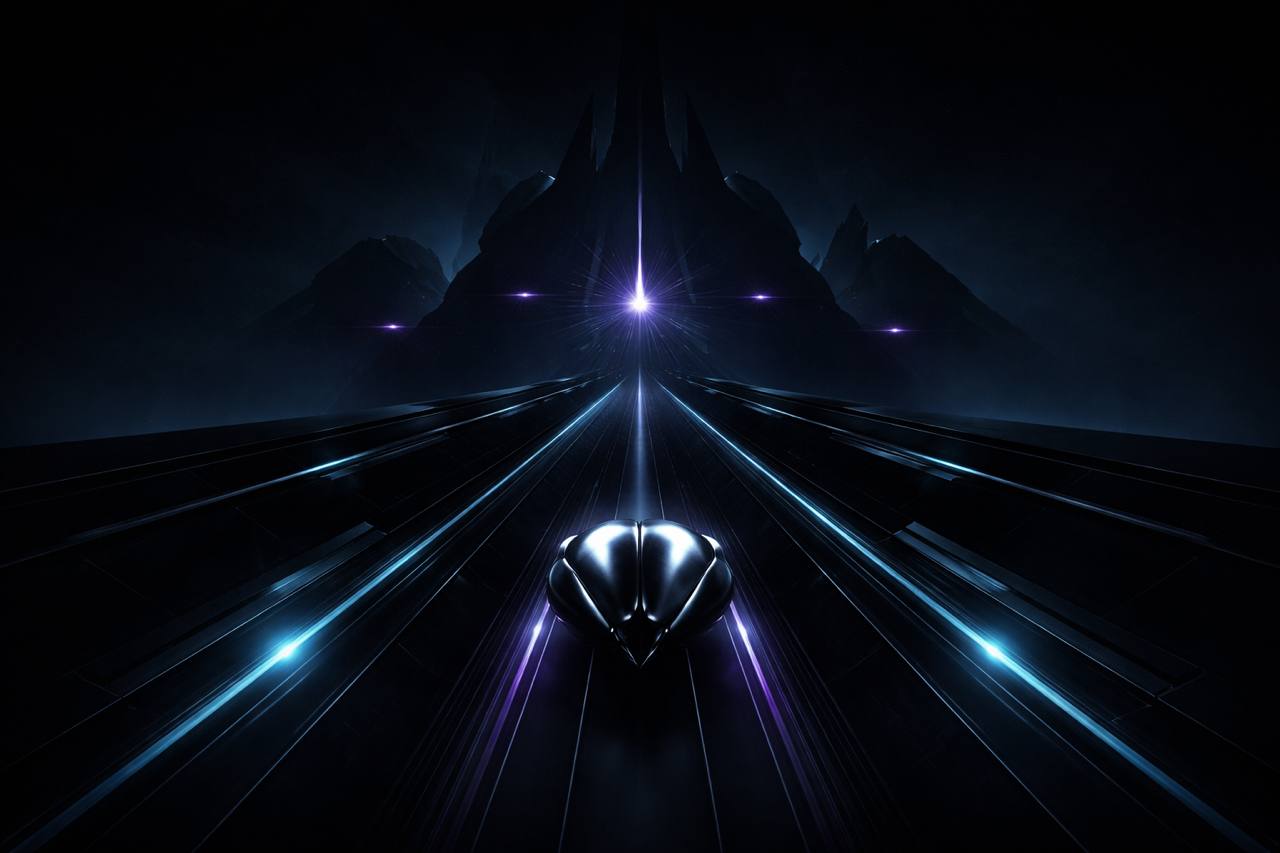
Drool called it “rhythm violence,” and that label only makes sense once you’ve played it. Thumper is a rhythm game where you pilot a chrome beetle down an infinite track, hitting notes, sliding through turns, and slamming into bosses at terrifying speed. In VR, the abstract neon hellscape fills your entire field of view, and the sense of velocity becomes physical — you’re not watching a fast thing, you’re inside it.
The game launched alongside PlayStation VR in October, but the non-VR version is identical in structure. VR is an option, not a requirement, which makes Thumper an interesting test case for how much a headset actually adds to an already-excellent game. The answer: a surprising amount. The track curves and drops in ways that feel more threatening when they occupy your peripheral vision. The bosses — abstract geometric horrors that pulse to the beat — are more intimidating when they’re actually looming over you.
The difficulty is relentless. Thumper is not a casual rhythm game. It demands precision, pattern memorization, and the willingness to fail dozens of times before a section clicks. The VR mode adds intensity without adding comfort — this is a game that moves fast, turns hard, and doesn’t care about your vestibular system. But for players who can handle it, Thumper in VR is one of the most visceral audiovisual experiences available on any platform.
Read the full Thumper VR review
#6: The Gallery: Episode 1 — Call of the Starseed
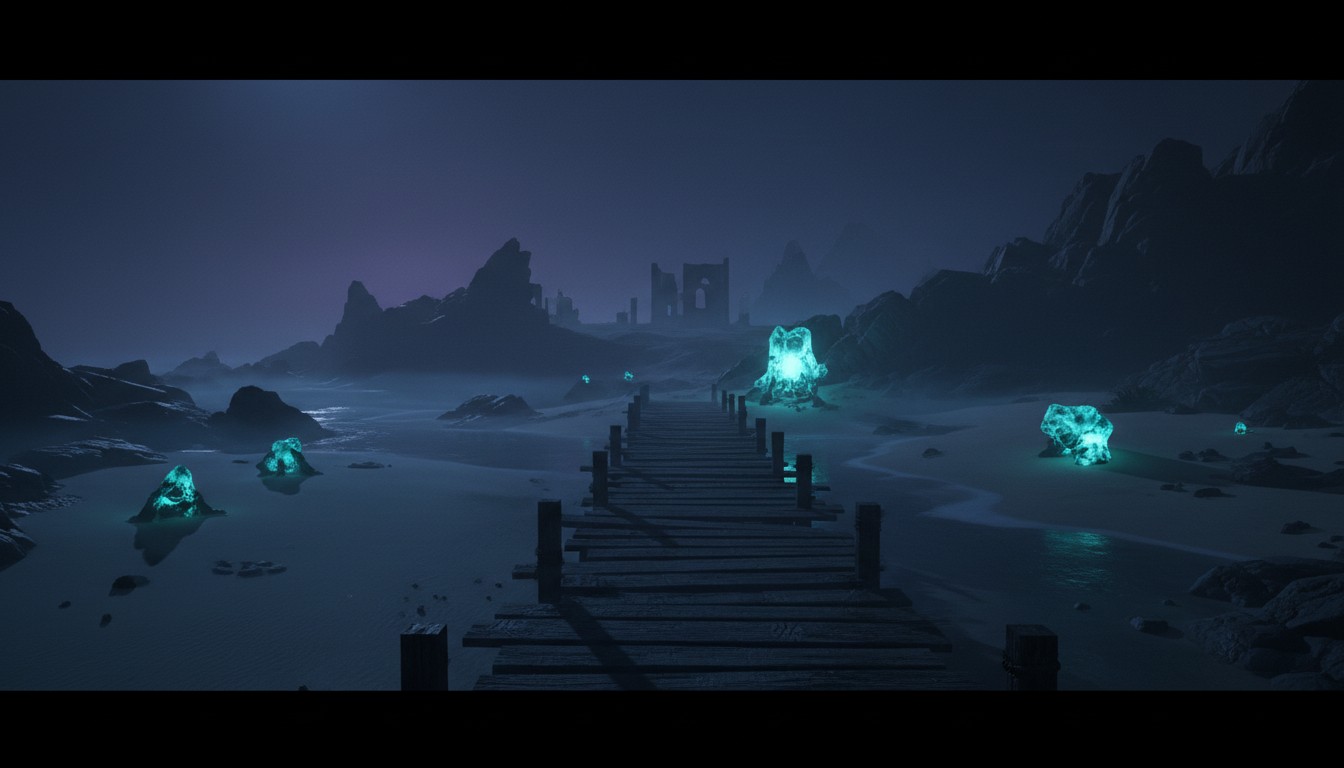
Cloudhead Games shipped Call of the Starseed on the same day the HTC Vive launched in April, and it immediately established the template for narrative adventure games in room-scale VR. You play a teenager searching for your missing sister on a mysterious island, solving environmental puzzles and uncovering a story that blends 80s nostalgia with cosmic horror. The Blink locomotion system — a hybrid of teleportation and smooth movement — was one of the first solutions to VR’s “how do you walk around” problem that actually felt like a design choice rather than a compromise.
The physical interactions are the hook. You pick up objects, examine them, rotate them in your hands, and combine them with other objects to solve puzzles. A locked chest isn’t opened by pressing a button — it’s opened by finding the key, physically inserting it, and turning it. The game’s world is built around the assumption that your hands are your primary interface, and every puzzle reinforces that logic.
At launch, it was the most polished narrative experience available in VR. The downside is that it’s short — a few hours of gameplay, ending on a cliffhanger that sets up Episode 2. But those few hours proved that VR could sustain a story-driven adventure with production values that approached traditional games. It wasn’t just a tech demo with a plot attached. It was a real game that happened to require a headset.
Read the full The Gallery VR review
#5: Robinson: The Journey
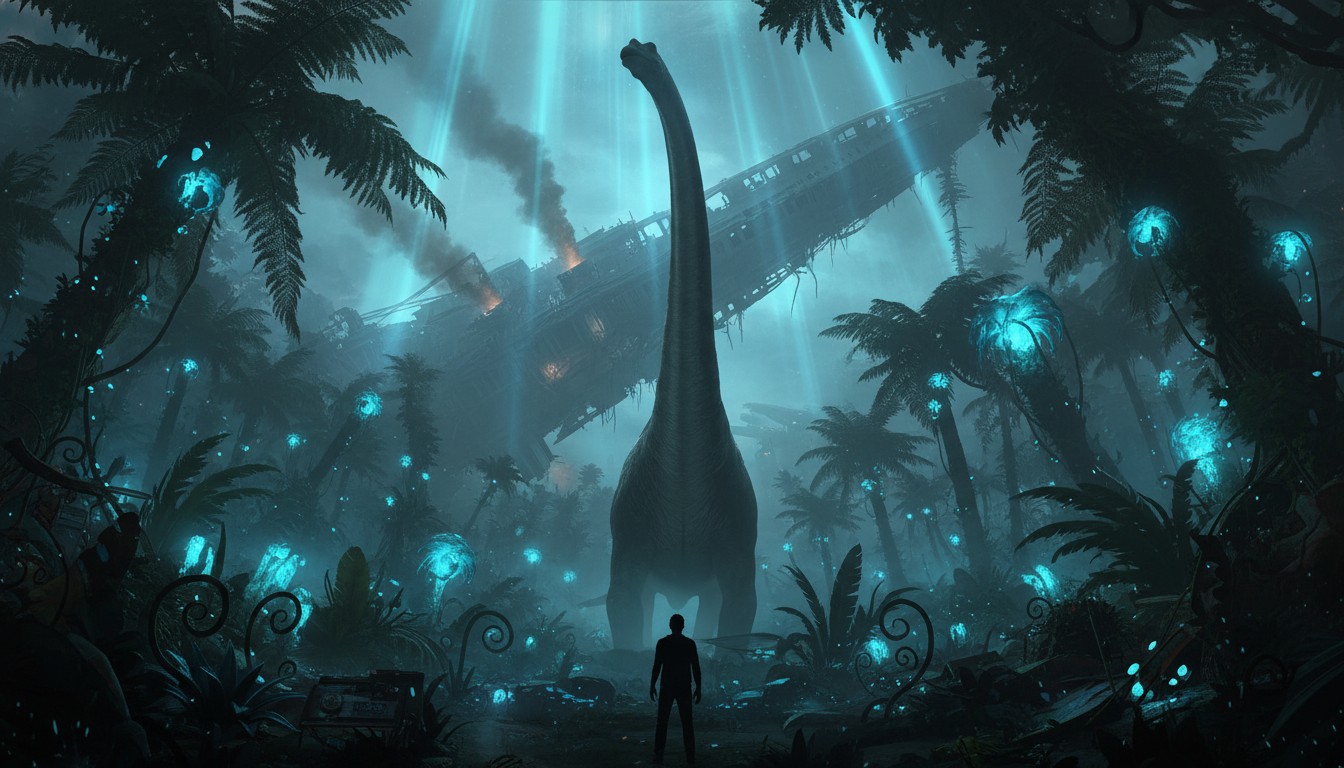
Crytek took the visual technology that powered their PC benchmarks and built a dinosaur planet for PlayStation VR. You play Robin, a young boy stranded on a world where prehistoric ecosystems never went extinct, exploring lush jungles and encountering creatures that range from curious to carnivorous. A floating AI companion named HIGS provides guidance and comic relief. A baby T-Rex named Laika provides the emotional core.
The graphical ambition is staggering for a 2016 PSVR title. Crytek’s engine renders dense vegetation, dynamic lighting, and massive creatures at a level of fidelity that shouldn’t have been possible on console hardware in VR. Standing at the base of a brontosaurus and looking up at its neck disappearing into the canopy is one of the defining images of 2016 VR — the moment when players stopped evaluating VR as a technical exercise and started reacting to it emotionally.
The gameplay is lighter than the visuals suggest. Puzzles are simple. Exploration is guided. The narrative is straightforward. Robinson: The Journey is more of a walking safari than a traditional game, and it asks you to be content with looking at beautiful things rather than mastering complex systems. For players who wanted that, it delivered something no other 2016 title could match: wonder.
Read the full Robinson: The Journey VR review
#4: Arizona Sunshine
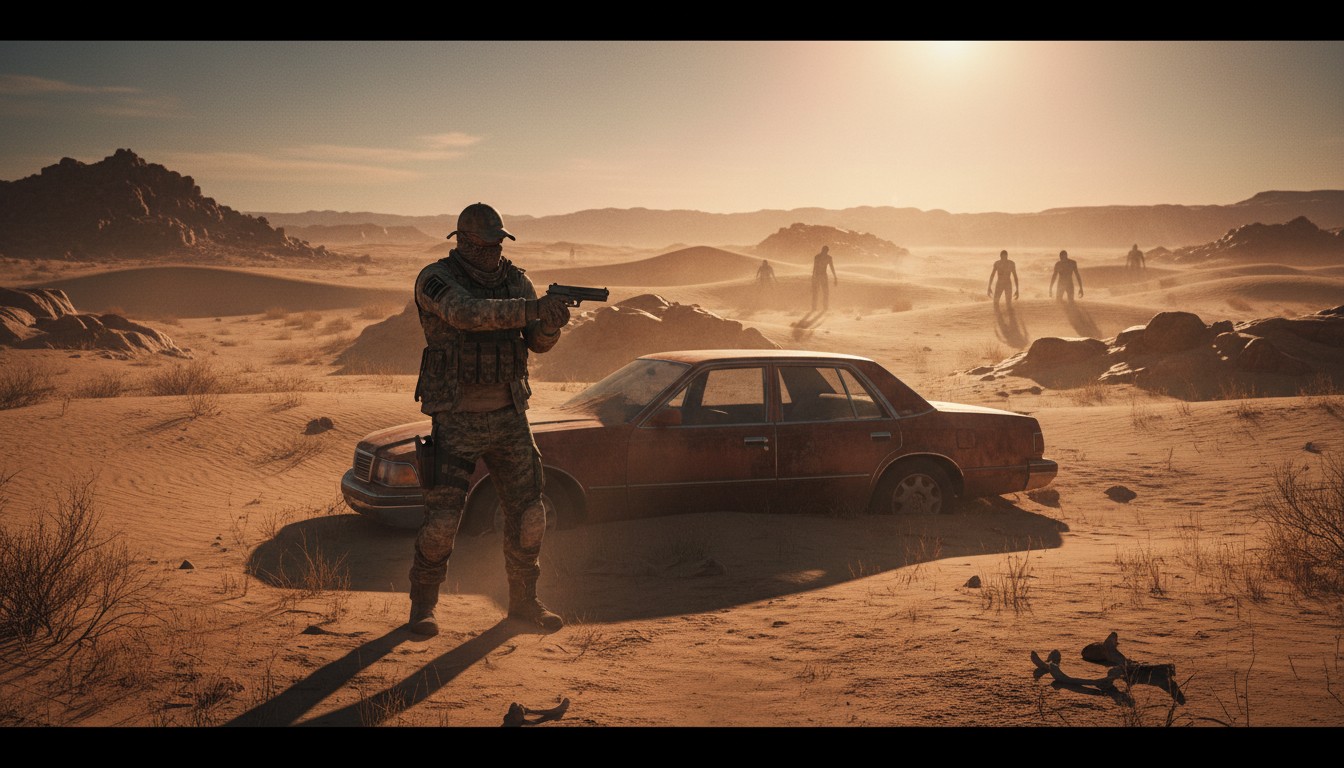
Vertigo Games built the first full-length zombie shooter for VR and proved that the medium could sustain a campaign with real structure, progression, and narrative stakes. Arizona Sunshine drops you into the American Southwest after the undead apocalypse, tasking you with surviving horde attacks, scavenging for ammunition, and following a trail of hope toward a rumored safe zone. It’s a road movie with zombies and motion controllers.
The gunplay is the star. Pistols, shotguns, rifles, and submachine guns all require physical reloading — ejecting magazines, grabbing fresh ones from your belt or backpack, racking slides, and chambering rounds under pressure while zombies shamble toward you. The tactile nature of the combat creates a panic that flat-screen zombie games can’t replicate. You fumble. You drop magazines. You panic-fire. It’s exactly the kind of embodied chaos that VR was built for.
The campaign runs several hours and supports co-op multiplayer, which transforms the experience from solitary survival into coordinated defense. The writing is sharper than it needs to be — the protagonist’s internal monologue delivers genuine humor and pathos through the radio. Arizona Sunshine isn’t the most innovative game on this list, but it’s the one that proved VR shooters could carry a full game’s worth of content without feeling like an extended tech demo.
Read the full Arizona Sunshine VR review
#3: Batman: Arkham VR
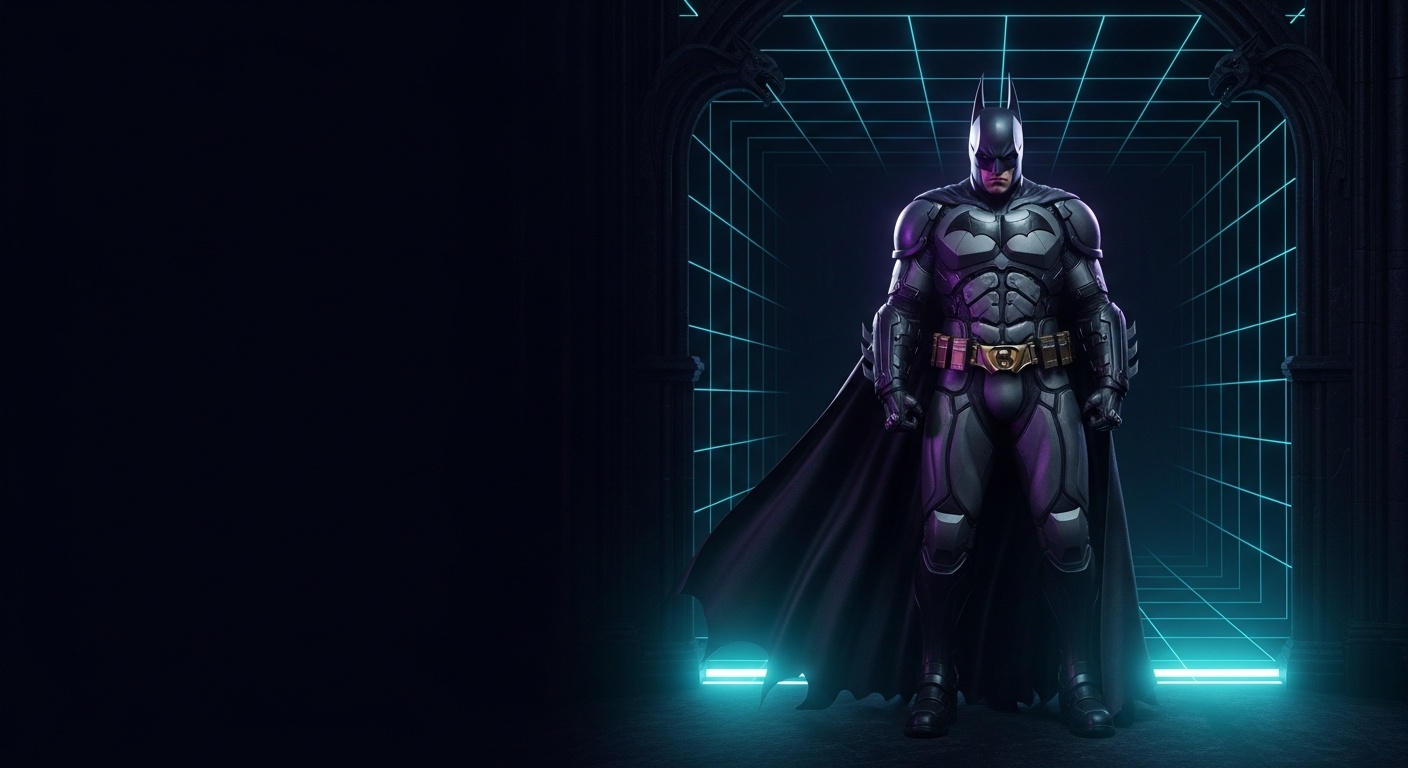
Rocksteady — the studio that defined the modern superhero game with Arkham Asylum and its sequels — pivoted to VR and made something entirely different. Arkham VR isn’t an action game. There’s no combat. No free-roaming Gotham. Instead, it’s a two-hour detective experience that answers a question every Batman fan has asked: what does it actually feel like to be Batman?
The answer, delivered in first-person VR, is surprisingly intimate. You stand in the Batcave and physically put on the suit, piece by piece — gloves, cowl, utility belt. You examine crime scenes in a reconstructed 3D space, rewinding holographic evidence and following trails of clues with forensic tools. You use the grappling hook to ascend to rooftops and the batarang to hit distant targets by actually throwing your arm. The detective vision — a staple of the Arkham series — becomes a physical action as you scan environments by looking at them.
The emotional payload comes from the moments between the mechanics. Visiting Wayne Manor as Bruce. Standing at the spot where your parents died. Looking in a mirror and seeing Batman stare back. Rocksteady understood that VR’s superpower isn’t scale — it’s proximity. Being close to things that matter. Arkham VR is short, but it’s the most psychologically dense experience of the year, and the one that made the strongest case for licensed VR content.
Read the full Batman: Arkham VR review
#2: Rez Infinite

Tetsuya Mizuguchi’s 2001 masterpiece was already a synesthetic experience — a rail shooter where music, visuals, and haptic feedback merged into something closer to a trance state than a video game. The 2016 remaster added VR support and an entirely new level called Area X that was built from scratch for virtual reality, and the result is the most transcendent VR experience of the year.
The original five areas play in a virtual theater mode that surrounds you with the game’s wireframe landscapes, but Area X is the revelation. It removes the on-rails restriction and lets you freely fly through abstract space, locking onto targets with your gaze and releasing homing lasers in time with the pulsing soundtrack. The sense of movement is fluid and dreamlike — you’re not piloting a vehicle, you’re becoming the music.
Rez Infinite is the argument for VR as an artistic medium, not just a technological one. Every other game on this list justifies the headset through mechanics, immersion, or social connection. Rez Infinite justifies it through pure aesthetic experience. It’s the game you play when you want to remember why VR matters beyond the bullet points and the sales figures. PlayStation VR’s most essential launch title, and the best music game in any format.
Read the full Rez Infinite VR review
#1: SUPERHOT VR
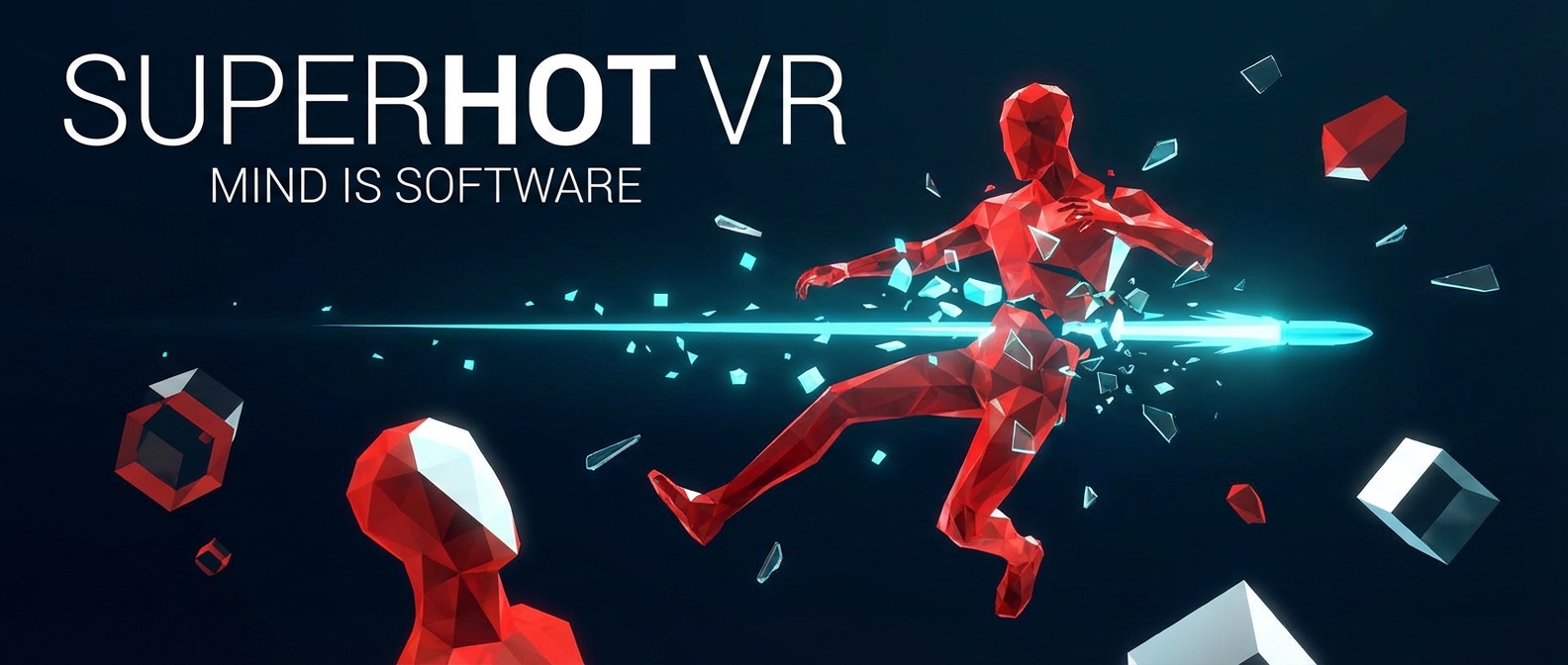
The original SUPERHOT was already one of the most innovative shooters of the decade — time moves only when you move, turning every gunfight into a choreographed puzzle of dodging bullets, disarming enemies, and improvising weapons from whatever debris is at hand. The VR version, rebuilt from the ground up for motion controllers, is something else entirely. It’s the game that 2016 will be remembered for.
In VR, the mechanics become physical. You don’t press a button to dodge — you physically lean, duck, and sidestep. You don’t click to throw an object — you throw it with your actual arm. Catching a gun mid-air after disarming an enemy requires reaching out and grabbing it in real space, and the moment you pull it off feels like you’ve performed a magic trick. The game’s stark white environments and crystalline red enemies give every level the clarity of a designed experience, but the solutions are emergent and personal. No two players dodge the same way.
SUPERHOT VR launched in December alongside the Oculus Touch controllers, and it immediately became the title that justified the entire motion controller ecosystem. It was later ported to Vive and PlayStation VR, but the core design doesn’t change: this is a game that can only exist in VR, because its mechanics are built around the specific capabilities of tracked hands in a physical play space. It’s the most innovative shooter in years, the best VR game of 2016, and the first game that made players feel like VR had arrived not as a peripheral, but as a new way to play.
Read the full SUPERHOT VR review
Honorable Mentions
The Lab — Valve’s free collection of mini-experiences became the default introduction to room-scale VR for every new Vive owner, packing more mechanical ideas into one download than most studios explored all year.
Vanishing Realms — An indie action RPG that proved room-scale combat could work outside the wave shooter format, with sword-and-shield fights that demanded physical positioning and timing. Read the full Vanishing Realms VR review
Fantastic Contraption — The classic puzzle game rebuilt from scratch for room-scale, letting you physically build machines in 3D space and watch them solve problems you designed.
The Climb — Crytek’s rock climbing sim delivered vertigo-inducing vistas and a surprisingly meditative experience, using grip-based locomotion that turned a controller into two virtual hands on virtual rock. Read the full The Climb VR review
Every game on this list has a full individual review with detailed VR analysis — click through for the complete breakdown.